Farming has a future despite pressures, says family

 Matt Knight/BBC
A family who run a farm that has made flour for more than 200 years is hopeful for the industry's future despite facing increased pressures from world events.
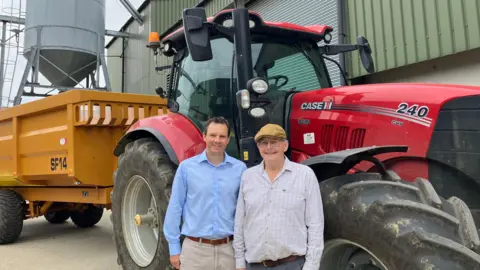
James Marriage, 42, and his cousins George and Hannah run Marriage's Mill, which has been producing wheat near Chelmsford since 1824.
He said the business had experienced "incredible spikes" in the last few years relating to the conflict in Ukraine, the Covid pandemic and Brexit.
James said: "But we focus on what we do, and we will adapt if we need to; things come and go and we stay."
He continued: "We are very proud of [our] history, but when we came towards 200 years it was more about what was going to happen in 10 and 20 years time to make sure we were well placed for that."
New traditions
The Marriages still operate their mill in the original Victorian building in Chelmsford's city centre.
It is served by their farm, which is run by Marriage's 70-year-old father, Simon, and brother Adam, 40.
In the past the company would deliver its flour by rail, but now the produce is loaded onto lorries to deliver to supermarkets, artisan bakeries and other factories that use it to make everything from traditional bread to noodles.
While some traditions remain, James said, the business is not immune from modern economic shocks, adding: "We buy the wheat that we need, we buy it carefully and we often buy from farms we've been buying from for many generations and they trust us on that year-to-year business.
He added: "We have seen some incredible spikes in the last few years relating to conflict and to Covid, even Brexit had an impact on certain parts of the business."
 Matt Knight/BBC
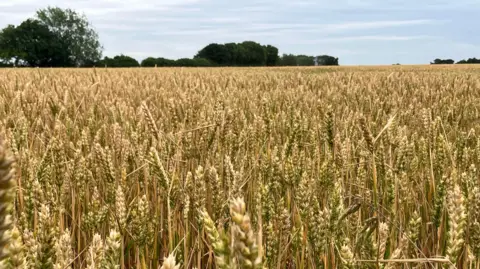
The milling process starts in the Essex hamlet of Mashbury where Simon grows the crops over 1,000 acres (404 hectares) of countryside.
He said he rents out parts of his farm to other businesses to help cover costs and added that consumers need a rethink on what consumers pay for food.
Simon said: "Our trouble is we are price takers not price makers, we are told what we are going to be paid for our wheat and our crops and really it doesn't make any difference what it has cost us to grow them.
"I'm sure people won't like to hear this, but unfortunately the price of food is too low, not too high, because we wouldn't be able to keep farming here without the diversification we now have in this yard.
"We're renting out space to other businesses and without that we would be losing money every year."
Simon explained the cost of machinery is a major cost factor, adding a combine harvester now cost "the thick edge of half a million pounds".
He added: "We are doing what we can to keep the price of growing down, but the ironic thing is that in those days farmers didn't have to struggle to make money and now we do."
Adam, 40, who is also involved in running the farm, making him the sixth generation of the family to tend to the land around Mashbury.
Yet Simon remained concerned whether the next generation would be able to get into the industry.
He said: "The price of land is too high, it has gone through the roof and unless they can find somewhere where they can pick up a small farm, a rental or perhaps be taken on as a farm manager it's very difficult for people to get into farming."
Dame Angela Eagle, the Secretary of State for Environment, Food and Rural Affairs, said: "We are backing our farmers with a record £11.8bn for sustainable and profitable farming over this parliament, protecting the sector in trade deals, and our new trade agreement with the EU will make it easier for British food to reach our largest export market."
Do you have a story suggestion for Essex? Contact us below.
Follow Essex news on BBC Sounds, Facebook, Instagram and X.
