Disabled in a heatwave: 'We're talking about survival'

 Emily Davison/fashioneyesta2012
Heatwaves this summer have brought travel disruption, overheating homes and school closures for millions - and there is a fifth heatwave expected to hit this week.
It is well-documented that those with existing health conditions and disabilities are most at risk during extreme heat episodes.
But these additional and specific challenges faced - from struggling service dogs to overheating wheelchairs - are often overlooked, even in public advice and emergency planning, say campaigners and researchers.
"For somebody who is able-bodied, it's uncomfortable but if you identify as disabled, we're starting to talk about survival," says campaigner Doug Paulley.
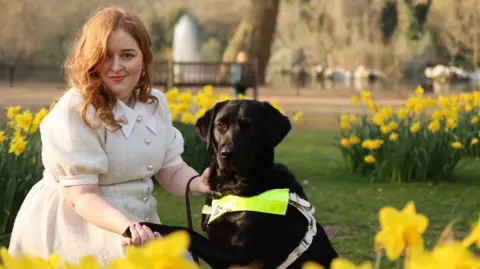
Emily Davison says soaring temperatures force her to put the welfare of her guide dog, Rosie, before her own independence.
"The dog's health has to come first."
Davison is a London-based journalist and content creator, but heatwaves have forced her to cancel journeys to events because it is often too hot for Rosie to travel safely - missing out on potential earnings.
Public transport like buses often overheat and she avoids Uber after "too many experiences where they've not let me in with a dog".
She says finding available taxis has become more difficult, even with London Taxicard scheme, a subsidised taxi service for people with mobility impairments or severe sight loss.
Davison says every trip now requires careful planning, which can make her feel isolated and limits both her work and independence.
"It does put the brakes on your life," she says. "When you're in this situation and you've got a guide dog and you can't do anything, it does make certain things grind to a halt."
She is now spending long periods working from home - but says she is lucky to be still able to do this but not all disabled people can.
"I think the culture of being able to work from home and have that option is really important to keep ensuring that disabled people can still be in employment."
 Jimmy Macfarlane/@jimmy.mac01
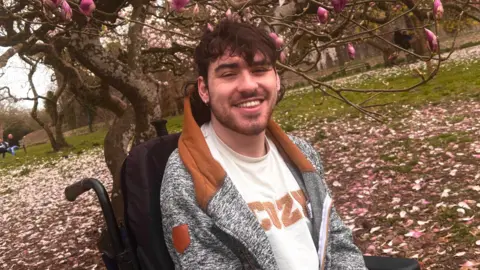
Jimmy Macfarlane is a Cardiff-based actor who needs to travel for his job - so he uses a powered wheelchair.
During this summer's heatwaves, people have taken to social media to report phone batteries draining faster because of the high temperatures, but forJimmy batteries are what enable him to get around.
"The heat definitely impacts the chair and it makes the battery go down a lot quicker.
"I always have to think is there a way I can get to where I need to be without moving the chair?" Macfarlane says.
Some days he has not even been able to leave his home - he previously lived in a sixth-floor flat and the heat caused the lift to break down.
Such problems have been reported in other high-rise buildings by BBC News, but unlike other residents Jimmy cannot just use the stairs to get round the problem.
"There were times where I was stuck in the flat [for days] until it was fixed," he says.
And the heat inside his flat became difficult to manage.
Because of his cerebral palsy, he says everyday tasks already require more energy. "Things like getting changed, having a shower… everything I do takes twice as long as a non-disabled person.
"On a hot day, it's even more exhausting."
Cooling tricks can be dangerous when blind
Common advice for dealing with the heat is to conserve energy and stay cool by keeping your curtains closed and opening the windows when it is cool.
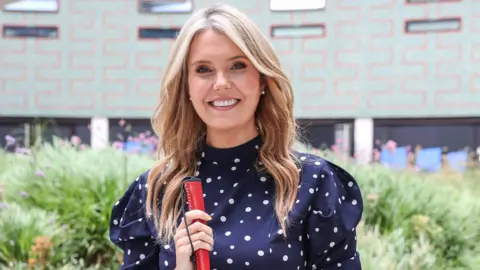
But for Claire Sisk, a content creator and advocate who has distorted vision, this can be dangerous.
"If I've got all my windows and doors open, I feel incredibly vulnerable because I can't see if anybody is walking into my property. So I have to have them all closed, which is quite unbearable," Sisk says.
 Claire Sisk/canseecantsee_
Other measures intended to keep homes cool can introduce new risks. Fans, for example, can become trip hazards because they are not part of her usual layout.
When she leaves home, the current weather can make her remaining vision far less reliable.
"[When] that sunlight comes out, then that bit of vision just goes," Sisk says.
Hot weather can make travel unpredictable, and access issues can waste valuable time on an already exhausting day. She recalled having to wait at a Tube station because of staff shortages.
"That can be a bit frustrating because it takes you two hours then to get home when it should have only taken 45 minutes."
The cost burden of a heatwave
Hollye Kirkcaldy, a PhD researcher at the University of Bath, studies how extreme heat affects disabled people in the UK, and says these experiences are shared by many across the country.
"You've got inequalities in urban infrastructure, housing, structural conditions around things like social networks and care. If you put all of those together and then you throw heat in, that's what's disabling," Kirkcaldy says.
Her research found that official heatwave guidance often does not reflect disabled people's circumstances, while measures presented as simple can in fact create new barriers.
This can reduce independence which harms their mental wellbeing and adds financial pressures, she says. Disabled people can be left unable to work and facing additional outgoings like higher energy costs for round-the-clock cooling.
Kirkcaldy says in some cases it can be "a trade-off that nobody should have to make between your health and whether you eat."
 Doug Paulley
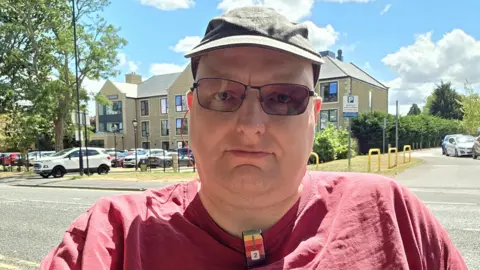
For disability campaigner Doug Paulley, who has a number of health conditions which are exacerbated by hot temperatures, the experiences of disabled people during heatwaves point to wider problems in society.
"Disabled people are always amongst the first against the wall whenever there's a significant crisis of any type in society, and this is no exception," Paulley says.
During one heatwave, he cancelled physiotherapy and missed giving evidence to the Covid Inquiry because travelling became unsafe.
"There was just no way that I could have gone. It was dangerously hot and I would have been really unwell."
Climate change must be factored into how people think about access and support, Emily Davison says.
"Climate change is a thing. Summers are only going to get hotter."
For Doug, the issue is not only how disabled people cope with extreme weather, but whose experiences are considered when decisions are made about the future.
"Policy is very much set for them, not with them."
