The campaigner who gave shirt factory women a voice

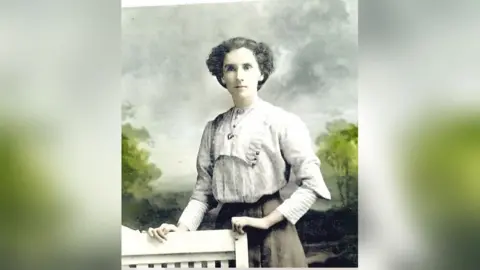 Gabrielle Deans
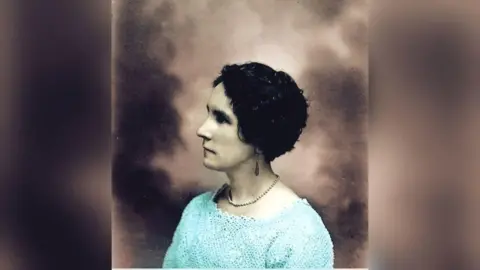
Sarah Doherty was only a teenager when she first walked through the doors of a Londonderry shirt factory and into a world of work built largely on the labour of women.
It was the late 19th century, a time when equal pay and workplace rights remained out of reach for most female workers.
Over the next five decades, Doherty would dedicate herself to improving pay and conditions for the women who helped power one of Ireland's most important industries.
She was, her great-niece Gabrielle Deans said, a campaigner for women's rights "without being named that at the time".
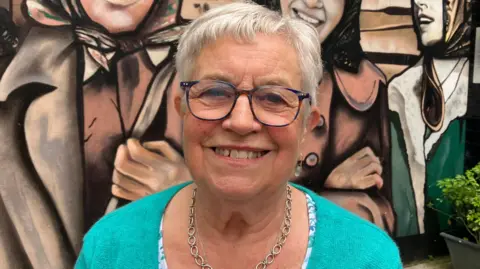
"She has a great legacy. She worked in the shirt factory all her life and was very, very vociferous about demanding better conditions for the shirt workers in Derry.
"In particular the women who were not well paid and not well paid in comparison with similar workers in England," she told BBC Radio Foyle.
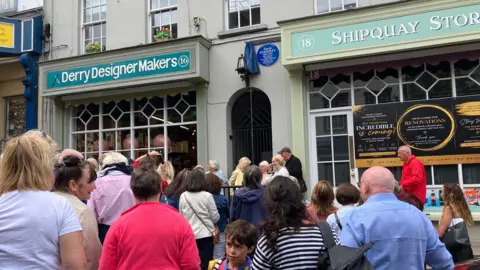
On Wednesday, the Ulster History Circle honoured Doherty with a blue plaque in her home city, recognising a contribution they say should not be overlooked.
Who was Sarah Doherty?
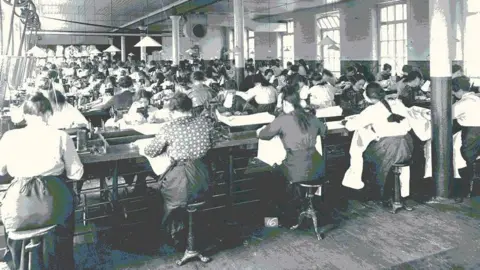 DCSDC Museum Services
Born into a working class family in Derry's Bogside in the summer of 1884, Doherty was around 14 when she first went out to work.
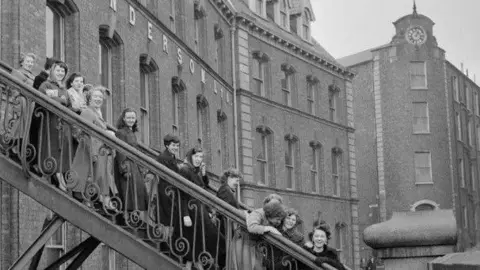
Then, Derry was a globally-renowned centre for shirt-making, with the industry developing from the late 19th Century.
By the 1920s, there were more than 40 shirt factories employing thousands of workers, with thousands more servicing the industry from their homes.
At its peak, more than 18,000 people worked in Derry's shirt-making industry, the vast majority of them women.
Doherty first got involved in the fledgling trade union movement during a shirtcutters' strike of 1913, becoming organising secretary of the Derry branch of the Tailor and Garment Workers Union in the 1930s.
She would also become secretary of the Tailor and Tailoresses Society and a member of the Shirt Making Wages Council.
 Getty Images
Doherty argued that women, who made up the overwhelming majority of the workforce, should organise collectively through trade unions.
Writing in 1932, she said: "Owing to the scarcity of employment, considerable apathy exists among the workers with regard to trade unionism.
"They do not seem to realise that the period of bad trade is the most dangerous time for wage earners, and is the time of all others when they should rally to their union. We are at present engaged in an organising campaign…"
By the mid 1940s trade union membership had doubled among the working women of Derry.
 Gabrielle Deans
Deans said she first became aware of her great-aunts' work and legacy when a relative had pulled together some family history and from doing some research of her own.
She remembers too, her father speaking of her great aunt.
"I remember my father Tom mentioning her as he was also involved in building trade unionism, but not much else. So I was very pleased to discover how active she had been, and how she worked hard to get better conditions and pay for the factory girls especially," she said.
Deans added: "That attitude has come down through the years and the children, grandchildren and great grandchildren of her brothers and sisters still figure prominently in the political and community life of Derry to the present day."
Doherty's family, she said, are "very proud" that Doherty's legacy is now being recognised and honoured.
Chris Spurr of the Ulster History Circle said Doherty was "was a trade unionist who campaigned for women's rights, but first and foremost she was a Derry shirt factory girl, one of the thousands whose working lives remain forever stitched through the fabric of the city".
Doherty, who never married, died in 1947. She is buried in Derry's City Cemetery.
