The hotel booking mix-up that could free mushroom murderer

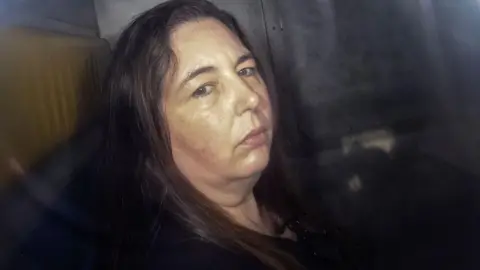 AFP via Getty Images
Last July, hundreds descended on Australia's Gippsland region from around the country for the most exciting event on the annual table tennis calendar.
But as elite players vied for medals at the national championships, one of the biggest criminal cases in the nation's history - that of mushroom murderer Erin Patterson - was unfolding just a few kilometres away.
This tournament inadvertently became part of a perfect storm which the triple killer's lawyers are now arguing "fatally undermined" the fairness of her trial.
The jury which condemned Patterson to prison were supposed to be isolated - sheltered from the frenzy surrounding the case while they deliberated.
But accommodation shortages in the region, exacerbated by the table tennis competition, meant they shared a hotel with members of the prosecution, a key police witness, and journalists.
Now Patterson's legal team is trying to overturn her convictions on appeal.
"The only proper remedy is... the order for a re-trial," Patterson's barrister Richard Edney said.
Towns overwhelmed by frenzy
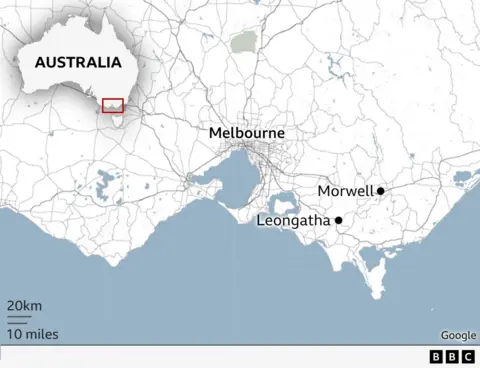
When Patterson served her estranged husband's relatives a poisonous mushroom-laced lunch in 2023, killing three and gravely injuring another, she thrust the sleepy Gippsland region into the global spotlight.
The community of Korumburra, where the victims were beloved figures, became shrouded in grief. Leongatha, where Patterson lived, was gripped by shock. And Morwell, host of the lengthy trial, was overwhelmed by journalists, lawyers and spectators - as were towns nearby.
You couldn't walk down the main street without spotting some of the courtroom's stars, or grab a coffee without overhearing chatter about the case.
It was this frenzy from which the jury of 12 needed protection, the trial judge decided.
Jurors are required to consider only the evidence presented to them in court, and must only talk about the case among themselves. In Australia, these rules are so strict that discussion with outsiders is forbidden even after a trial wraps up.
To reduce the risk of contamination and the temptation of gossip, Justice Christopher Beale decided the jury should be sequestered once deliberations began - a relatively rare move which meant they would stay in supervised accommodation with little to no contact with the outside world until they reached a decision.
But finding the jury, and the jury keepers watching them, somewhere to sleep became something of a logistical nightmare.
As the trial dragged on, stays became longer than anyone anticipated and accommodation became a constant scramble.
And the week the table tennis tournament came to town - which by a stroke of bad luck was the one in which the jury finally retired - turned the accommodation drought into a famine.
Early morning email revelations
At 08:28 on Monday 7 July, an email from the judge's chambers popped into the inboxes of the lawyers in the case.
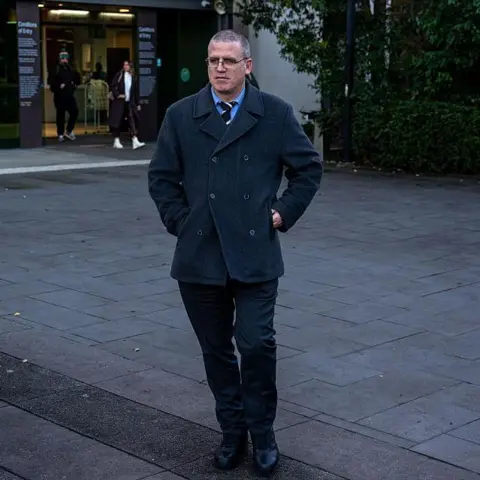
It revealed that the lead detective who investigated the murders - a key trial witness - and two prosecution solicitors had been staying at the same hotel as the sequestered jury.
 Getty Images
The jurors had exclusive use of a separate floor of the hotel, the email said, and had eaten their meals in a conference room, away from all other guests.
Common areas like the lobby were used by everyone, but the jury keeper who reported the issue said there had been no interaction between his charges and anyone from the prosecution case.
"I understand that there is a shortage of accommodation in the district, but it is obviously undesirable," Justice Beale wrote.
About two hours later, the prosecution responded, admitting they had been aware of the situation for days.
The detective "took steps to avoid common areas from the point that he became aware that [the jurors] were there", their email read.
Upon learning their team would cross over with the jury for a single night, the prosecution had done its best to find other hotels for staff. But they couldn't get alternative rooms for two solicitors, though the email stressed the pair also took steps to avoid any "incidental contact".
However, another missive from the judge's chambers quickly overshadowed the hotel snafu that same afternoon: the jury had reached their verdicts.
They had found Patterson guilty on all counts.
'Most critical week of trial'
Patterson's lawyers are now arguing the hotel mix-up amounted to a "fundamental irregularity" which "fatally undermined" the integrity of the verdicts.
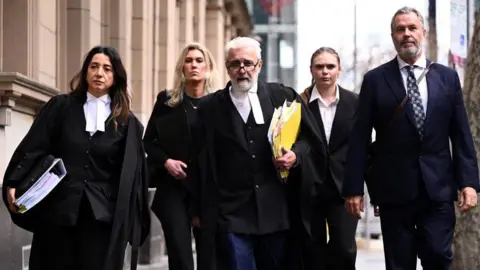
"We would describe... it as catastrophic," Patterson's appeal counsel, Edney, told Victoria's Court of Appeal this week.
"What occurred here was an inexplicable and perhaps still unexplained failure in the process."
The defence - which Edney pointed out had been kept in the dark several days longer than anyone else - didn't immediately move for a mistrial last July.
Instead, it twice asked the state's juries commissioner to investigate in the weeks following the verdicts. Both requests were rejected, the barrister said, and the reasons have not been made public.
A year on, there remains a "vacuum of evidence" around what occurred during "the most critical week" of the entire trial, Edney argued.
 Reuters
There is no CCTV from the hotel; no sworn statements from those who were sharing it with the jury - a group which also includes an unknown number of journalists; and nothing to say what happened except the two brief emails sent last July.
There was also at least one media report at the time - raised by Edney this week but rubbished by the prosecution lawyers as "unverified" and "seemingly inaccurate" - that the mix-up had led to "people hiding in doorways to avoid contact" and "skipping breakfast".
"My question is... so what?" Justice Peter Kidd bit back.
In any criminal trial, jurors see other parties all the time - in corridors, or even nearby cafes - but they're under the constant supervision of jury keepers who have sworn to ensure there's no improper communication, he said.
Edney conceded there was "no evidence" that the jurors had communicated with anyone else, but said innocent contact - even just seeing the detective or solicitors - could have resulted in "subconscious influence".
"This was a hotel with windows," Edney said several times - a likely thing for it to have, someone from the judge's bench countered.
Patterson's team cited two cases to support their argument: one in which jurors were discharged when one was offered a throat lozenge by a defendant's relative during a coughing fit, and another in which a retrial was ordered after jurors caught a taxi without being escorted by a jury keeper.
The prosecution's response was simple.
"The system worked as it was intended to work," Director of Public Prosecutions Brendan Kissane KC said.
The jury was constantly supervised, and when a potential problem was identified, steps were immediately taken to prevent it becoming an actual issue.
The jury keeper, the lead detective, and the prosecution all say there was no contact.
"The evidence in this case is that there was no interaction between any other person and the jury," he said.
Other cases the defence pointed to in which jury errors resulted in retrials all had evidence of actual contact, he noted.
"That's not the situation here."
Patterson has seven appeal grounds - the others relating to rulings on evidence and alleged unfairness by the prosecution - but this one, by the defence's own admission, is unprecedented.
Just as important as actual interference is the perception of interference, said Edney, quoting the trial judge's own speech as he selected jury members on the very first day of the trial.
"Justice must not only be done, it must be seen to be done."
The trio of judges are now deliberating on Patterson's appeal, as well as an argument by the prosecution that her parole period should be scrapped.
They will announce their decisions at a later date.
