Farmer has vaccinated 1,700 sheep for bluetongue

 BBC
BBCA farmer has spoken about the impact of protecting livestock from the bluetongue virus which can make sheep and cattle lethargic and lame, it can cause birth defects or spontaneous abortions and it can be fatal.
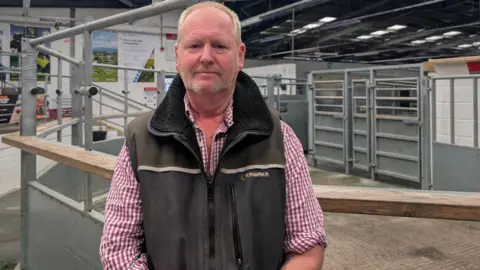
Mark Walter, who farms in Milton Damerel in north Devon said bluetongue has caused "a lot of stress".
He said: "I've probably injected 400 plus sheep with antibiotics. We've vaccinated 1,700 sheep in total.
Devon has the highest number of places with the virus in England and Wales, with 304 premises where it has been detected, as of Wednesday, with 105 sites in Cornwall.
He feared 40% of his lambs could be born stillborn or with disabilities because of bluetongue.
He added: "All we were doing is jabbing sheep day and night. The poor sheep, it was horrendous for them."
The government's deputy chief veterinary officer Ele Brown joined farmers for a meeting at Holsworthy Market in Devon on Thursday to discuss their concerns and give them an update on the virus.
The first cases of bluetongue in the UK for 15 years were recorded in 2023-24.
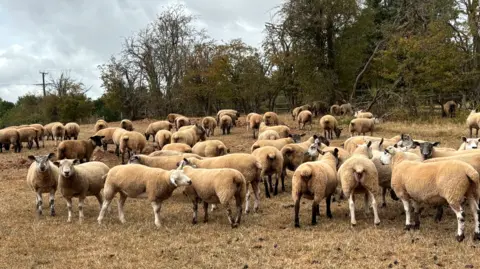
Brown said the number of cases were "particularly bad" in Devon and Cornwall because of the high number of cows and sheep and weather conditions being "perfect" for midges.
She added: "That really ramps up the amount of virus there is and unfortunately that means animals down here are picking up the infection."
The midges which carry bluetongue and the virus itself are "really temperature sensitive", she added.
"If the warm weather survives into the autumn midges will still be active, will still be feeding.
"If the average day and night temperatures stay at above 12C (53F) or 13C (55F) we'll still see virus replicating in them, so everything that pushes that heat really prolongs that period."
Vaccination
She said the government "spent a lot of of time" in 2024-25 "trying to stop the spread" once the virus arrived in the UK and has been trying to persuade farmers to get their stock vaccinated.
Brown added the uptake has been around 10% and "it just means that not enough animals have been protected and so unfortunately we're seeing that spike in disease signs".
NFU president for England and Wales Tom Bradshaw who was also at the meeting called for the government to compensate farmers for disposing of any "fallen stock".
He added: "We need that vaccine here as quickly as possible so it can be rolled out here and in other parts of the country where we know its spreading to very very quickly."
He said reporting of vaccination needs to be "more streamlined".
Currently farmers have to report vaccinating each individual animal, Bradshaw said.
