How the murder of Joshua Ingram opened a seaside town's eyes to knife crime

 Eddie Mitchell
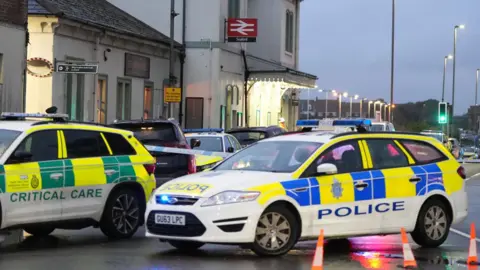
On a wet and windy afternoon in the coastal town of Seaford, a hooded figure is seen making his way along the street.
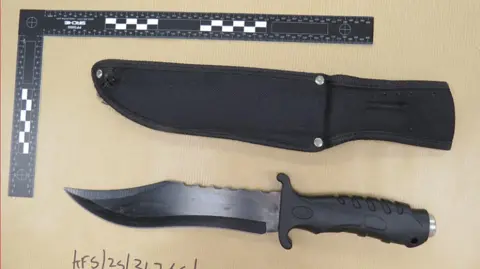
Hidden beneath the teenager's dark clothing is a 19cm (7.5in) combat-style knife. He sees two boys walking ahead, leaves his girlfriend and follows them.
The boys spot the knife-carrier as they head towards Seaford railway station.
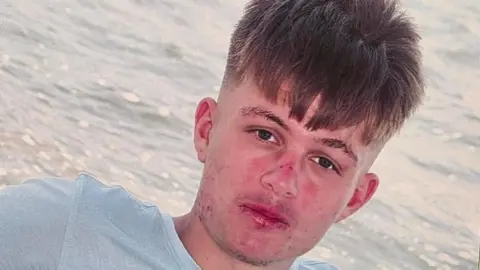
At about 17:00 BST on 10 September 2025, one of them, 16-year-old Joshua Ingram, is fatally stabbed on the platform, the knife piercing his heart.
A jury at Hove Trial Centre would later be told Joshua had owed his attacker £20 for some cannabis.
Local people have reacted to the senseless attack with profound shock and disbelief.
One boy told the BBC at the time: "It honestly just freaks me out because it's so normalised in England and it shouldn't be.
"Every day people wake up and there's a new stabbing, there's a new knife crime that's happened."
 Family
Even after a 16-year-old boy was found guilty of murdering Joshua, people in Seaford are still trying to understand how knife crime involving people so young has spread to this relatively small and quiet coastal community in East Sussex.
He was also found not guilty of conspiracy to commit grievous bodily harm with intent, alongside two other boys aged 15 and 17.
The 15-year-old boy was found guilty of assisting an offender, which the 17-year-old had previously admitted.
The 17-year-old told the court: "We are all in a group selling drugs, not killing people."
He told police he thought Snapchat messages from Joshua's killer had been a joke.
One message said "Josh will perish" if he did not pay his £20 debt. After stabbing Joshua, the 16-year-old boy told his friend he had "just dipped" him, the jury heard.
The court was told the boy who stabbed Joshua liked to listen to drill music which has violent lyrics and has been linked previously to knife crime.
All three boys will be sentenced in October.
 Charlie Rose/BBC
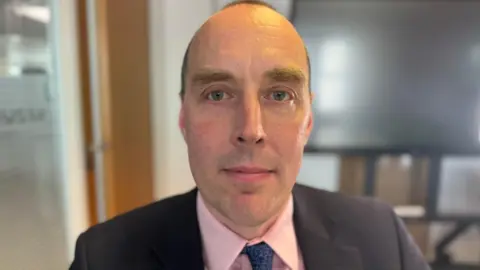
Det Ch Insp Paul Stanley, who led the British Transport Police investigation into Joshua's death, said the defendants had been influenced by social media, TV and each other.
"They formed this idea in themselves of who they should be and how they should act," he said.
"So often with young people, they don't have those checks and balances, they don't have that challenge to their behaviour.
"Perhaps in areas such as Seaford, where this is not viewed to be a problem, some of those support and intervention networks are less available."
'I've been stabbed'
Joshua, who lived in Newhaven, had just started a bricklaying course at a local college and he and a friend usually made their ways home by bus.
However, that afternoon they chose to take the train so they could travel together for longer.
Joshua never boarded the train.
One witness, Warren Greening, told the court Joshua appeared to have been punched in the stomach by a third boy who had run up to the teenager.
He said he thought the blows had been "playful" until the victim pulled up his top and said: "I've been stabbed."
Stanley said Joshua's friend reacted "amazingly well" under the circumstances.
"He called 999 within seconds and called for help from people who were in the pub on the platform at Seaford Railway Station who all came out to offer assistance and first aid."
Joshua's mother, who worked nearby, was by her son's side as doctors and paramedics tried desperately to save his life - but his injuries were catastrophic.
About an hour later, the teenager was confirmed dead.
'Complex mix of reasons'
Recently, the south-east of England has seen several other incidents of knife crime.
They include the case of Billy Ripley, 20, who was fatally stabbed by Rhys Hedges,17, in Hailsham.
Meanwhile, Charlie Cosser, 17, was murdered on a crowded dancefloor at a party in West Sussex. He was killed by Yura Varybus, who was 16 at the time.
Charlie's father Martin is now a prominent campaigner against knife crime. He said the perception that the problem affects only large urban areas was misplaced.
He suggested lower police numbers in smaller towns and rural areas, as well as fewer prevention programmes in these areas, may be a factor in the spread of knife crime beyond large urban centres.
Craig Pinkney, a criminologist and urban youth specialist, said he was "saddened" but "not shocked" by the incident in Seaford.
"It's something that we're seeing a lot and I think the worry is that a lot of people don't realise and recognise that these things are happening quite a lot in rural spaces."
He suggested a holistic public health approach was needed to tackle knife crime, as well as a focus on youth and community provision, preventative work within the education system from primary school years, and more support for young people and parents.
 British Transport Police
After Joshua was killed, Crimestoppers encouraged young people in East Sussex to make an anonymous and untraceable report if they knew someone who regularly carried a knife.
The Fearless campaign reached 11,000 people on social media.
Annabelle Goodenough, the charity's south east regional manager, said there was a "complex mix of reasons" which led to young people carrying knives and being involved in criminal behaviour.
"There is a real sense of fear and perceived vulnerability amongst young people and that leads them quite often to wanting to carry knives and other weapons," she said.
"We know in reality that actually the number of young people carrying weapons is very very small."
Stanley says Joshua's case shows police and support services need to broaden their scope and look outside areas normally associated with knife crime.
A Home Office spokesperson said more than 3,800 officers had been placed into neighbourhood roles, while funding for police forces had risen by £834m to £18.4bn during the 2026/27 financial year.
"While we are making progress, we understand the devastating impact of knife crime on lives and communities and there is still more to do," they said.
"That's why our Plan to Halve Knife Crime will combine tougher enforcement with prevention and early intervention."
Follow BBC Sussex on Facebook, X, and on Instagram and listen to BBC Radio Sussex on Sounds. Send your story ideas to southeasttoday@bbc.co.uk or WhatsApp us on 08081 002250.
