Blue plaque unveiled for 'first' royal photographer

 University of Brighton
A blue plaque will be unveiled in honour of William Constable, a Victorian believed to have taken the first-ever royal photographic portrait.
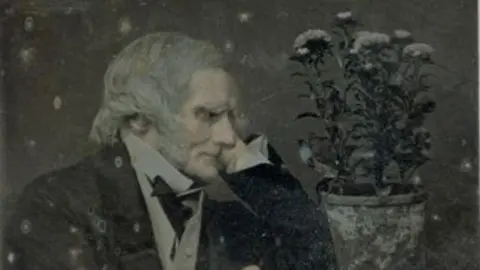
Constable, who captured an image of Prince Albert, opened the first photographic portrait studio in Brighton in 1841. A plaque will be unveiled outside the building at 57 Marine Parade on Friday.
The honour has been arranged by his descendant Claire Constable, author of several books exploring the family's history.
Professor Annebella Pollen at the University of Brighton, which has researched the photographer alongside the National Museum of American History, said: "William Constable played an unparalleled role in Brighton's early photographic history.
"But much of his story has remained untold, and many of his photographs have not been seen for nearly two centuries."
Constable opened The Photographic Institution at his seafront studio in Brighton just two years after photography was first invented.
Visitors could enter his studio and see their likeness captured permanently by light on daguerreotypes, which were early photographs captured on silver-coated metal plates.
Through this, Constable is believed to have produced the photographic portrait of Prince Albert.
Almost two centuries later, researchers are now piecing together the story of Constable's life, studio, and photographs through the William Constable: Brighton Daguerreotypes Project.
Jointly led by Professor Pollen, with Shannon Perich, curator of the photographic history collection at the Smithsonian Institute, the project has uncovered new information about 130 surviving Constable photographs created between 1841 and 1861.
Follow BBC Sussex on Facebook, X, and Instagram and listen to BBC Radio Sussex on Sounds. Send your story ideas to southeasttoday@bbc.co.uk or WhatsApp us on 08081 002250.
