'I was chased by the lions of Longleat'

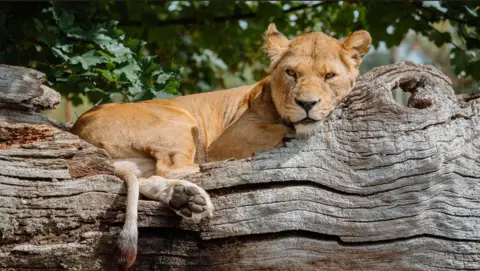 Longleat
As Longleat's lions are released for feeding time, BBC reporter Andy Howard finds himself the focus of their hunt - and discovers how the park's keepers manage some of the UK's most powerful predators.
I have to admit I was nervous. Desperately trying to stay upright in a shaky cage on wheels, surrounded by hunks of meat and entering a field of hungry lions is not how most people start their day.
It certainly wasn't my average morning. But for the keepers looking after the lions of Longleat, it was business as usual.
 Longleat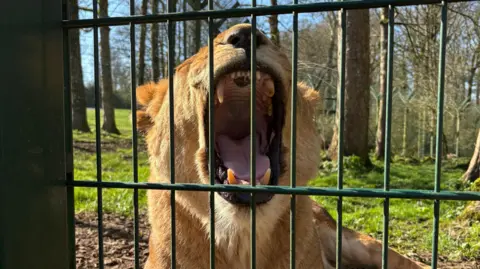
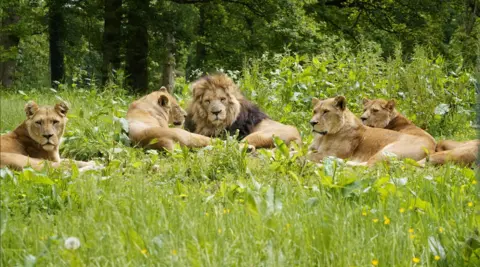
The two prides of apex predators are fed just twice a week, and they know exactly when it's time.
To my surprise, this wasn't a case of chucking breakfast over a fence.
"They're hunting us," explained head keeper Eloïse Kilbane.
"Well, they're hunting you, not me; they know me."
Fantastic.
High-security fences
Lions have been at Longleat since 1966, when the Wiltshire estate became the first drive-through safari park outside Africa. Back then, it cost £1 per car.
Around 50 lions roamed the 100-acre site, kept in by little more than chain-link fencing.
Nearly 60 years on, almost everything has changed.
Today, there are 18 lions contained by four-metre-high, state-of-the-art fencing with high-security remote locks.
These safety features matter most on feeding days.
'Food reward'
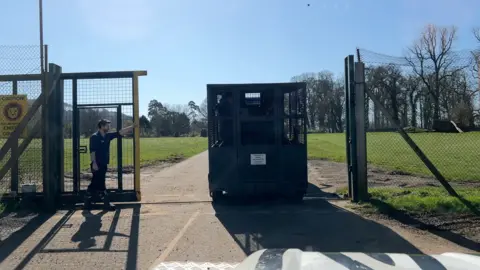
Our "feed wagon", piled high with veal, rumbles through the security gates, pulled by a tractor. The routine is tightly controlled.
Walkie-talkies crackle. Supporting keepers in Land Rovers wait for the signal. Only when everyone is in position are the lions released.
"Come on, lions!" echoes across the enclosure.
As the tractor pulls away, the first of the pride charges towards the meat.
The quickest makes a beeline straight for our wheels.
"They know that if they pop the tyres of the feed wagon, the food stays in their section," is the latest bombshell from Eloise.
"Our patrol truck's mission is to stop that from happening.
"Our job is to make sure that when it's the right time - when they've worked hard enough - they get their reward of food."
Thankfully, the tyres stayed intact.
'Designed to hunt'
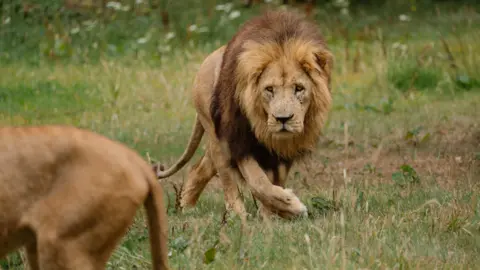
Lions are tactical hunters. In the wild, the dark markings on the backs of their ears and the tips of their tails help the pride track each other during a chase. Light fur around their eyes reflects any available light, helping them hunt at dawn and dusk.
The females do most of the work.
"I personally think that when the mum has cubs, she designs the hormones that she produces to create what she thinks the pride needs to become the best hunting group," said Eloïse.
Our clattering feed wagon, travelling at 25mph, is treated as the next kill.
Fifteen-year-old Nala is the first to chase, as the others hang back.
"She's caught up with us and is starting to cut us off, to try and whip us away and then push us into two other lions," Eloïse said.
Of course, it works. The tractor is suddenly surrounded by six panting big cats.
Now it's our turn to act. A metal hatch at the back of the feed wagon is opened, and the huge joints of meat are dropped onto the track.
"We give them a couple of pieces each because they'll all have different cuts of meat that they want to eat, so they're going to find the piece they want," Eloïse said.
Almost instantly, the chaos melts away.
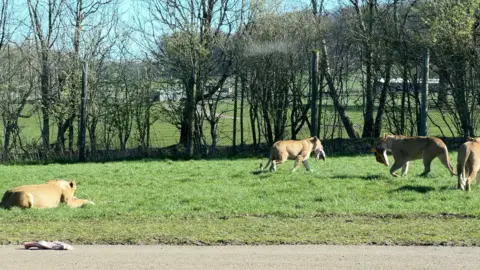
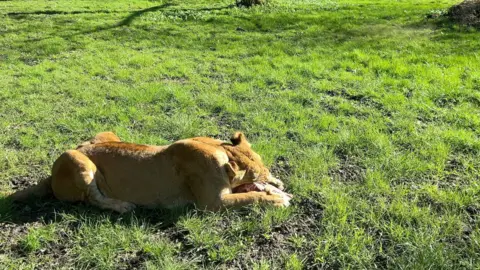
The lions drag their food into the grass, spacing themselves just far enough apart to avoid conflict.
"They'll separate off a little bit because they don't want to have that rivalry between each other, but they'll stay quite close to the meat so they can come back for the next bit," Eloïse said.
"Lions are the top of the food chain, no one's going to go after one who's got food, so you can see they've got their heads down – they're not caring about what's going on around them."
Over in minutes
Like a real hunt, the entire episode is over in minutes.
Once keepers are satisfied that every lion is settled and feeding, we retreat, leaving a trail of scattered meat behind us.
"And relax," Eloïse said.
I needed that reassurance.
 Longleat
Being at such close quarters with 30-stone predators in full "hunt mode", separated only by a metal cage, is a genuine heart-rate raiser.
For the park staff, though, this controlled chaos is routine – carefully designed to mimic life in the wild.
"We're all about trying to be as natural as possible," said Eloïse.
"We want to make sure they stay lions, because they are the lions of Longleat. They always have been, and they always will be."
