Blake Lively and Justin Baldoni settle lawsuit over It Ends With Us film

 AFP via Getty Images
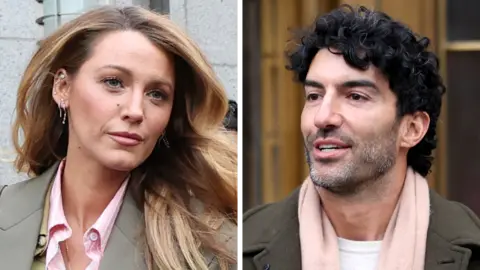
Co-stars Blake Lively and Justin Baldoni have settled a lawsuit that followed filming of the 2024 movie It Ends With Us.
The settlement comes just two weeks ahead of a scheduled trial, where both stars were expected to testify.
The Hollywood legal battle began in 2024 when Lively sued Baldoni, accusing him of harassment, sexual misconduct, and a smear campaign on the set of their hit movie.
He denied those accusations and filed a counter-suit. The litigation unveiled the private happenings of Hollywood elite, including texts and emails from Lively, Baldoni and their host of A-list friends.
Attorneys for the two actors issued a statement on Monday to announce the settlement, saying their film "is a source of pride to all of us who worked to bring it to life".
"Raising awareness, and making a meaningful impact in the lives of domestic violence survivors – and all survivors – is a goal that we stand behind."
"We acknowledge the process presented challenges and recognise concerns raised by Ms Lively deserved to be heard," it continued. "We remain firmly committed to workplaces free of improprieties and unproductive environments."
The statement ended by saying that both actors "hope that this brings closure and allows all involved to move forward constructively and in peace".
The case stems from interactions between Baldoni and Lively on the set of the film, an adaptation of a best-selling Colleen Hoover novel. It features Lively as the main character, Lily Bloom, a young woman who grew up witnessing domestic abuse, then finds herself in the same position years later.
Lively's legal team accused Baldoni and his film studio, Wayfarer, of planning to wreck her reputation, including by using social media manipulation and friendly journalists to sow certain narratives.
Lively filed a lawsuit against Baldoni's Wayfarer Studios in December 2024, alleging he sexually harassed her on set and retaliated against her for bringing those complaints, among other allegations.
The settlement announcement comes about a month after a judge threw out 10 of 13 allegations in Lively's case, including harassment and defamation.
That left in place three claims - breach of contract, retaliation, and aiding and abetting in retaliation - with a civil trial in New York scheduled for 18 May.
Baldoni's counter-lawsuit was also dismissed by the same judge.
Shortly after Lively's lawsuit was filed, Baldoni brought defamation cases against Lively, her husband, Ryan Reynolds, and their publicist, claiming they were aiming to ruin his career and reputation with the allegations. He also sued the New York Times for printing Lively's allegations.
He alleged that Lively "stole the film" from him and Wayfarer by threatening not to promote it, and that she and others perpetuated a false narrative that Baldoni had harassed her and launched a smear campaign against her.
But in June, the judge dismissed Baldoni's lawsuit, saying his team had "not adequately alleged that Lively's threats were wrongful extortion rather than legally permissible hard bargaining or renegotiation of working conditions".
Evidence in the legal battle has involved texts between Lively and music icon Taylor Swift about Baldoni.
 Getty Images
After the judge's decision to dismiss most of her case last month, Lively's lawyer suggested that a settlement might be forthcoming, but also said that her client looked forward to testifying during trial.
Lawyer Sigrid McCawley said at the time that Lively had exposed the "smear machine" in Hollywood.
"For Blake Lively, the greatest measure of justice is that the people and the playbook behind these co-ordinated digital attacks have been exposed and are already being held accountable by other women they've targeted," she said.
Lively also posted on Instagram about the judge's move, writing: "The last thing I wanted in my life was a lawsuit, but I brought this case because of the pervasive RETALIATION I faced, and continue to, for privately and professionally asking for a safe working environment for myself and others," she wrote.
"I hope the Court's decision shows others that, as unfathomably painful as it is, you can speak up."
