'I have no future' - fears special needs children will struggle despite education reforms

 BBC
BBC"We had a very sad little girl," mum Jackie Jellyman says.
Her daughter, Millie, is autistic and was absent for most of her secondary school education.
"It's not [that she] didn't want to go, she couldn't go," her mother says.
Thousands of children with special educational needs and disability (SEND) across the country are absent from their education every year, according to the latest government figures.
Millie Jellyman started at her secondary school in Wednesbury, West Midlands, in Year 7 when she was 11, but only lasted a few months.
She was absent for the rest of that school year before starting at an academy in Walsall in Year 8. She was there for six months in 2017-18 and intermittently in Year 9.
However her parents said the school environment and her anxiety affected their daughter's physical and mental wellbeing so much, they decided to permanently withdraw her when she was 14, without her gaining any qualifications or passing exams.
 Jackie Jellyman
Her mother said when Millie left school her mental health was poor. They did not feel confident enough to try and educate her at home, but did try later to enroll her at Walsall College, without long-term success.
While we were recording, Jackie Jellyman asked her daughter, now 21, what was next for her and Millie replied: "Nothing, I have no future."
Her mum said the family felt they were not supported by Walsall Council: "Nobody knocked [at] the door to ask where Millie was, Mill could have been under the patio, nobody ever asked where my daughter was at all."
The family did not feel able to approach the council themselves but did expect the local authority to contact them, given their daughter was no longer attending school.
Jackie Jellyman said "We were worried about having fines, we was worried about going to court. We were so lonely."
The borough council did not respond to the specific claims by the Jellymans that the authority failed in their duty of care to their daughter and that they did not contact them or offer alternatives after Millie left the academy.
A spokesperson instead said they took their duties over school attendance seriously and worked closely with schools, families and other groups to support children in getting education.
They added that they would consider what support they could give youngsters who were not getting a "suitable education" and if they were not, weigh up legal actions including penalty notices and prosecutions over attendance.
Across England, nearly a third (429,334) of SEND children were persistently absent from their education in 2024-25, compared to 15% (911,103) of children without special educational needs who were persistently absent from their education.
Persistently absent means children missing at least 10% of their education.
Not only are more children with SEND persistently absent from their education in England compared to students without SEND, the gap has also widened.
The numbers for persistently absent SEND youngsters rose from 19% in 2018-19 to 33% during Covid in 2021-22 and the figures have still not returned to pre-pandemic levels.
For children without SEND, the persistently absent data increased from 9% to 20% in the same period but numbers have recently started to fall.
The government announced major reforms earlier this year to the SEND system in England, including bringing in inclusion bases - dedicated spaces for SEND pupils in all schools.
Billions are planned to be spent on making mainstream schools more inclusive, including £1.6bn over three years going directly to schools, early years settings and colleges.
Over the same period, £1.8bn would also be spent providing more access to experts like specialist teachers and speech and language therapists, ministers said.
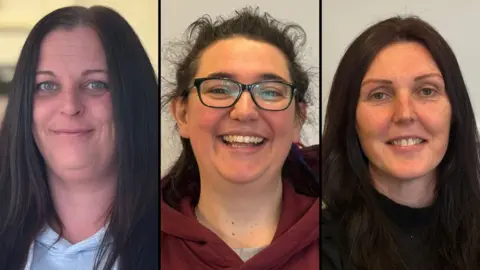
Lindsey Barrington, from Darlaston in the West Midlands, has three children and two of them were diagnosed as autistic.
Two of her trio have struggled in mainstream education and were absent from school at times.
The 45-year-old said she struggled to find support when her eldest daughter was first diagnosed and "had to educate [herself]. "
She decided to set up the Diverse Minds Community Interest Company (CIC) in Walsall, to help other families facing the same challenges.
'Better understanding needed'
Kim Lewis, 36, who is also part of the CIC, said her 13-year-old son struggled when he went to secondary school.
"Even though there was an inclusion hub there and there were people trained, nobody could spot the troubles he was going through," she said.
The issues led to him being absent from school.
"It was just too traumatic for him," she added.
Another CIC member, Carrie Garrington, 38, said "better understanding is needed from every single teacher".
Her daughter has sensory issues, processing feelings of touch differently to most people, which her mother said meant some clothes felt uncomfortable or painful to her, so she cannot wear full uniform.
Garrington said sometimes a teacher who did not know her daughter would shout at her about it.
"Why are you shouting at a child you don't know" she argued. "You've just made the situation a whole lot worse."
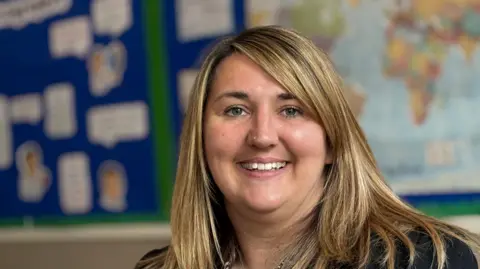
At Bristnall Hall Academy in Oldbury, a quarter of their 1,100 pupils have SEND and are taught alongside children who are neurotypical.
Principal Louisa Simcock believes being inclusive, as the government plans, can work with the right support in place.
"We have children with a real wide range of vulnerabilities," she said. "We support those children as individuals, so that they flourish and grow and are able to access the wider world post 16. "
The school was rated outstanding by Ofsted in 2023, with inspectors praising it for being "truly inclusive".
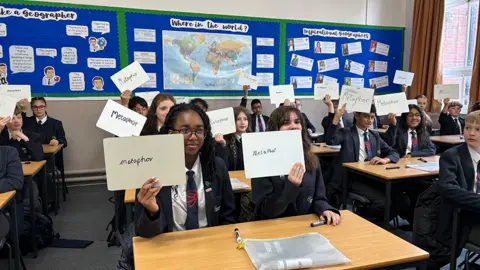
Simcock said they made use of a wide range of technology to help SEND pupils, including laptops, reader pens - which help with reading text - as well as extra support from adults.
"It might also be in a classroom that a child is more independent with some of the tools that they're using," she added.
"So it might be that they have a red or green card out in front of them and that's alerting the teacher that they do or don't understand something when they may feel a little bit more apprehensive about sharing that at that given moment.
"It might be that some of our children need some fidget toys or things to help them with their stimming and that's there to help them regulate so that they're able to access that content that's being delivered in that moment."
With additional reporting by Jonathan Fagg.
Follow BBC Birmingham on BBC Sounds, Facebook, X and Instagram.
