Join EU migration pact to tackle small boats, says Ed Davey

 EPA
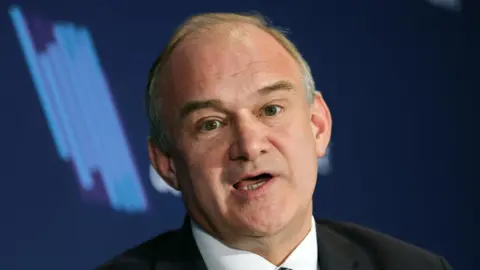
EPAThe UK should join the EU's new Migration and Asylum Pact as a way of tackling small boat crossings across the Channel, Liberal Democrat leader Sir Ed Davey has said.
The agreement, which came into force in June, aims to speed up the asylum process, increase the number of irregular migrants returned to their home countries and spread responsibility for asylum seekers across the EU.
Sir Ed argues that signing up to the pact would allow the UK to return asylum seekers to the first EU country they entered, thereby "destroying the business model" of the gangs behind the crossings.
Labour said the government's efforts to work with European countries to tackle small boat crossings were "bearing fruit".
A Labour spokesperson said more than 47,000 crossings had been prevented in two years and 70,000 people with no right to be in the UK had been removed.
"There's more to do and that will only happen by working in collaboration with the EU," the spokesperson added.
So far this year, more than 14,000 people have arrived in the UK by small boat - a fall of 43% compared to the previous year.
The EU's new pact, which was nearly 10 years in the making, introduces mandatory screening and an updated database to track those arriving in the bloc.
Under the rules, EU nations must take in migrants from those member states that see the highest number of arrivals - such as Italy and Greece - or instead provide extra funding or resources.
Joining the agreement would require the UK to accept some asylum seekers from the EU. However, the Liberal Democrats argue numbers would be lower than those currently coming to the UK by small boat and that they would be screened before entering the country.
The party says the scheme would save British taxpayers money, with the cost of participating - around £100m a year - amounting to a fraction of the £5bn spent on a "failing asylum system".
Sir Ed said: "We have a plan that would finally end the small boats crisis: a pact with every EU country that will allow us to return people who come over the Channel, taking away the major pull factor that [Reform UK leader Nigel] Farage and co created and destroying the business model of the criminal gangs."
Like the Liberal Democrats, some Labour politicians have made the argument that Brexit led to an increase in small boat crossings.
Reform UK has previously dismissed such claims as "complete misinformation", arguing that EU membership "did nothing to make it easier to return asylum seekers".
The EU pact replaces previous agreements - including the Dublin Regulation which allowed countries to return asylum seekers to the EU country they initially arrived in.
But the protocol had been criticised for placing a disproportionate burden on countries receiving the bulk of the arrivals.
The new so-called solidarity mechanism creates a pool of about 30,000 asylum seekers to be redistributed across the 27 member states.
Instead of accepting asylum seekers, participating countries could instead choose to pay €20,000 (£17,000) per person not taken.
Arrivals must be registered, with identity checks to prevent those who pose security or public health risks from entering the EU undetected.
People aged six and above would have their biometric data collected, with information - such as fingerprints - stored on the Eurodac database.
The UK government has previously said it would like to regain access to the database, something it lost following Brexit.
Joining the pact could prove tricky for the UK and would require unanimous approval from all EU states.
The government would also have to pass new laws to implement the pact and could have to standardise its procedures with the EU bloc.

Sign up for our Politics Essential newsletter to keep up with the inner workings of Westminster and beyond.
