Residents reflect on why UK's best city is special

 BBC
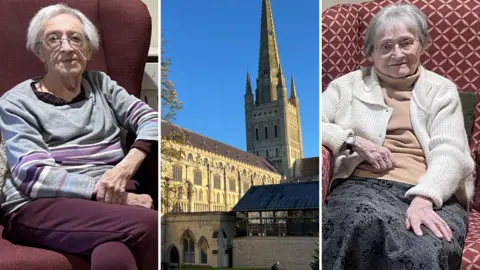
BBCNorwich has been named the best place to live in the UK, but for people who have lived in the city for nearly a century the recognition has come as no surprise.
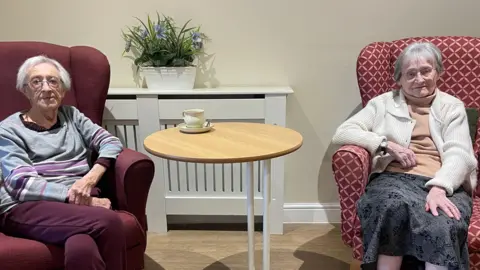
From walking through the grounds of the 900-year-old Norwich Cathedral to the atmosphere at Carrow Road, residents at Redlands House Care Home in Hellesdon, Norwich, say there are many reasons it is known as the "fine city".
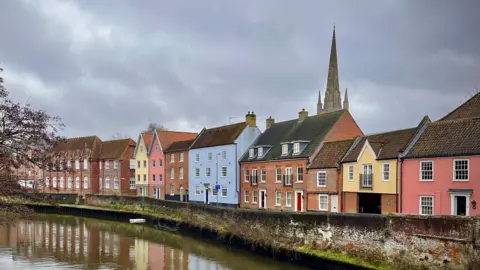
Norwich beat off competition from 71 other locations in the Sunday Times annual list, with judges praising the city for its "historic character" and "urban buzz".
June Turner, 96, who was born in Norwich and has lived in the city all her life, said: "I've not been to a lot of places but I've always been happy here. I wasn't surprised."
 Walking Tractor / BBC Weather Watchers
The competition's panel assessed areas on a range of factors such as schools, transport and green spaces.
Brenda Durnham, who moved to Norwich from Lowestoft, Suffolk, during World War Two and has lived in the city for 88 years, said its history helps make it special.
"There are a lot of old places [in the area]," she said.
Durnham remembers there used to be lots of industry and factories in the Hellesdon area, but many of the sites have now closed.
For Turner, growing up near Norwich Cathedral and walking through its grounds are among her happiest memories.
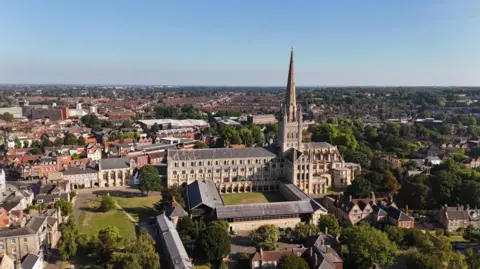
"It was lovely. Where we lived, I mainly walked through Cathedral Close and that was lovely, it is a lovely part of Norwich," she said.
 Shaun Whitmore/BBC
Cathedral Close is part of the grounds of the cathedral, which was founded in 1096 and remains one of the most picturesque parts of the city.
But while Norwich has always been a great place to live, Turner said there have been lots of changes, particularly along St Stephens Street.
"That was where all the shops were and I think that has changed a bit," she said.
"It is not so top market as it used to be," she added.
Brian Dent, 79, said he would recommend Norwich after living in the city all of his life.
Dent used to work at the Jarrold printing works next to the River Wensum in Whitefriars. The firm's printing arm began in the 1800s and became a major employer in the city until it shut in 2006.
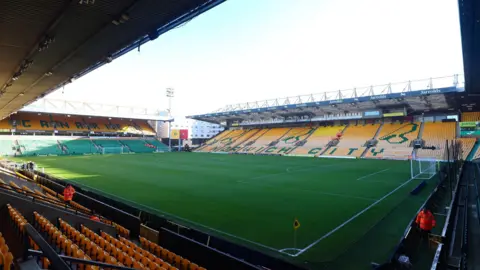
As a lifelong Norwich City FC fan, Dent remembers watching some of the biggest games as the club rose in the leagues in the 1960s from the old south stand – a section of Carrow Road known for its lively atmosphere.
"I was a Barclay boy," he said.
Outside of football, Dent said he spent his nights dancing at the Samson and Hercules nightclub in Tombland and going to the ABC Cinema in Prince of Wales Road, which opened as the Regent Theatre in 1923.
'A century of major change'
 PA Media
Paul Dickson, a historian and tour guide from Norwich, said the three residents would have lived through many significant moments in the city's history.
In the 1920s many of Norwich's parks, such as Eaton, Wensum, Waterloo and Heigham, were created and they remained an important part of why people enjoy living in the city, he said.
New council estates were also built around that time, he added, which provided improved housing.
In the 1930s works to Market Place and the construction of City Hall was a "major development" for the city centre, he added.
Norwich was damaged during bombing raids in World War Two, with many houses being destroyed along with larger buildings such as the Caley Mackintosh chocolate factory.
"Norwich was much more of an industrial city throughout the 20th century, dominated by shoe factories employing up to 15,000 people and other manufactures like Colmans," he added.
"Entertainment went through many changes as well."
At one point there were more than 10 cinemas and some of the city's venues, such as The Orford Cellar, hosted bands including Cream, Pink Floyd and Jimi Hendrix Experience, Dickson said.
Follow Norfolk news on BBC Sounds, Facebook, Instagram and X.
