Two puffins rescued after Storm Chandra return to wild

 SSPCA
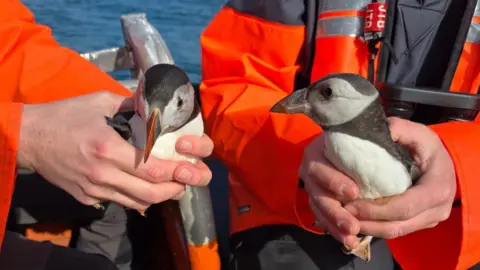
SSPCATwo puffins that were rescued during the stormy weather have been returned to the wild.
The birds were discovered a week apart on beaches in Fife following the fallout from Storm Chandra in January this year.
Now Danny, who was found in Anstruther, and Arnie, who was found in St Andrews, have been given a new home together on the Isle of May.
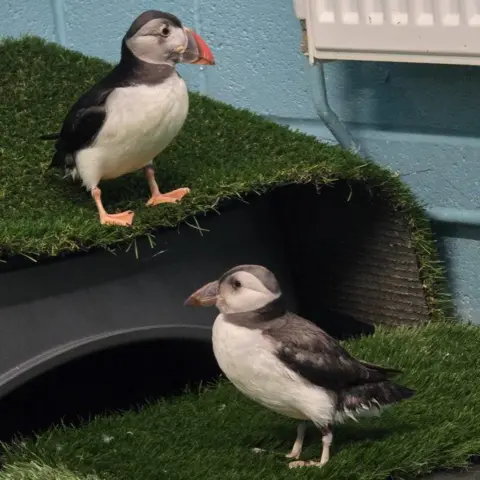
The birds spent nearly three months at the National Wildlife Rescue Centre in Fishcross recovering and are now thriving on the island famous for Puffins in the Firth of Forth.
 SSCPA
SSCPAThe puffins were weak and starving when they were rescued.
Arnie, who was found on 7 February, had not lost his appetite and was self-feeding immediately.
However Danny, found on 28 January, had no appetite and blood tests confirmed he had an infection. Once he recovered, his appetite returned.
During the weeks spent at the rescue centre, the birds were routinely washed by the staff members to to assess their waterproofing.
It is common for seabirds to lose their waterproofing due to a lack of natural preening and contamination as a result of necessary handling by centre staff.
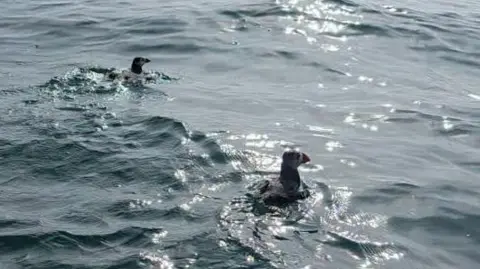
The centre then contacted an Isle of May boat tour company to arrange their release back into the wild.
It was agreed that the pair could be taken halfway over to the island and released on the water last month.
They were not taken directly to the island in case they were caught by a predator.
 SSPCA
SSPCAThe positive news came after thousands of seabirds washed up dead across Europe earlier this year.
Dozens of the puffins had washed up on beaches across Scotland - about 1,000 miles from their winter home in the North Atlantic.
When large numbers of birds wash up dead or dying on beaches, usually due to winter storms, it is a natural phenomenon called a wreck.
Bird Life International has said the incident could be the worst "seabird wreck" to hit Europe in a decade.
Emily Burton, conservation manager at the Scottish Seabird Centre in North Berwick, previously told BBC Scotland News that puffins were already facing "huge pressures" caused by climate change.
She said: "Puffins only return to land for a short period each year to breed, spending most of their lives out at sea, so finding them washed up on our beaches in winter is concerning.
"Seabirds can struggle to survive during periods of stormy weather, as it makes it harder for them to feed.
"Changes to our oceans driven by the climate crisis, threats from disease, and unsustainable fishing practices can all reduce food availability or contribute to these tragic mortalities."
