'Why fantastic swan count was must see on UK trip'

 BBC
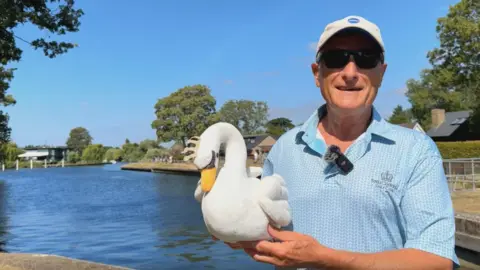
BBCA tourist from Australia has described how swan upping, the annual royal census of the mute swan population on the River Thames, became a highlight of his trip to the UK.
Colin Thomas, who was born in Epsom in Surrey but now lives in Canberra, said he was told about the medieval tradition while planning a boating trip through his former home county.
"When we heard about it we just had to pay a visit - it's fantastic to see vital wildlife being protected like this," he said.
Thomas was one of many who have gathered to watch the five-day event, which started at Sunbury Lock this week.
 PA Media
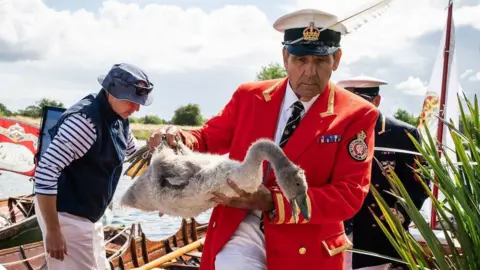
Taking place during the third week of each July, swan upping sees six traditional rowing skiffs travel through the likes of Shepperton Lock and Penton Hook Lock before ending up at Abingdon Bridge in Oxfordshire, 79 miles (127km) away.
Dressed in distinctive scarlet uniforms, teams count, weigh and examine the adult birds and cygnets for injury or disease.
All cygnets are then ringed, allowing their movements to be traced in future.
Just 86 cygnets were counted in 2024, rising to 115 in 2025, and organisers are hoping for a similar increase this year.
 Getty Images
The King's Swan Marker, David Barber, called the previous growth in population "very positive", despite there having been a fresh outbreak of bird flu over the winter months.
Now on his 34th swan upping, he said cygnets faced a difficult start in life, with risks from predators like birds of prey, foxes and dogs, as well as disease and pollution.
"The conservation of this protected species is very important, as is educating people all about it," Barber added.
"We have a lot of school children who come along and they absolutely love it."
Follow BBC Surrey on Facebook,X and Instagram, and listen to BBC Radio Surrey on Sounds. Send your story ideas to southeasttoday@bbc.co.uk or WhatsApp us on 08081 002250.
