HS2 restores battlefield disturbed during works

 Northamptonshire Battlefields Society
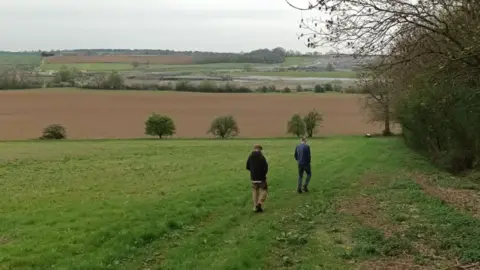
A medieval battlefield disturbed during the construction of an HS2 viaduct has been restored "to more or less its original shape", a historian said.
Graham Evans had criticised the company for using part of the Edgcote battlefield in Northamptonshire as a temporary soil storage site for the project.
However, the Northamptonshire Battlefields Society chair said the rail infrastructure company has "delivered on their promise ahead of schedule, as far as I can tell, so that's terrific".
HS2 said it took its "responsibility to the historic environment very seriously", adding "all works have been undertaken in accordance with full planning and heritage requirements".
 Northamptonshire Battlefields Society
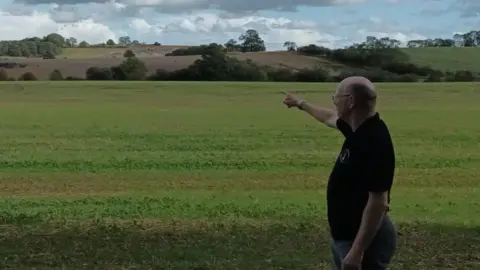
"It just now requires to be grassed and so on to make it look like it did before it was damaged," said Evans.
The landscape is "one of the few battlefields where the medieval landscape" has remained the same since it took place in 1469.
The Battle of Edgcote was the first major action during the second period of unrest in the Wars of the Roses.
Evans estimated a "huge amount" of about 500,000 tonnes of soil - excavated from other sites – would have been stored on the site during its use.
This had "obscured a very important part of the battlefield", which made it difficult for people like him to take guided tours of the site, he said.
"It was behind that bank where the rebel army was concealed at the start of the battle, and so the shape of that ridge line where the earth bank was put was critical to understanding the battle and why it was fought where it was fought," he said.
 Northamptonshire Battlefields Society
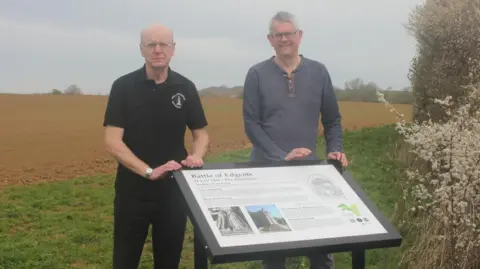
The site was granted registered battlefield status by Historic England, which means it must be considered during planning, but it does not offer any statutory protection from development.
Evans has previously said legislation protecting the heritage assets was "weak" and that if it were strengthened, the work would have been deemed illegal.
The land was acquired by HS2 for temporary stockpile purposes through permitted development rights, and the company previously said an environmental assessment deemed any impact on the battlefield as likely to be "low".
"Medieval battlefields don't always leave a lot of artefacts, but the artefact they do leave behind is the ground itself, so the shape of the hills, the shape of the fields, and the lines of rivers and streams," said Evans.
"We can't do anything about the archaeology that's been lost, but at least we can restore the shape of the hill and the battlefield."
Do you have a story suggestion for Northamptonshire? Contact us below.
Follow Northamptonshire news on BBC Sounds, Facebook, Instagram and X.
