Comey surrenders over charge of threatening Trump's life in Instagram post
Former FBI Director James Comey surrendered to authorities to face charges alleging that an image he briefly shared on social media posed a threat to the life of US President Donald Trump.
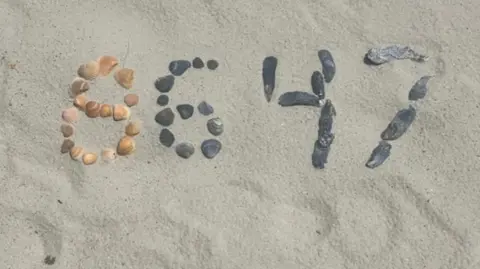
The case stems from a 2025 Instagram post shared by Comey, which contained a photo of seashells on a beach arranged to read "86 47". "Eighty-six" is a slang term for "get rid of", and prosecutors allege it encourages violence against Trump, the 47th president.
Comey denied any wrongdoing, saying he did not know what the numbers meant, and accused the prosecution of political motivation.
This marks the second time the justice department has brought criminal charges against Comey, a longtime critic of Trump.

Comey did not enter a plea or speak during his brief appearance at a Virginia court on Wednesday afternoon.
His attorney, Patrick Fitzgerald, said the former director would seek dismissal on grounds of selective and vindictive prosecution - arguing he was targeted for speaking out against Trump.
Judge William Fitzpatrick read the charges against Comey. He nodded as he was read his rights and later smiled back at his family when he was leaving, the BBC's US partner CBS News reported.
Judge Fitzpatrick denied the justice department's efforts to set conditions of release for Comey, saying they were not necessary, according to CBS.
Prosecutors have charged Comey with knowingly and wilfully making a threat to take the life of - and to inflict bodily harm - on the president, and also, knowingly transmitting in interstate commerce a threat to kill him.
Each charge carries a maximum penalty of 10 years in prison.
In a video statement on Tuesday, Comey said he was determined to fight the charges.
"This won't be the end of it - but I'm still innocent, I'm still not afraid and I still believe in the independent federal judiciary."
Comey's original post from May 2025 contained an image of the seashells on a beach that spelled out "86 47", with the caption, "Cool shell formation on my beach walk".
Following a public outcry, Comey deleted the image and posted a follow-up note on Instagram.
"I posted earlier a picture of some shells I saw today on a beach walk, which I assume were a political message," he wrote. "I didn't realize some folks associate those numbers with violence. It never occurred to me, but I oppose violence of any kind so I took the post down."
Talking to reporters about the charges against Comey on Wednesday, Trump called him a "crooked man".
"If anybody knows anything about crime, they know 86," Trump said. "It's a mob term for kill him. The mob uses that term to say when they want to kill them, they say 86 the son of a gun."
When asked if he believed Comey's social media post was a threat to him, the president replied: "Probably."
"People like Comey have created tremendous danger, I think, for politicians and others," Trump said
Some legal experts - and lawmakers - have questioned the strength of the charges.
Republican Senator Thom Tillis told reporters on Wednesday that he hoped "there's more to it than just the picture in the sand".
"Otherwise, I just think it's another example where we're going to regret this because we're setting a fairly low bar," he said.
Jimmy Gurulé, a former federal prosecutor and former assistant US Attorney General appointed by President George W Bush, said the new indictment was "an embarrassment to the American criminal justice system".
On Wednesday, when asked whether the case will result in conviction, Acting US Attorney General Todd Blanche told reporters that it had been investigated "for the past year".
"If there's a prosecutor in this country that speaks about what a jury will do, they are not living up to their oath," he said.
Blanche rejected the suggestion that there were political motives behind the case.
"People should be very wary of threatening the life of President Trump because that is a crime. Full stop," he said.
In his second term, President Trump has publicly implied that justice department officials should investigate his political adversaries.
Comey was fired by Trump during his first term, after the former FBI director opened an investigation into Russian interference in the US 2016 presidential election.
Since then, Trump has repeatedly called for his prosecution - Tuesday's charges are the administration's second attempt to do so.
He was first indicted by a federal grand jury in late September on charges that he lied to Congress during testimony and obstructed a congressional proceeding.
Comey pleaded not guilty in October before the case was dismissed in November.
US District Judge Cameron Currie tossed the indictment because of prosecutor Lindsey Halligan's "invalid" appointment as US attorney.
Halligan, the prosecutor in eastern Virginia who secured the indictments, was not authorised to present the charges to the grand jury, the judge said.
