What is International Dawn Chorus Day?

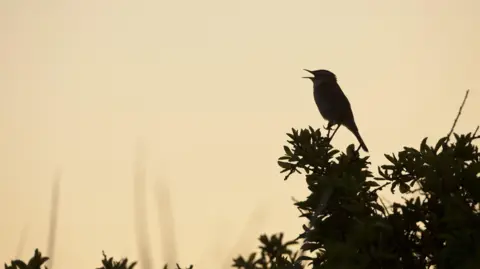 Mark Hamblin
On the first light of the first Sunday in May, the world rises and listens to nature's greatest symphony.
Thousands of people across more than 80 countries take part in International Dawn Chorus Day, which began as an unusual 40th birthday celebration.
One of those taking part this year is 71-year-old Jeff Delve, who leaves a microphone outside his window in Canewdon, Essex, to record birdsong.
Due to cancer, he is unable to get out of bed by 05:00 BST, but he listens back later.
"I have some fantastic dawn chorus recordings that I've kept just because they are so evocative," he said.
So where did the idea originate? And why are so many people willing to set their alarms for 04:00 to join in?
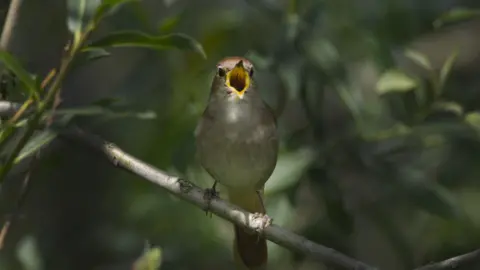 David Tipling
Winter is a quiet time for birds - they pause their singing to save energy while they forage for survival. Robins are the exception, singing all year round.
As daylight hours increase, their hormones change and birds turn their attention to breeding, and the songs gradually return over several weeks.
Essex Wildlife Trust (EWT) is hosting four events up and down the county, including in Walton-on-the-Naze, Basildon, and two in Colchester.
It says not all birds get out of bed at the same time.
An hour before sunrise, the nightingales, robins, song thrushes and blackbirds set the tone.
As the light increases, wrens, blackcaps, chiffchaffs and great tits join in.
Last to rise are birds like chaffinches, and eventually the songs combine until it sounds like a single choir.
Who made it a national day?
 Nerys Jones
The concept was born in Birmingham in 1987, when broadcaster Chris Baines was thinking about how to celebrate his 40th birthday.
He invited his friends - wherever they were - to wake up at 04:00, sit in their gardens and listen for the first sound of the birds.
He said he was "astonished" that so many took part and decided it was "too good an idea to waste".
Baines picked up the phone to BBC Radio 4 to tell them that the first Sunday of May was an international event.
"Because if the BBC says it is, then it is," he said.
Now 78 years old and living in Wolverhampton, Baines explained that it spread from there.
"It's still the same basic, simple idea. The dawn chorus is free, it happens at this time of year in the Northern Hemisphere," he said.
"It's at its best because, in our case, the migratory birds have arrived to join the resident ones.
"And all you really need to do, wherever you are, is get outside before it gets light and sit and listen.
"You don't need to know the name of anything, you just need to immerse yourself in the glorious sound."
Why 4am?
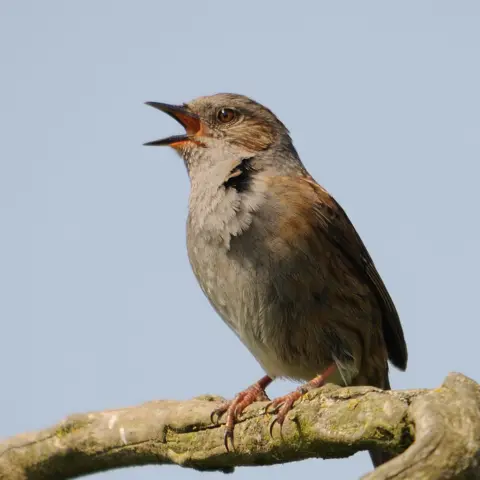 Amy Lewis
Experts believe that a bird's song travels 20 times further in the early hours, when the air is still.
The dim morning light is not ideal for finding their breakfast and it also provides a bit of cover against predators.
The RSPB says birds feel more comfortable revealing their location to "announce themselves" to potential mates and to migrant species arriving through the night.
'Evocative'
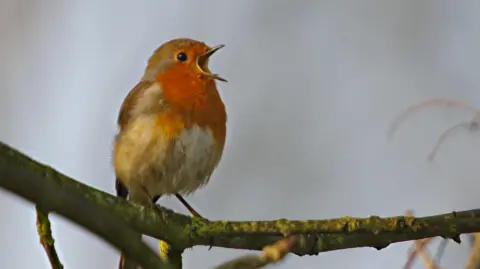 Neil Aldridge
Birdwatcher, Delve, started recording migrant birds flying over his house at night, since cancer took away his ability to eat and drink - meaning he needs to spend up to 10 hours in bed.
"It's called nocturnal migration logging, and effectively you record overnight, so I put it on, say, 8 o'clock in the evening... I would switch it off sometime in the morning," he said.
"It does mean that I get a big, big chunk of dawn chorus on my recording.
"I can run back through that and play sections out of it back to myself and that's just brilliant."
Delve - who volunteers with the RSPB and Essex Wildlife Trust - thinks the international date is "fantastic", but said he was listening to dawn choruses every morning between early April and June.
Do you have a story suggestion for Essex? Contact us below.
Follow Essex news on BBC Sounds, Facebook, Instagram and X.
