How pain treatment transformed cancer patient's life

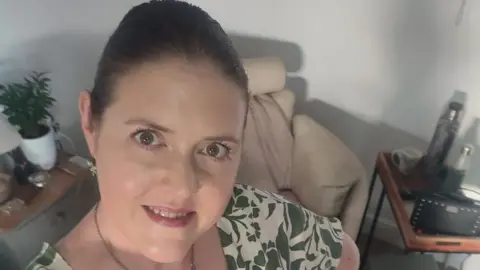 Rachael Johnson
A woman says a groundbreaking pain relief treatment has helped transform her life after she was diagnosed with bowel cancer.
Rachael Johnson, 41, from Plymouth, was diagnosed with the disease in 2023. She said an intrathecal morphine pump, fitted by the Chronic Pain Management Team at Plymouth's Derriford Hospital, has helped her manage severe pain and continue with cancer treatment.
Three years later, she said she was living a "completely normal" life.
She added: "I can do just about everything, really, and I am not in any pain at all. I was basically stage four [cancer] and they were saying it wasn't curable, only treatable... and then, all of a sudden... I am not on palliative care any more."
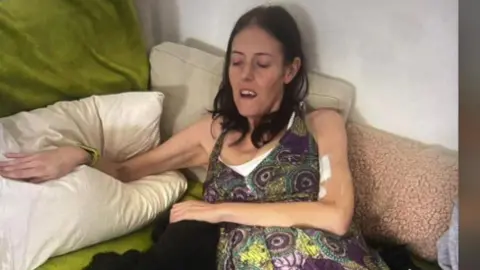 Rachael Johnson
Rachael's mother Sue Johnson explained: "It's revolutionized Rachael's life because the amount of morphine I had to administer to Rachael before she had access to the pain pump was too much.
"I knew her body was never going to cope with it all."
Sue said that Rachael's body was deteriorating but the pump allowed her to eat properly and cope with the treatment.
She added: "I am shocked that a pain pump and pain management can make so much difference to keeping someone alive. Without that, you get eaten up by the pain."
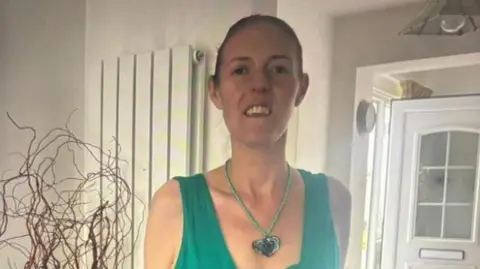 Rachael Johnson
Nurse consultant Lindsey Pollard said patients referred to the clinic often lived with persistent pain that had continued beyond the point of natural healing. Some had been in pain for many years.
She said patients could be offered a range of treatments, including injections, medication, physiotherapy, clinical psychology and implants.
Rachael is one of 25 patients who have received an intrathecal pump through the service.
The device, which is surgically implanted beneath the abdomen, delivers medication through a tube into the spine.
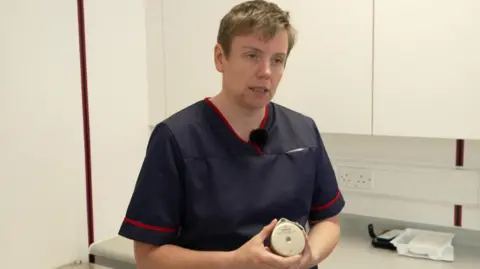
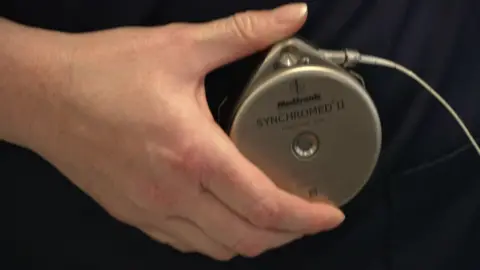
Pollard said: "This pump allows us to infuse medication into a targeted area within the body so we can get very good pain relief for the patient.
"The morphine in her is tiny amounts, but, because it doesn't go into the bloodstream or through the brain, the side effects are completely eradicated."
Ms Pollard said other patients had experienced similarly life-changing results.
"It's just amazing to see patients like Rachael who've been unwell going off on holiday and enjoying their life.
"We've got patients who are back on horses, back on tractors.
"They are out living their lives."
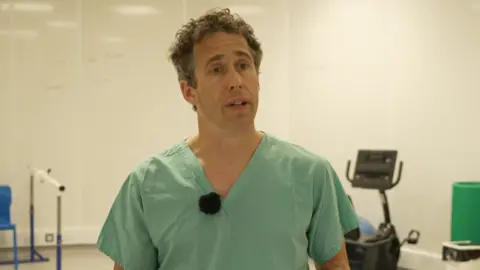
The team at University Hospitals Plymouth NHS Trust is one of only a few in the UK to offer intrathecal pain pumps.
Anaesthetist Dr David Hutchins, who works as a consultant for the Chronic Pain Management Team, said: "Rachael is one wonderful example of a cohort of patients that me and other centres around the world are seeing."
He added: "It needs to be caveated. This is a specific management for very few patients, unfortunately, but it changes people's lives dramatically."
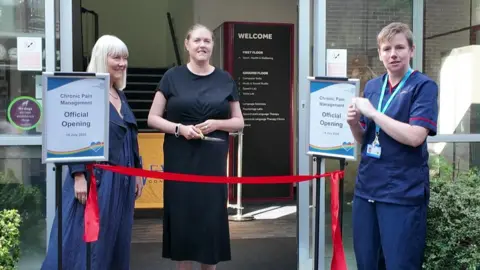
The service moved to a purpose-designed space at Plymouth Marjon University in March as part of a collaboration between the university and the trust.
The trust said the additional space would allow the team to develop new programmes focused on helping patients manage pain and improve their overall wellbeing.
Johnson and her mother took part in the new unit's official opening ceremony.
She said she hoped other patients would benefit in the same way she had.
She added: "As long as I am cancer free until 2029, they can take the pump out.
"Usually people have it to get them through the last part of their life, but, for me, it's been totally different."
