What is a nurdle and why do they matter?

 Fidra
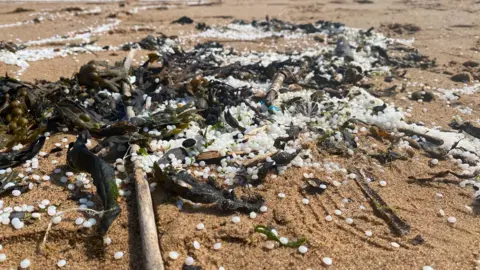
FidraTonnes of plastic pellets, known as nurdles, washed up on the coastline following a ship collision, triggering a major clean-up operation. But what are nurdles and how will they impact north-east England in the long-run?
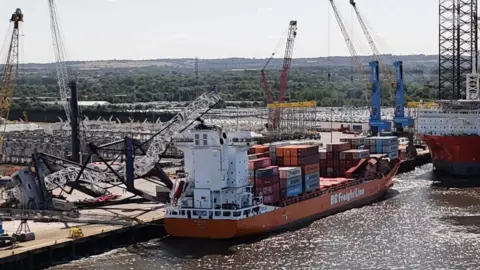
On 19 July, the ship Wind Orca crashed into a container ship at the Port of Tyne in South Shields.
Initially, the damage looked to extend only to the ships and a dockside crane, which subsequently collapsed.
One person was taken to hospital with injuries.
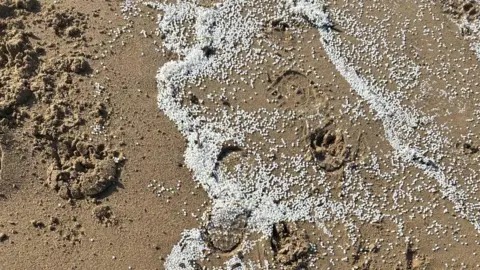
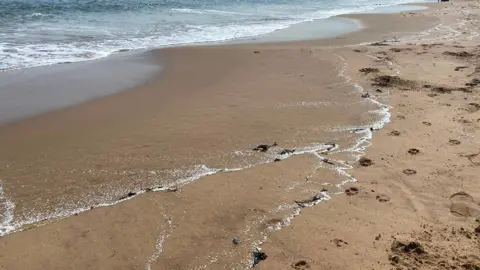
But in the coming days, nurdles began washing up on the coast, first at Littlehaven in South Shields before travelling across the mouth of the Tyne to North Tyneside, up to Northumberland and down to Seaburn, Sunderland.
Environmental charity Fidra puts the number of nurdles at about one billion.
 South Tyneside Council
Fidra runs a project called The Great Nurdle Hunt.
Senior project manager Heather McFarlane travelled to the North East on Wednesday to see the extent of the damage for herself.
From Littlehaven Beach, McFarlane explained: "Nearly everything that is made of plastic starts life as a nurdle."
The North Sea is on a plastic trade route, McFarlane said, and the pellets came from one of the vessels transporting them.
But spills like this one are not the only way they get into the environment.
"When they're produced, when they're transported, and when they're converted into plastic products, then nurdles can be lost at every point in the supply chain," McFarlane explained.
Fidra found there was more than a thousand tonnes of nurdles lost in the UK every year, just from everyday operations of the plastic industry.
 Fidra
FidraFollowing the spill, the Environment Agency (EA) said the risk to public health was low, but the same cannot be said for the impact on the North East's wildlife.
"They're small enough that they can be eaten by seabirds and fish, and because of the size and shape of them they can look like fish eggs," McFarlane said.
"So they even look like food and this means that if you have a seabird, like a fulmar, they've been found with plastic pellets in their stomach.
"It can make them feel full when they're not full of food, they're full of plastic, and that can cause starvation."
'Plastics are everywhere'
Dr Geoff Abbott is a reader in organic geochemistry at Newcastle University and said most nurdles can be classified as microplastics because they are less than 5mm.
He said there was a low immediate toxic risk to humans, however if the pellets remain in the coastal environment for a long time there could be more significant impacts.
"These pellets have continually been weathered," Abbott said.
"So they break down into smaller and smaller particles... and if there's continuous uptake, these microplastics will be going into the food web.
"They get into fish and then if we are eating the fish, we will be consuming these microplastics."
Abbott said even without significant events like the South Shields nurdle spill, this was continuing to happen.
"Plastics are absolutely everywhere, they're in our clothes, they're in our buildings," he said.
"The thing about plastics is they are incredibly useful, the problem is that they're being used now more and more for single-use applications where they're just used once and then they're just thrown away."
 Thomas Ord
Unlike in the EU, there is no regulation to prevent plastic pellet loss in the UK, McFarlane said, and suggested solutions such like filters in drains and sturdier packaging could make a considerable difference.
"The International Maritime Organisation has got voluntary measures that you can do on a ship, but those need to be mandatory so you have to package them better and stow them more safely so if there is an accident they don't get out into the environment and they're easier to clean up," she said.
Abbott said there had been legislation to reduce the use of plastic particles being used, for example in the cosmetic industry.
"The legislation is increasing, but it's still not effective enough," he said.
A spokesperson for the Environment Agency said they were "deeply concerned by the significant amounts of plastic nurdles continuing to wash up on" beaches.
They said while local councils were responsible for determining how the clean ups are carried out, the person or company responsible for the pollution will be the one to pay for it.
"We will carry out a thorough investigation into the circumstances surrounding the incident to establish the facts and consider whether any regulatory action is appropriate," they said.
Response time criticised
Labour North East mayor Kim McGuinness said she had met with Port of Tyne and written to the owners of the vessels involved in the collision so they "put their hands in their pocket right now and support the clean up".
The Port of Tyne said its response plan had been activated "immediately" and a floating barrier had been put around the container ship to help prevent further spills.
But Labour North Tyneside Mayor Karen Clark criticised the port's response time.
 South Tyneside Council
McGuinness has also warned the clean-up would be "long and expensive".
"Sadly, it is already clear this looks like the worst incident of nurdle pollution in Europe," she said.
South Tyneside and North Tyneside councils said they have been working long hours around the tides to clear the beaches.
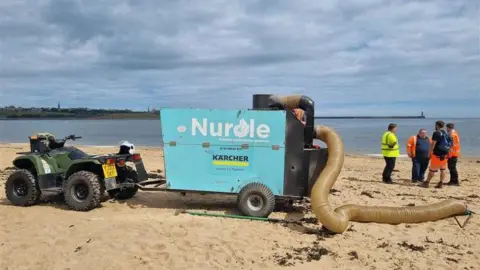
On Thursday, the charity Nurdle arrived in the North East to help with the clear up effort.
Using "nurdle machines", which look like vacuums, they began sucking up the plastic pellets and sand.
South Tyneside Council said the pellets will then be sieved out of the sand so they can collate exactly how many have been found on each beach. The sand will be returned to the beaches.
Members of the public are still being urged to keep away from the clean-up.
But director of environment at North Tyneside Council, Samantha Dand, said it was still safe for people to enjoy the region's beaches.
"Make sure you're following the advice that's obviously on our signage, that's on our council website," she said.
"Make sure though that you do keep dogs on leads because these pellets can be quite hazardous to wildlife and animals and yes, just come down and enjoy our fabulous beaches."
