PM challenged to song battle by health campaigner

 Suzanne Harley
Prime Minister Andy Burnham has been challenged to a "rock battle" by a health campaigner.
Ashleigh Harley was diagnosed with Ehlers-Danlos syndrome (EDS) in 2020, which causes her joints to dislocate without warning.
The 27-year-old believes she has lived with the condition since she was 12 and said her health became so bad that she needed life support after becoming unable to eat, walk or speak.
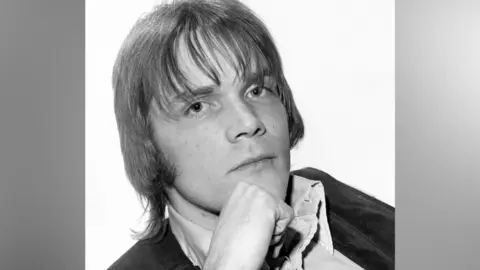
In a bid to raise awareness of EDS, she plans to duet with 1960s singer Brian Hyland outside Downing Street, performing his hit Itsy Bitsy Teenie Weenie Yellow Polkadot Bikini.
Harley has already released her own version of the song to raise funds for her charity, Save Our Lives, but the unlikely musical double act will perform together on Saturday.
"Will [Burnham] be there? We've asked him and challenged him to a rock battle, but we've not heard anything back," she said.
"Apparently he was a rocker back in the day.
"I'm doing the first solo, and Andy Burnham, you're very welcome to do the second solo."
 Suzanne Harley
Hyland, 82, promised a "joyful performance".
"It's a happy song. When it comes on the radio, people start smiling - it's just one of those songs," he said.
Harley's story had touched him "immensely", he said, describing it as a "tragic situation" in which children have "their childhood taken away".
EDS are a group of rare inherited conditions that affect the tissue conecting parts of the body, such as in tendons and ligaments, the NHS says.
Harley, from Luston, Herefordshire, said she first began suffering from the effects of her condition at the age of 12, when she experienced her first seizure.
"I got seizures every day, which made school completely impossible because I was collapsing every day," she remembered.
"I couldn't see. I was getting paralysis quite badly, so I couldn't use my hands. I couldn't write down stuff.
"That was the first episode. That was when we realised something was wrong.
"We went down every single different route, and the doctors couldn't figure out what it was.
"There was the stipulation of, young people don't get ill, therefore, you know, just go away and get on with it. It'll be all right."
Her EDS developed into severe gastroparesis, where food passes through the stomach more slowly than it should and became an eating disorder.
"It basically means there is a missing genome in my DNA, so my body isn't built fully as a normal person's body would be," Harley said.
"In my case, it's then developed into lots of other conditions.
"The longer I've gone untreated, the worse it has become because I've then developed lots of other conditions. It's just made life harder and harder."
Her condition would not have progressed as far had she received "proper treatment" or been diagnosed sooner, she believed.
The Department of Health was approached for a response.
Harley was diagnosed with EDS after her family paid for private healthcare, having explored what she described as every option available through the NHS.
"So it's there, the treatment is there, the medication is there, it's all there - you just can't access it on the NHS," Harley claimed.
Going without a diagnosis for a decade had a profound impact on her childhood, Harley said.
"It was 10 years without a diagnosis. It ruined all my youth, all the fun things you get to do as a kid - you go to school, you have friends, go on a date for the first time, have a job," she said.
"All that was just not possible.
"But as I've got healthier and I've been able to connect with other people from the same situation, it's really shocking how many other young people are just like me, having their whole youth stolen from them, because they can't get diagnosed."
Follow BBC Hereford & Worcester on BBC Sounds, Facebook, X and Instagram.
