Day trippers urged to support local businesses

 BBC
BBCPeople who live in south-west England are being urged to support their local tourism businesses under pressure from increased costs.
The South West Tourism Alliance said footfall was good on the first bank holiday weekend of the season but accommodation providers were struggling.
Chair Alistair Handyside said overnight booking were within 1-2% of last year at a time when businesses faced increased rates, wage and national insurance costs.
He urged locals to do their bit to keep the industry going: "We have the most amazing pubs, cafes, restaurants, farm shops... Let's make sure that we use them as the communities that live down here because we need them to stay, for us to enjoy as well."

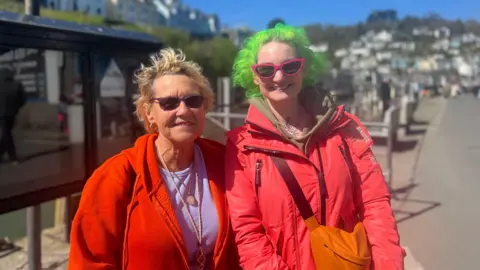
Plenty of locals in Looe were doing just that.
On Friday, clad in winter coats and bobble hats many braved the chilly weather to eat their fish and chips on the beachfront, protecting it from both seagulls and the drizzle.
Anita Large said her family visited the town every Easter from Plymouth: "We were coming whatever - bad weather, fish and chips. We'll go to the pub in a minute."
Those who chose to visit the town on Monday were in for significantly bigger crowds - the sun was shining and despite a brisk wind, people were making the most of it.
Day trippers Louisa Simcox and Angela said the breeze would not put them off a hummus, dips and creme egg picnic on the beach.
Simcox said: "I think it's important to visit places near where you live and even if you to go and get a cup of coffee, it's still bringing money into these places, which at the minute is really important."
Alice Duncan, who lives near Looe, was happy to see it so busy.
"We try to stay as local as possible," she said.
"We spend days at the beaches, eat in the cafes, it definitely helps the economy as well."
'Quite a pile on'
Handyside said there had been a reduction in the number of overnight visitors to the region over the last three years and "the pressure is enormous".
He said: "The big problems are increasing business rates, the increase in minimum wage [and the] increase in national insurance all at the same time, which creates quite a pile on."
He said it meant profit margins were reduced and therefore businesses would not be able to invest.
"We really do need to see the government starting to take its foot off the tax pedal on hospitality businesses," he added.
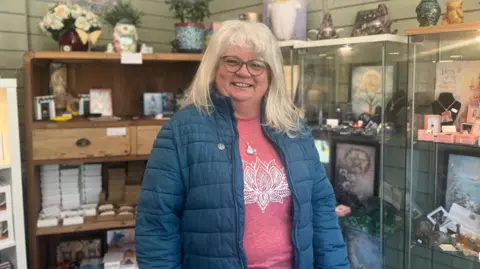
Claire Hall, who runs the Sweet Pea Holistic Healing crystal shop, said it had been a "rough old winter".
"It's been really bleak up until now and I've been quite worried financially," she said, adding Easter had been a "welcome break with a lot of people about".
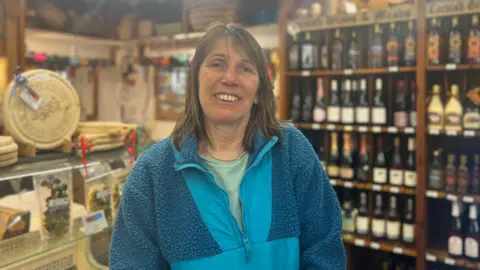
Allison Parritt, from the Purely Cornish farm shop and deli, agreed: "It's really bucked up and there's a lot of people around and they seem to be wanting to buy local produce, which is very good for us.
"We are just hoping that the season will carry on like this."
She said she wanted the government to do more for small businesses.
"It'd be nice if they could look at smaller businesses and not categorise us as along with the larger businesses and put some sort of easement on it to make it a little bit of easier for us to keep going and along with the rates - they could be sort of looked at and that would help I think a lot of small businesses," said Parritt.
Further up the coast at another tourism hotspot, there was hope that global events might lead to more holidays at home.
Jack Higgins, from Torquay Watersports, said people had been wrapping up warm for trips to see marine wildlife.
"Lots of people have told us they've chosen to arrange holidays down to Devon," he said.
"It's obviously a popular location to come down here, given that there's uncertainty, difficulty, maybe booking flights, costs changing with exchange rates and things like that.
"I mean, it's a beautiful part of the world, why not come and visit?"

A government spokesperson said in response: "We have the right economic plan - we're reforming business rates to back hospitality, with a £4.3bn support package to limit bills rises, alongside capping Corporation Tax at 25%, cutting red tape and taking action on the cost of living to boost the sector.
"Increasing the National Minimum Wage boosts pay for over 200,000 young workers, and employer NICs are lower when hiring under‑21s."
