Ram sales go ahead despite bluetongue disease restrictions nearby

 BBC
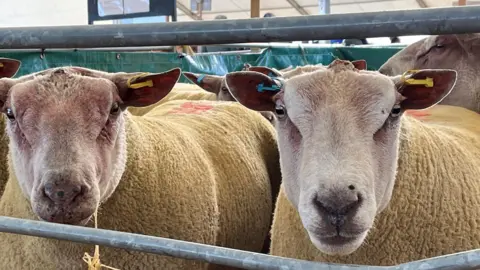
BBCThe biggest single-day ram sale in Europe is set to take place in the Scottish Borders despite disease restrictions imposed on much of neighbouring Dumfries and Galloway after cases of bluetongue were detected.
More than 4,300 rams across 17 breeds will go under the hammer in Kelso with more than £5m expected to change hands.
A new restricted zone came into force in south-west Scotland on Thursday meaning livestock such as cattle, sheep and other susceptible ruminants will still need a licence if they are being moved to the rest of Scotland.
The Border Union Agricultural Society said it was creating logistical challenges for some breeders but strong entries - up 9% on last year - meant it would still be a major day for sheep farming.
Breeders and buyers from all over the UK descend on the Springwood Park showground for the ram sales which go back nearly 190 years.
Organisers said they had been monitoring the bluetongue situation closely and advised livestock keepers to check the Scottish government website for the latest advice.
They said everyone should follow the guidance on movement restrictions and also take note of the changes to restrictions announced on 10 September.
Kelso is actually closer to the longer-standing restricted zone for the disease in England and Wales than it is to the Scottish one.
A number of smaller agricultural events in the area have cancelled their sheep and cattle sections in recent weeks following the outbreak.

A temporary control zone was put in place for much of Dumfries and Galloway after the virus was recorded in livestock in Scotland for the first time at a site in Creetown last month.
Experts believe that midges infected with the disease were blown over the border from England, where there are many more cases.
It became a restricted zone on Thursday - joining England and Wales - and the restrictions will only be lifted once the region has been free of the disease for two years.
The most recent figures show bluetongue serotype 3 (BTV-3) has infected 64 cattle and 15 sheep at 20 farms in Scotland since the first case on 8 August.
They are located around Newton Stewart, Lockerbie, Castle Douglas, Kirkcudbright, Dalbeattie, Dumfries, Annan, Gretna, Canonbie, Twynholm and Gatehouse of Fleet.
If an animal is showing clinical signs of bluetongue, it must be reported immediately to the Animal and Plant Health Agency.
BTV-3 does not affect people or food safety, but it causes a high rate of death in infected sheep and fertility problems in infected cattle.
Symptoms include nasal discharge, redness and swelling of the lips, nose and muzzle, lameness or reluctance to stand, a decrease in milk production and diarrhoea in cattle.
