Patient 'failed' by breast cancer diagnosis delay

 Norman Taylor
A former patient of disgraced surgeon Ian Paterson was failed by a delay in her breast cancer diagnosis before she became his patient, medical experts claim.
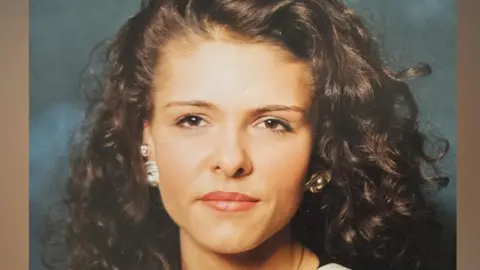
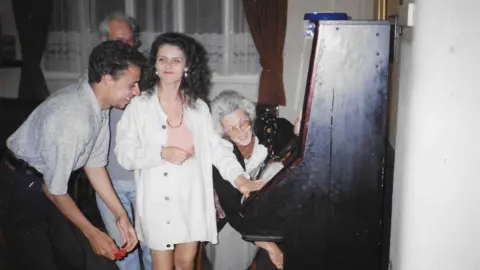
Tracey Taylor from Solihull was 29 when she died in December 1999. She is believed to be the youngest of 68 women whose deaths are being examined by a coroner investigating their treatment by Paterson, who was jailed over his surgeries in 2017.
Several medical experts assisting the inquests have been critical of the time it took for her to be diagnosed with cancer, claiming a months-long delay.
Despite several criticisms of her care, three such professionals said they believed adequate treatment would not have cured Taylor of the illness.
The trio are among a team helping the coroner to navigate the 68 inquests to determine whether the woman's deaths were unnatural as a result of Paterson's treatments.
Professor David Miles, a professor of medical oncology, told the coroner it was "possible but not probable" that Taylor's life would have been prolonged, but that an earlier diagnosis could have meant a "completely different conversation" regarding her treatment.
Rick Linforth, an oncoplastic breast surgeon, believed it was probable her life would have been extended, but not by more than a few months.
Additionally, a report from Professor Nigel Bundred read: "It is likely that she would have died anyway as she had an aggressive tumour and early metastases in her spine prior to [her] mastectomy."
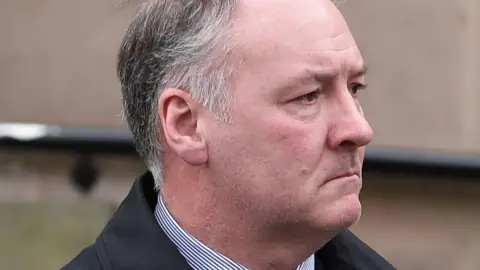
Paterson was jailed for wounding patients with botched and unnecessary operations. He will be eligible for automatic release next year when he reaches the half-way point of his 20-year sentence.
 Norman Taylor
The inquest heard that Taylor had been concerned about lumpiness in her breast for a period of about 12 months.
Her GP told her she had a fibroadenoma, a benign lump that was not cancerous, but in November 1997 she was referred to Solihull Hospital for an appointment set for December, where Dr Mukesh Sinha echoed the GP's diagnosis of a fibroadenoma.
Medical notes said she had an eight-week history of the lump - which would turn out to be cancerous.
In March 1998, Tracey met Paterson for the first time when he removed the lump from her breast, expecting it to be a fibroadenoma. Instead, it was revealed to be grade three breast cancer.
A sample had previously been taken from her breast with a needle and was found to be unusable, but the process was not repeated and the cancer was not detected until Paterson removed the lump.
Linforth and Prof Miles, who attended the inquest via video link, both said the time it took for the patient to be diagnosed was too long, partly due to a prolonged wait for ultrasound results.
They both said the delay pertained to treatment prior to Paterson's involvement with her, and that they were not criticising him in relation to this.
The proceedings, however, went on to focus on the procedure Paterson initially performed.
 PA Media
Taylor's husband Norman Taylor represented himself on Thursday and during proceedings he questioned Linforth about whether a mastectomy would have given his wife the best chance of survival, in regards to the fact Paterson first gave her a wide local excision, meaning she retained some of her breast.
Linforth said the survival rates between a mastectomy and a wide local excision followed by radiotherapy were "pretty equal" and that radiotherapy could "mop up" microscopic cancer cells left behind that surgeons could not see.
"Even the best surgeons can't remove every single bit of breast tissue," he said.
However, the patient did not have radiotherapy to her breast after the surgery.
When questioned by Norman Taylor about this, Linforth said: "In my view there was no error. There was presence at that time already of metastatic disease, so the use of [radiotherapy] to prevent death ... that horse had bolted."
Addressing the widower at the start of Thursday's inquest, coroner Richard Foster said his investigation was into all the circumstances of Tracey Taylor's death, and not just into Paterson.
He said: "I will leave no stone unturned in investigating all relevant and legitimate questions regarding Tracey's death."
Norman Taylor had told the inquest that he had been waiting for answers regarding his wife's death for 27 years.
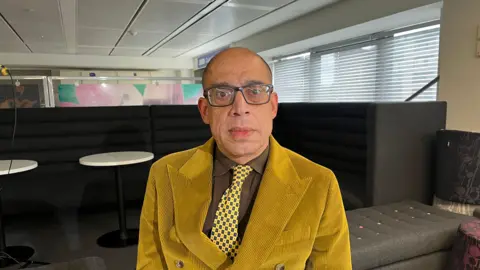
He represented himself in court on Thursday, having previously been represented by barrister Teresa Hargreaves.
It came after Hargreaves made a disclosure at the inquest on Tuesday that her sister Dr Rachel Sam had been one of the doctors who reviewed the patient.
Dr Sam was working as a junior to a consultant responsible for Taylor's care and after meeting her in February 1998, placed her on a waiting list to have her lump removed.
Norman Taylor told the BBC that he was choosing to no longer be represented by Hargreaves after learning this information.
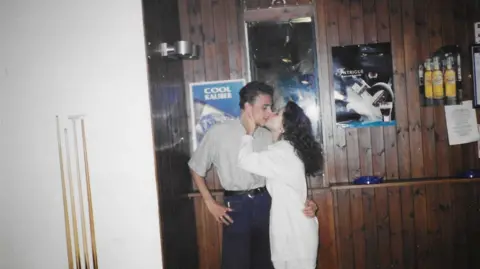 Norman Taylor
Follow BBC Birmingham on BBC Sounds, Facebook, X and Instagram.
