Climate impact among proposed data centre concerns

 BBC
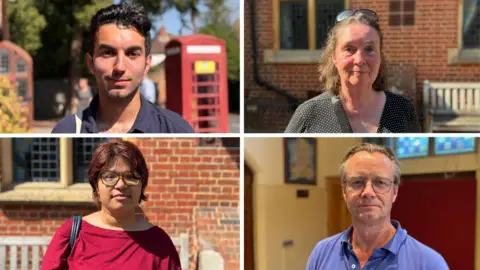
BBCThe climate impact of a proposed data centre was among concerns shared by locals at a public consultation.
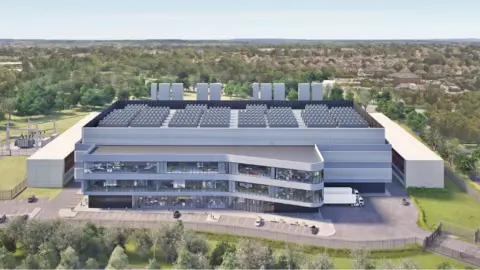
Developers say the data centre would respond to "falling demand for office space" at Thames Valley Park near Reading while supporting other nearby businesses.
Some of those at the event told the BBC they supported the plan but others said they were concerned about the potential negative environmental impact.
A spokesperson for the project team said: "Data centres... support the digital services that people, businesses and public services rely on every day. The proposals would help meet growing demand for this."
Developers, including Arup and Hilson Moran, said building the gas-powered data centre would support about 250 jobs, while about 115 full-time employees would work there once it is open.
The plan is to demolish the Microsoft buildings and, if approved, developers are anticipating construction to start in 2027.
Microsoft, which is not involved in the redevelopment, said it plans to move staff into the existing HERE building, also in the business park, by August 2027.
The proposals include using fuel cells for the facility "while additional grid capacity is brought forward" and would "provide a viable long-term future for the existing underused office campus", developers say.
A public consultation event held at Pearson Hall in Sonning on Tuesday gave residents the chance to find out more about the plans.
Chris Weller, a pensioner who lives locally, told the BBC that he has concerns about the height of the building.
"There should be a concern for the people that live in the houses on the other side of the railway," he said.
He added: "Whilst everybody agrees that data centres are the future and we need them, the only thing anybody will be concerned about is, is that the right place for them?"
The project team spokesperson said: "While the proposed building would be taller than the current buildings, the site already benefits from natural screening, which would help limit wider visual impacts."
Christa Dyson told the BBC she was in favour of the proposed data centre.
"I do believe we are all users of the internet... I believe we need faster connectivity," she said.
 TVPDC
TVPDCBut several people who spoke to the BBC at the drop-in had concerns about the impact on the environment.
Louis Rutman, 23, said: "We're in the middle of a nature reserve and they're building a massive glass housing thing.
"We don't really know what's happening in it. We don't really know how much water is being used, what the noise is going to be.
"It's incredibly polluting for the local atmosphere and the local surroundings."
Amrit Parmar, a 19-year-old university student who lives near the site, said: "We're going through insane levels of heatwaves as it is and really rapid progression of climate change... this is not going to help."
She added: "We're the ones who are gonna have to deal with it when we're older and not just us, the whole planet's going to have to deal with it, and it's getting to a point where I don't want it to be irreversible."
Angela Fenwick, who lives in Bracknell, said she had concerns about the water usage and the methods used to power the centre.
"They should be using modern methods of energy to power it - that's my main concern," she said.

Steve Wilkinson, who lives in Emmer Green, added: "I've come with an open mind because I think towns like Wokingham and Reading need this critical national infrastructure, which is what data centres are supposed to be.
"I believe that AI has a lot of downsides, but it does have the potential to do good."
However, he said there were "lots of questions unanswered".
The project team spokesperson said: "We recognise that concerns have been raised about the emerging proposals and remain committed to engaging openly with the local community as the project develops."
They added that the proposed data centre would use "predominantly air-based cooling, with water circulating in a closed-loop system".
"This means that, once operational, the development would require minimal new water compared with facilities that rely on evaporative cooling."
They said noise, landscape, transport, ecology and environmental impacts are all being "carefully assessed".
They added that the proposals would deliver at least 10% biodiversity net gain.
