Hunting lodge older than first thought and not Tudor

 Historic England Archive
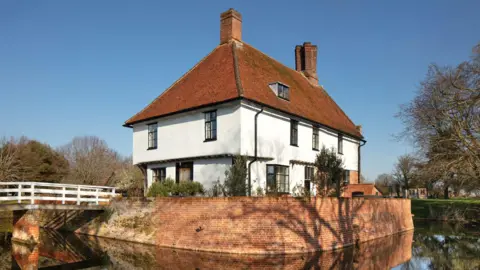
A building believed to be one of the earliest surviving banqueting houses or hunting lodges in England has had its listed status upgraded after tests revealed it was older than first thought.
Letheringham Lodge, near Woodbridge, Suffolk, was thought to have been erected in the early 1500s, but an investigation by Historic England dated it at around 1475.
The building, now considered medieval rather than Tudor, has been made a Grade I listed building by the Department for Culture, Media and Sport.
Tony Calladine, East of England regional director for Historic England, described the building as being of "national significance".
"The upgrade to Letheringham Lodge shows that well-known historic places can still reveal remarkable new discoveries," he said.
"And that modern scientific techniques can play an important role in developing understanding of our shared past."
 Historic England Archive
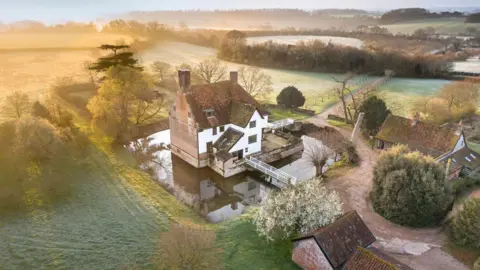
The lodge was built on the edge of a deer park on the Wingfield family's estate and commissioned by Sir John Wingfield, a courtier in the Yorkist court.
He was also the chief administrator to Edward the Black Prince, the eldest son of King Edward III of England.
At the time, the lodge was used as a medieval hunting site – buildings which were once common on aristocratic estates.
According to Historic England, it remains one of the last of its kind, following the demolitions of similar complexes at Nonsuch Palace, Surrey, and Kenilworth Castle in Warwickshire, centuries ago.
Letheringham Lodge, however, with its moulded timber beams and ornamented dragon posts, stood the test of time, later becoming a farmhouse.
In its latest investigation, Historic England dated the lodge's timber by analysing tree rings.
 Historic England Archive
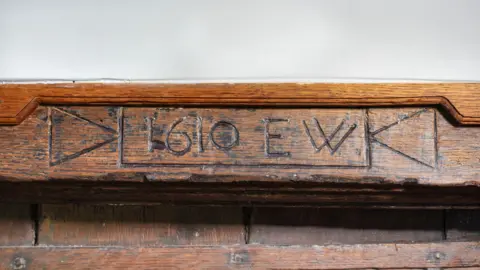
In 1610, the house was inherited by Elizabeth Wingfield, who added a brick gable and stair tower and inscribed her initials on a door lintel.
The lodge was originally listed as Grade II in 1966, before it was upgraded to Grade I, a listing that only about 2% of buildings in England hold.
"This rare building is of national significance and represents an important chapter in Suffolk's medieval history," added Calladine.
Do you have a story suggestion for Suffolk? Contact us below.
Follow Suffolk news on BBC Sounds, Facebook, Instagram and X.
