Teen treated 'like dirt' before hospital death

 Family Handout
This article contains details of suicide and self-harm
A teenage girl who died while in the care of a mental health service complained of staff treating her "like dirt", an inquest has heard.
Emily Moore, from Shildon, was found unconscious at Durham's Lanchester Road Hospital shortly after her 18th birthday in February 2020 and died two days later.
She had previously been a detained patient at West Lane Hospital in MIddlesbrough which, like Lanchester Road, was run by Tees, Esk and Wear Valleys NHS Foundation Trust (TEWV).
One of Emily's clinicians told the inquest criticism of West Lane was "fair" and Emily did not get the treatment she needed due to staff shortages.
The inquest, which is being held before a jury in Crook, heard Emily began harming herself and attempting suicide in 2017 when she was 15.
Medication and therapy in the community was ineffective so, due to the high risk she posed to herself, she was admitted against her will to the 14-bed Newberry Centre at West Lane in March 2019, the inquest heard.
Emily was given a working diagnosis of emotionally unstable personality disorder (EUPD), her consultant psychiatrist Melanie Willetts told jurors.
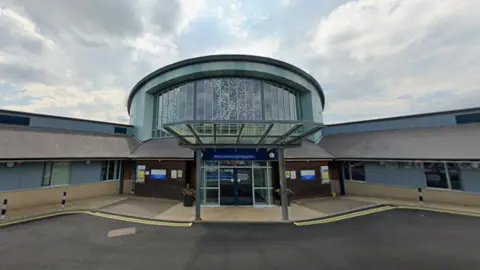
The Care Quality Commission (CQC) ordered the closing of the hospital in August 2019 following the deaths of two patients, with Emily moved to the more secure Ferndene in Prudhoe, run by Cumbria, Northumberland Tyne and Wear NHS Foundation Trust.
 Google
After her move, she wrote a letter complaining about her treatment at the Newberry ward which she described as "understaffed".
Instead of "showing compassion" after she had a self-harm incident, staff would "swear" at her and say "not again, this is getting a joke now", Emily said.
She claimed she was "constantly told to 'pack it in'" and "spoken to like dirt", with staff saying she was "just looking for attention" and she "obviously liked being this way".
Emily said staff would give her back items she had tried to hurt herself with and would often not intervene when she was self-harming, saying they would just wait for her to tire herself out.
The teenager said her "good friend" died on the ward when she should have been monitored, while Emily herself was not checked for two hours when she should have been observed six times an hour.
'Compassion fatigue'
Willetts was asked if Emily's account could be true.
The doctor, who spoke to the hearing via videolink from Australia, said Emily's comments did "not surprise" her but may not be "100%" true.
She said staff were "well intended" and did "compassionate work", but there was also "compassion fatigue" and there were "staffing issues".
"I suspect the truth is somewhere in between," Willetts said.
"There is an element that may be true and an element that may be linked to [Emily's] illness and her perception of things."
Subsequent investigations found multiple failings at the hospital and in Emily's care, with Willetts telling the inquest the criticism was "fair".
She said there had been a "definite decline" between mid-2018 and its closure in 2019, with issues including:
- An "excellent" and "absolutely vital" psychologist not being replaced resulting in "extremely stretched" psychology care and full treatment for Emily not being available
- A shift in patient admissions meaning more "distressed" and complex young people having to be managed
- The suspension in November 2018 of a "big cohort" of staff from another ward amid allegations of inappropriate restraints which, due to the issues being poorly explained by managers, created anxiety and low morale among remaining workers
- A reliance on bank staff who were "thrown in the deep end"
- A "misunderstanding" and "loss of common sense" around risk management with young people being given back items they had tried to harm themselves with
- Staff and young patients being "traumatised" by their experiences at the hospital
Willetts said the various issues meant working at the hospital was "like trying to build a house on sand while putting a fire out", and the facility "never recovered" from its problems.
She said her own experience at the hospital had been a "struggle" and "had an impact on her", but she had not been "suffering with EUPD and struggling with the things Emily was".
"I would not work on an inpatient ward ever again," Willetts said.
Staff 'burned out'
The inquest heard the CQC rated the hospital "good" in July 2018, but deemed it "inadequate" the following June with concerns around staffing levels, patient safety, risk management and observation.
Elizabeth Moody, TEWV's executive director of nursing at the time, told the jury management had known there were "issues" since the summer of 2018 which were exacerbated by the suspension of 33 staff over concerns about the way a patient had been restrained.
Efforts were being made to make improvements but Moody said she never felt a "full assurance" problems would be solved.
She said the intention of managers was always to "get a grip" of the problems and ensure patients were safe but their efforts were "unsuccessful" as they added to the "burden and confusion" of "burned out" staff.
The jury previously heard Emily was moved from Ferndene to Lanchester Road, a hospital for adults, two days after she turned 18.
She died less than a week later.
The inquest continues.
- If you are affected by any issues raised in this article, help can be found at BBC Action Line
