Twitchers told to give breeding black grouse space

 North Pennines National Landscape / Martin Rogers Photography
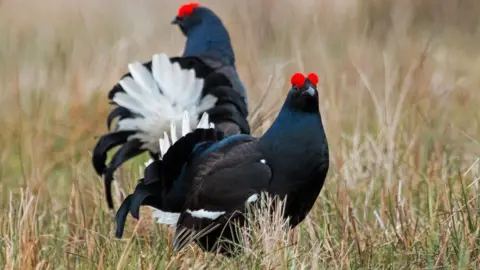
Endangered black grouse have started staking out ground in a "spectacular" mating ritual.
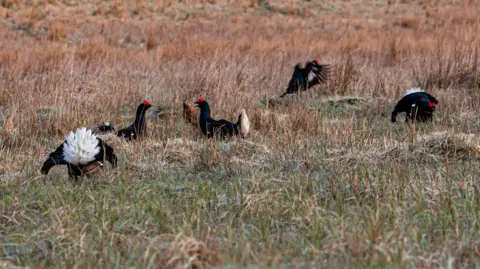
People heading out in the North Pennines, where the majority of England's population of the bird lives, have been urged to keep their distance as the males congregate to entice females in an activity known as a 'lek'.
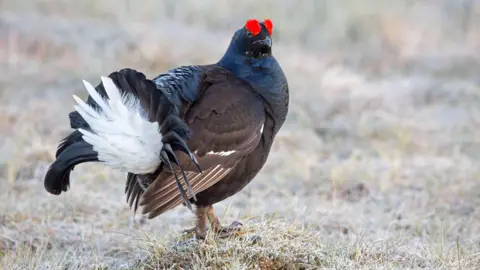
Due to peak in early May, it involves males dancing and fanning out their tail feathers while making "burbling sounds and guttural hisses" before dawn, the North Pennines National Landscape team said.
Research scientist Philip Warren said the birds thrived in the North Pennines due to the mix of habitats but said populations had "collapsed" in other regions such as southern Scotland.
Warren, who works at the Game and Wildlife Conservation Trust, said the North Pennines National Landscape was home to 80% of the English population, which was estimated at 1,000-1,500 males.
"We have been counting black grouse at leks in Teesdale and Weardale in County Durham since 1988 and numbers through time have remained stable," he said.
 North Pennines National Landscape / Martin Rogers Photography
"Black grouse numbers in the North Pennines have remained stable over the past 40 years, in comparison with some other regions, such as southern Scotland where numbers have collapsed over the same period," Warren added.
The RSPB said the lek was "essential to the birds' breeding success, but they are easily disturbed".
The females, which are "cryptically coloured in mottle brown", then laid their eggs in thick ground vegetation within a kilometre or so of the lek, Warren said.
"After hatching they take their broods to feed among the tall grasses, rushes and heathland shrubs where they feed first on insects then buds, flowers and seeds."
 North Pennines National Landscape / Martin Rogers Photography
People were asked not to disturb the birds and advised those watching the lek to keep inside a stationary vehicle from a safe distance of at least 100m (328ft) and not to approach the grouse on foot.
Warren also urged anyone walking their dogs in black grouse habitats to keep them on leads.
