New recycling food caddies a 'magnet for maggots'

 PA Media
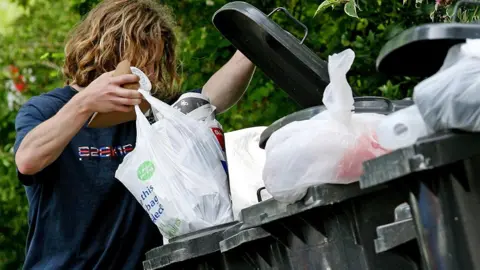
Some residents in Blackpool say changes to recycling arrangements are causing issues with flies and odour, which has been made worse by the recent heatwaves.
The local authority says it has had to simplify the way waste is collected, meaning grey bins will no longer be used for organic waste and will only be emptied every three weeks instead of two, alongside a new separate weekly food waste collection.
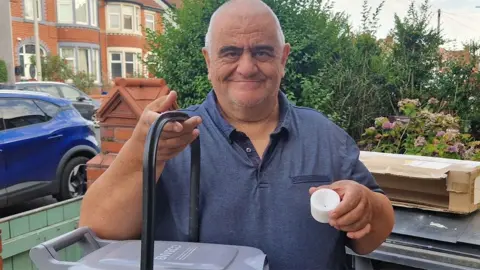
Resident Annie Valentine said the food caddies were "a magnet for maggots" and having to wait three weeks for general waste to be emptied was "unhygienic" because she has pet dogs.
Councillor Jane Hugo, cabinet member for climate change, said there had been a "positive increase in recycling".
 LDRS
LDRSLocal authorities in England were required to collect food waste from April as part of changes to recycling services.
The weekly food waste collections were introduced to prevent produce from ending up in landfill, and instead put to better use such as biofuel and fertiliser.
But at a Police and Communities Together (PACT) meeting in central Blackpool, PACT chair Brian Roberts said people were "complaining about an epidemic of fruit flies, house flies and blue bottles".
"Many say they have stopped using the food caddies," he said.
Community activist William Banks said the scheme discriminated against families with children, disabled people and women, as their household bin requirements were greater, according to the Local Democracy Reporting Service.
But the council said figures not only showed the new service had proved a success because more people were now recycling, but it had received no direct complaints from those groups.
Hugo, for the council, said: "Early results show a positive increase in recycling, demonstrating that the changes to collection frequencies are encouraging more people to recycle.
"Support is available for all residents with additional requirements or who may be unable to put their bins out due to circumstances such as mobility issues, age or disability. This includes assisted collections.
"Residents who feel they require additional support or capacity are encouraged to contact the council to discuss the options available to them."
Listen to the best of BBC Radio Lancashire on Sounds and follow BBC Lancashire on Facebook, X and Instagram. You can also send story ideas via Whatsapp to 0808 100 2230.
