Parking charge plan: 'It's like the wild west at the moment'

 BBC
BBCPlans to bring in parking charges on the streets of some Glasgow southside neighbourhoods have sparked a backlash from opponents but those in favour fear their voice is not being heard.
Thousands of people in Battlefield, Strathbungo, and Shawlands have voiced opposition to the proposals, which they claim could "cause substantial harm" to residents and businesses.
However, others have told the BBC they think the proposals, which could see residents charged for parking permits and visitors charged for time parked, would be fairer and would tackle the current chaotic situation.
Glasgow City Council said it was reviewing thousands of consultation responses, as well as a petition against the plans that had 7,000 signatures, and will report on its findings in early summer.
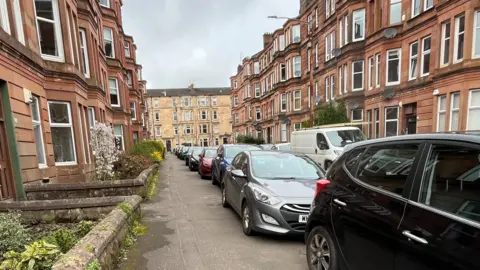
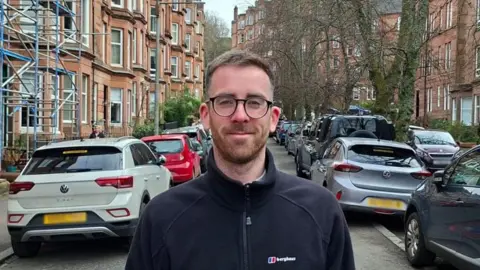
David Kelly, who lives in the Shawlands/Strathbungo area, says the parking arrangements feel "a bit like the Wild West" at the moment.
"People are doing whatever they like and parking wherever they want and not thinking about the consequences for other people and for their neighbours," he said.
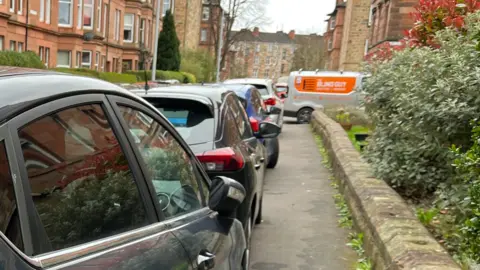
David, who no longer owns a car, says the current unregulated parking encourages people to squeeze their cars into any space they think it will fit, often blocking kerbs and parking too close to junctions.
"It's the inconvenience and the lack of safety," he said.
"I'm constantly being forced onto the road or crossing in between parked cars where they shouldn't be and where you've not got visibility of the traffic."
The 31-year-old said: "I think having parking controls would make it much clearer where everyone stands and what the rules are.
"If there's that regulation to it and residents can get a permit, there's going to be fewer visitors taking up those spaces and people who live here are more likely to be able to get a space."
What is the council planning?
Glasgow City Council says the aims of parking control zones (PCZ) is to reduce congestion, improving traffic flow and manage limited road space.
It says the zones, which are already in place in the west end and are proposed for other areas across the city, make streets safer for pedestrians and cyclists, increase turnover in short-stay parking and discourage long-term commuter parking.
The original plans for the PCZs in the south of Glasgow were outlined when a consultation was launched at the end of last year.
The general proposals would introduce resident permits costing between £80 and £220 per year, depending on how polluting a vehicle is deemed to be.
Business permits would be priced at just over £1,000 annually.
A new pay‑and‑display system would charge £1.20 per 15 minutes, with a maximum stay of three hours costing £14.40.
It would operate from 08:00 to 22:00, seven days a week.
Parking is currently mostly free across Battlefield, Strathbungo, and Shawlands, although available spaces can be hard to find.
The council's proposals indicate that all parking spaces would be designated as shared use, meaning that permit-holders would not be guaranteed a space.
Residents who object
BBC Scotland news spoke to residents who reject the proposed parking changes. They are among thousands who have signed a petition which has been sent to the council.
What are they objecting to? They point to the requirement for, and cost of, parking permits and the possibility businesses, including cafes and bakeries, would lose car-driving customers.
David says he used to own a car but he gave it up because it was often hard to find somewhere to park and public transport in the area is pretty good.
"We need to remember that the space that we've got in the area is finite and we don't have enough room for everyone to have a car," he said.
"If about half of the resident population don't have access to cars, why does the other half get to colonise the pavements and all of the other space in the city?"
In addition to pressure from residents, the areas are popular with visitors who come to sample the local businesses, David said.
"You've got a lot of visitors coming in, a lot of them are driving, and that puts a lot of pressure on the area.
"I hope the changes would make people who are visiting think twice about how they're actually getting here."
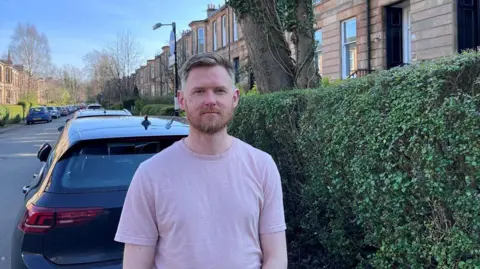
Gareth Johnson, who lives in Strathbungo with his partner and two primary school-aged children, says the safety of the parking situation has had an impact on his family.
"It started when I couldn't push a buggy down the pavement, every single street has pavement parking," he said.
"I can't actually see safely to cross the road because there's so many parked cars."
Gareth says his children, who are now six and nine, do not have the freedom and independence he had as a child.
He says it didn't feel safe to let them play out or cycle near the house because of the traffic issues.
Gareth views the council's parking proposals as a "step in the right direction" but he would be in favour of even more radical changes.
He thinks pedestrians should have priority on the roads and cars drivers should be secondary.
"It would at least formalise what already happens in Strathbungo, which is people do walk up the middle of the roads," he says.
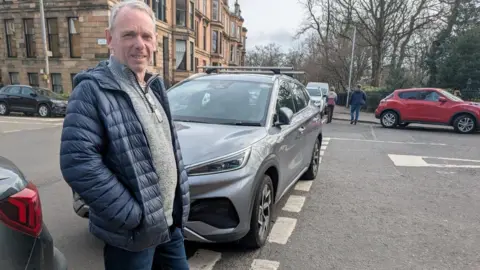
Andrew Downie, who lives in Strathbungo, is another resident in favour of changing who gets priority on the roads.
"Although it seems counterintuitive, it's the norm in the Netherlands," the 61-year-old says.
"Put people in the road and give them the right to be there .
"Motorists have to just put up with it and drive slowly and carefully around them.
"This is exactly what everybody in Strathbungo has been doing for the last 25 years."
A spokesman from Glasgow City Council said no decisions had been taken about the final design of parking zones for the three communities involved and it would report back in the early summer.
