The roots of Notting Hill Carnival ahead of its 60th year

 Reuters
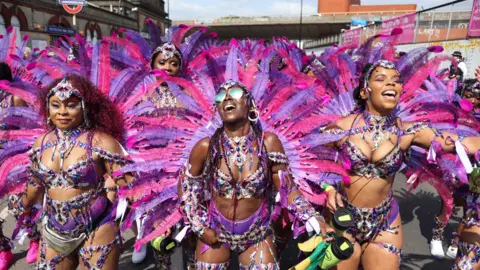
As Notting Hill Carnival prepares to celebrate its 60th anniversary next month, those involved in the event say its legacy is not just about the music, costumes and spectacle but the history it continues to teach.
The 2026 Notting Hill Carnival will take place in west London from 29 to 31 August, with millions expected to attend Europe's largest street festival.
One of the carnival's founders was Vernon Williams, who moved to Britain from Trinidad and Tobago in the 1960s.
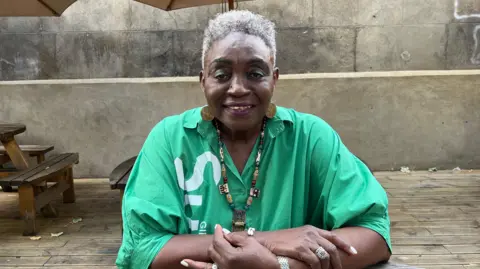
Sixty years on, his widow Allyson Williams remains at the heart of the event, having been involved for the past 45 years.
For Williams, the carnival is a "teaching tool" that helps younger generations understand the history of Notting Hill and the Windrush generation.
She told BBC London at the carnival's launch event on Thursday: "We have to continue with the education of the children in terms of acknowledging their ancestors as well.
"As Maya Angelou said, if you don't know where you've come from, you will never understand where you're going."
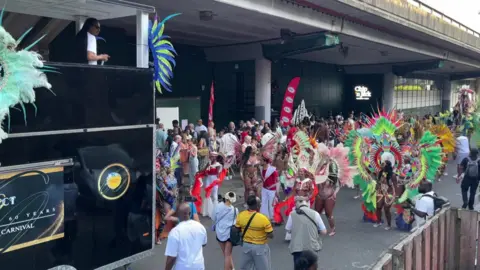
Launched in 1966, the carnival celebrates Caribbean culture and the freedom of slaves after emancipation.
Williams, who first took part in the carnival in 1975, said it must remain in west London because of its roots.
"I think it is important that it stays here because this is where everything started.
"It actually was born out of the race riots that were held in Notting Hill in 1958-59 and the murder of the carpenter Kelso Cochrane at that time," she said.
Cochrane, from Antigua, was stabbed to death by a white gang in Notting Hill in May 1959. No-one was ever charged.
Williams continued: "We then had Rhaune Laslett who started the street carnival in 1966 because of the same problems with trying to have the disadvantaged groups come together and live as a community in harmony.
"She chose the August Bank Holiday because she felt it would be a gift for the children of the area to have something to talk about and to experience before going back to school."
Mayor of London Sir Sadiq Khan has announced £4.66m in funding for this year's carnival, aimed at addressing potential overcrowding following an independent review.
The investment follows wider discussions about how best to manage an event of its size.
Last year, Conservative group leader Susan Hall called for the Greater London Authority to take over organisation of the festival and potentially move it elsewhere, citing safety concerns, but no further action was taken on this suggestion.
Williams welcomed the boost in funding, saying the carnival had become much larger than organisers ever imagined and that investment was needed to help keep participants and visitors safe.
But she said the event's importance went far beyond logistics.
"I think the carnival has demonstrated the resilience of the Caribbean people.
"It has acknowledged that it is important that we establish a celebration to honour and respect and pay tribute to our ancestors who went through death and destruction on our behalf, who paved the way for us to be here."
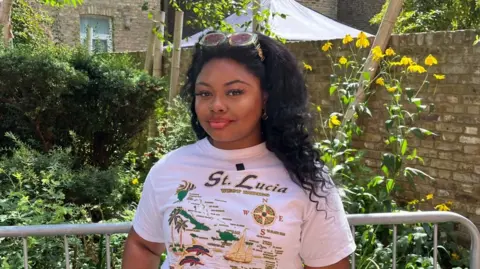
Jada Pascall, a DJ who performs under the stage name Jada Pink, said the carnival had connected her to her heritage since childhood.
"I have been going to Carnival since I was in the stomach. Being a third-generation Caribbean descendant, my dad's from Dominica, Grenada, my mum's from Saint Lucia and Guyana - Carnival links me to my identity."
She said the event provided a chance for Caribbean communities to celebrate their culture openly and proudly.
For Pascall, the carnival's west London home remains essential.
"The origins of Carnival stems from something tragic that happened to a Caribbean man.
"It wouldn't be the same if it was anywhere else, because it doesn't have that tie to the Windrush."
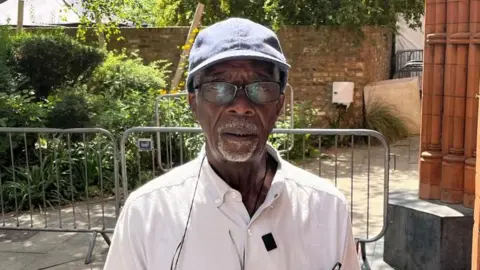
Gladwin Wright, known as Gladdy Wax and one of the UK's longest-running sound system operators, has been involved with the carnival for almost 40 years.
He said the event's enduring appeal was its ability to bring people together.
"Music itself brings people together, but Carnival certainly brings them together for more reasons than one and it's not about animosity, it brings them together in a loving way, harmonious way."
Listen to the best of BBC Radio London on Sounds and follow BBC London on Facebook, X and Instagram. Send your story ideas to hello.bbclondon@bbc.co.uk
