Rioter who died in prison acted 'strangely' - inquest

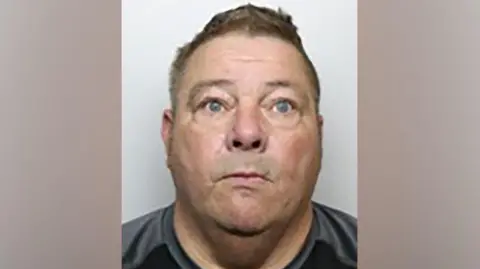 South Yorkshire Police
A man who was found dead in his cell two months after he was jailed for his part in rioting outside an asylum seeker hotel behaved "strangely" after he was arrested, an inquest heard.
Peter Lynch, 61, died from hanging at HMP Moorland, Doncaster, on 19 October 2024 after being convicted of violent disorder at anti-immigration protests that broke out in Manvers, Rotherham, in August of that year.
Police officers told a jury inquest at Doncaster Coroner's Court earlier that following Lynch's arrest, he declined food or drink, would not give his surname and that in "hindsight" he should have been referred to a mental health team.
The inquest, scheduled for 10 days, will resume on Tuesday.
Giving evidence earlier, Sgt Ryan Handley from South Yorkshire Police told the jury he had made a note of how Lynch's presentation had been "strange" in the custody suite at Shepcote Lane police station in Sheffield, and also noted he had been confused.
He said Lynch answered every question put to him by saying he was "Peter, living man, son of Michael and Lily".
Sgt Handley added that he should have sent Lynch to the liaison and diversion team, who deal with mental health issues among detainees.
Asked by Doncaster's senior coroner, Nicola Mundy, if he spotted any "red flags" in Lynch's presentation, Sgt Handley said he did not.
The officer was asked by Richard Copnall, representing Lynch's family, whether it would have been "sensible" to involve the liaison and diversion team.
Sgt Handley said: "With hindsight, yes."
The coroner also read a statement from another police officer which described how a flag was found in Lynch's house "that could be be linked to far-right ideology".
Earlier, histopathologist Laszlo Karsai told the jury that Lynch, who was from Wath-upon-Dearne, died by hanging.
Dr Karsai said the fact that prison officers found his body "stiff and cold" meant he had probably been dead for at least two to three hours before it was discovered.
The pathologist said there were traces of medication in Lynch's body compatible with his known medical history of heart disease and diabetes, but these conditions did not contribute to his death.
The inquest continues.
Listen to highlights from South Yorkshire on BBC Sounds, catch up with the latest episode of Look North
