Man sent fake comments to try to close nightclub

 BBC
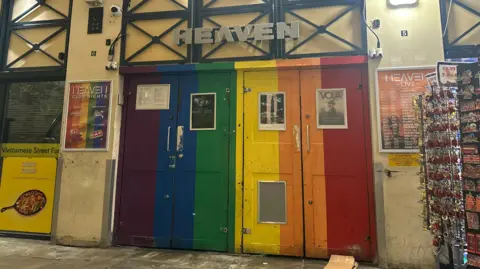
BBCA man submitted fake comments to a council in an attempt to shut down a central London LGBT+ nightclub.
Aldo d'Aponte, 47, of Craven Street, Westminster, received a 12-month conditional discharge after admitting to knowingly or recklessly making a false statement during a review of Heaven Nightclub's premises licence.
The Metropolitan Police said d'Aponte had falsely used the names of other people as the authors of emails submitted to the council.
The club's owner, Jeremy Joseph, said: "It is not just about what this person did. It's about the bigger picture of the fact that the integrity of licensing hearings is now at risk."
D'Aponte was sentenced at Westminster Magistrates' Court on 16 April and ordered to pay £85 in court costs and a £26 victim surcharge.
Heaven, an LGBT+ venue near Charing Cross that first opened in 1979, was temporarily closed in November 2024 at the request of police after a bouncer was accused of rape.
The nightclub reopened about a month later after complying with additional restrictions, including a ban on re-entry after 03:00 and increased security measures.
The bouncer was later found not guilty of rape and attempted rape.
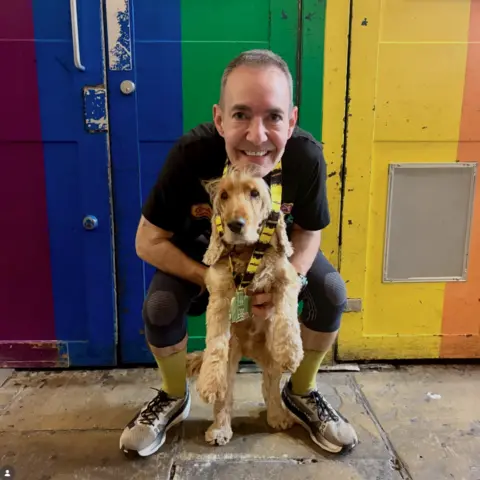
Joseph said that during the reopening process he was informed the council had received a large number of negative submissions, adding that his "heart dropped" when he learned of this and that he felt "mentally completely destroyed".
 Heaven
He said a neighbour alerted him to a name on one submission that did not match the person they knew to be living at the address.
This prompted his legal team to examine the complaints more closely. According to Joseph, many of them shared similar wording.
Joseph said his lawyer, Philip Kolvin KC, found that a number of the submissions were likely to have been written using AI.
He also noted that they had been sent from encrypted email accounts.
D'Aponte was charged on 21 November 2025, with the charges relating to two emails identified during a police investigation.
Sgt Ben Chadwick, from the Met's Licensing Team, said: "This conviction reinforces the importance of integrity in the licensing process."
 Heaven Nightclub
D'Aponte said via his lawyer that he regretted acting inappropriately and did not intend to excuse the offence, but added that he felt frustrated by longstanding attempts to "secure real action from Heaven's management team".
In 2024, the police described the club as the "highest crime generator in the borough".
D'Aponte added: "My young family, local residents and club patrons have, week after week, been subjected to an unsafe and often dangerous environment.
"Numerous well-documented instances of venue mismanagement, from public nuisance complaints to physical and sexually violent assaults, have occurred around the club's entrance, outdoor smoking area and queue.
"This needs to change. Heaven and its proprietors need to take steps to better coexist with the local community and protect the safety and wellbeing of its customers, neighbours and my family."
'No weight'
Joseph said he decided to take the case to court following the reopening in order to highlight that "any objection might not be genuine".
He said he was concerned that Westminster and other councils across the country were not carrying out sufficient checks.
Westminster Council said it scrutinised every submission and would reject vexatious representations, adding that written evidence was given less weight than testimony provided in person.
It also said it could not prevent people from using AI when making submissions.
A council spokesperson said: "The committee made clear that it provided no weight to this petition in reaching its conclusions, and therefore these false representations had no adverse impact on the committee's decision."
Joseph said this was only the case "because we were lucky enough to find out that these were fake, and we managed to bring that up at our hearing."
'Business survival'
"The bigger picture hasn't been looked at and the implications of what he could have done," he added.
Joseph warned that fake complaints like these could prevent venues from making licence changes that might otherwise prove a lifeline.
"Within the current climate, with cost-of-living costs, that extra hour could be business survival, but you don't get it because there's a fake resident's complaint by AI," he said.
Joseph suggested councils should introduce basic verification measures, such as matching objectors' names against the electoral roll, or even consider a change in the law to prevent similar cases happening again.
He added that the case highlighted wider risks posed by AI, raising questions about "what else could be faked that could affect things legally".
Listen to the best of BBC Radio London on Sounds and follow BBC London on Facebook, X and Instagram. Send your story ideas to hello.bbclondon@bbc.co.uk
