Woman hopes MS drug could help her walk

 Handout
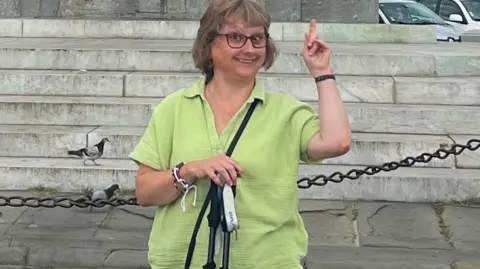
A partially blind woman who developed multiple sclerosis (MS) almost two decades ago is hoping a new NHS drug could help her walk again.
Jules Hobbs, who lives near Devizes in Wiltshire, said that NHS England finally offering access to Fampridine has left her "really hopeful".
The medicine known as a "signal booster" helps electrical messages get through damaged nerve cells in charge of controlling muscles needed to walk.
Prof Frankie Swords, the NHS national medical director, said: "Walking difficulties can have a huge impact on the freedom and independence of people with MS, so this signal-boosting pill could be life-changing for thousands of patients."
Multiple sclerosis is caused by the immune system attacking the protective covering around nerve cells - known as myelin.
This damage impairs the ability of nerves to carry electrical messages from the brain to the rest of the body - including those needed for the precise control of muscles needed to walk.
But the medicine does not work for everyone.
Emma Richards, from Gloucester, who privately used the drug a decade ago, said she saw no improvement to her mobility.
Richards said the medicine was portrayed to her as a miracle drug but "did not help me".
Nonetheless, Richards said it is still "really beneficial" to have the drug on the NHS as it does help lots of people.
More than 120,000 people live with MS in England. However, only about 5,000 people a year will be eligible to use the medicine - based on the extent of their walking difficulties.
Clinical trials showed about four in 10 people taking the drug had improvements in their walking speed and in how long they could walk for.
 Jules Hobbs
In 2007, Hobbs lost sight in her right eye overnight. This led to four years of testing and an eventual MS diagnosis.
However, her condition worsened during the Covid pandemic when her right leg "stopped working", she said.
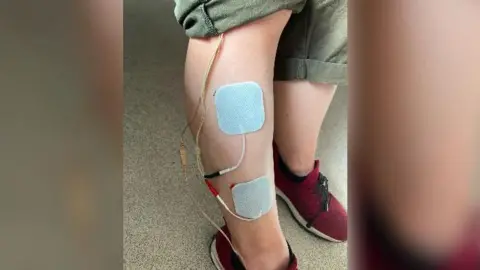
Hobbs uses a functional electronic stimulation device which helps her continue with her career.
"I'm lucky enough that I can still work, so I can go out of the house and I sometimes take walking poles with me to help my balance," she added.
"Over the years I've had to say goodbye to the public performance side of things in my acting career."
She said England is "pretty late" to Fampridine; Scotland, Wales and Northern Ireland have offered the drug on the NHS for several years.
"Of course it will be disappointing if it doesn't work, but I would just have to handle it in the way that I've handled it all so far," Hobbs said.
"I'm really hopeful."
Follow BBC Gloucestershire on Facebook, X and Instagram. Send your story ideas to us on email or via WhatsApp on 0800 313 4630.
