City bus gates to stay after legal challenge fails

 BBC
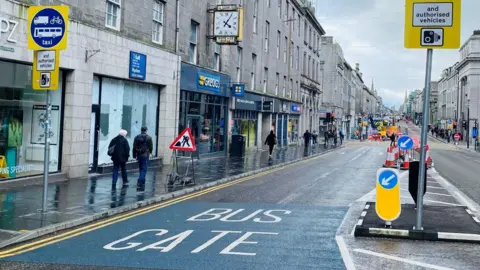
BBCControversial bus gates in Aberdeen will remain in place after a legal challenge from local businesses failed.
Shop owner Norman Esslemont, who took the case to the Court of Session, had argued the decision to make the measures permanent was unlawful and that they prevented access to business premises.
However, in a judgement, a panel of judges concluded there was "no merit in any of the grounds of appeal" in regards to the decision to implement the measures.
Aberdeen City Council (ACC) said that following the decision it looked forward to continuing to work with businesses and communities "to make the city centre an even better place to live, work, invest, and visit".
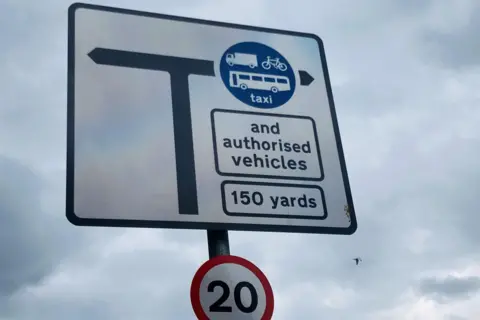
The bus gates were first introduced as experimental measures before a decision was made to make them permanent in 2024.
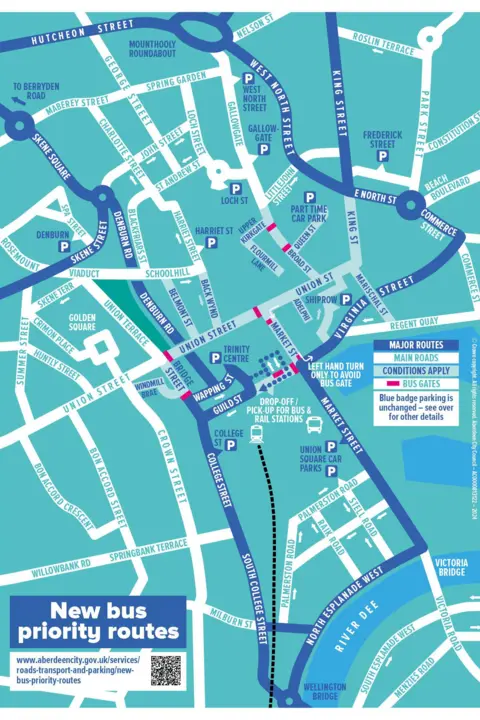
The traffic measure stops cars travelling along Bridge Street, Guild Street and up Market Street towards Union Street.
The council has long defended the scheme and said the gates had led to an increase in bus use.
 Aberdeen City Council
In court, Mr Esslemont's representatives argued there was a procedural breach when an experimental traffic order was made permanent, as the council provided "inadequate" reasons for the change.
Ministerial consent is needed for road changes which "prevent access".
A lawyer representing ACC said the bus gates meant access for cars was restricted by the measures, but not prevented so therefore the permisson was not needed.
In the judgement, Lord Pentland said: "We consider that the appellant has failed to show that access to any of the premises identified as relevant for the purposes of the appeal has been prevented".
Other grounds of appeal regarding how the scheme was implemented also failed.
 Norman Esslemont
Reacting to the ruling, Mr Esslemont said he was "disappointed" with the decision but had no regrets about bringing the case forward.
He added: "My key hope is that the council has seen the people of Aberdeen are prepared to stand up on an issue that has caused frustration.
"I hope the council recognises the strength of feeling and understands we need a thriving city centre which depends on genuine engagement with the business community.
"My hope is they see we need to change our ways and take the public with us."
Mr Esslemont confirmed he saw this as the end of the issue as a legal matter but hoped the traders and the council could get back around the table and work out a suitable way forward.
Have the bus gates improved journey times?
ACC representatives argued the bus gates had led to improved journey times for passengers.
The Confederation of Passenger Transport UK, a trade body for bus operators, included the Aberdeen bus gates in a recent research project about the impact of congestion on journey times.
This research found that First Bus had seen passenger numbers rise and journey times reduced overall, despite the closure of Union Street for major road works since April 2024, because of the bus gates.
The firm highlighted improvements on two of its services, with end-to-end journey times for its number three service falling by 17% and a 18.8% drop in the journey times of the number 12 service.
Prior to the closure of Union Street, punctuality improved on four of the five Union Street routes by up to 12%, the firm said.
