'Swapping teaching for nursing has been fantastic'

 BBC
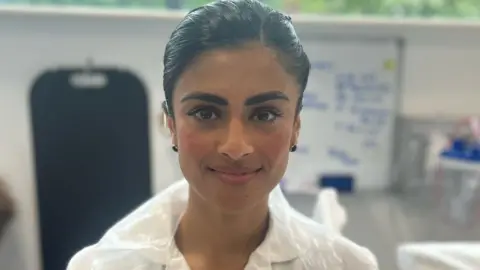
BBCA former PE teacher who spent more than eight years in schools before retraining to become a nurse said she had been given "a fabulous opportunity" to learn on the job.
Taibar Akhtar is part of the first tranche of students on the Nursing Associate Apprenticeship Degree, delivered in partnership with the University of Lancashire and Blackburn College.
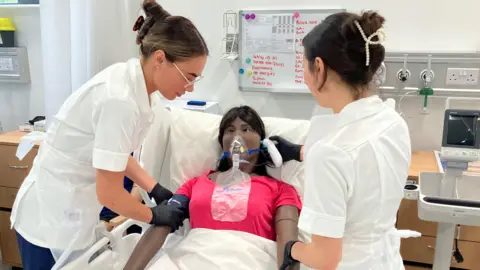
Based in a training facility resembling a real hospital ward, students learn on mannequins which can be programmed to have a range of different symptoms.
Taibar, from Clitheroe, said working with the mannequins allowed students to "make mistakes, rather than in real life, where you have someone's life in your hands".
Taibar started her two-year apprenticeship course in March.
Students spend four days a week on placement, usually at Blackburn Royal Hospital, and one day a week at Blackburn College.
She said "not anybody" can become a nurse and that "you've got to be a caring person, and empathetic".
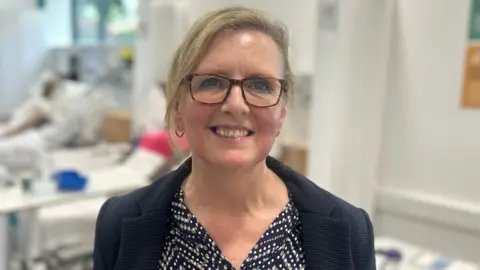
Course leader Marjorie Dalton said the course encouraged "people who wouldn't normally have an opportunity to do the traditional route to nursing, through the universities" to get into healthcare.
It has been helped by the use of the "high fidelity mannequins", she said.
They can be programmed to "have breathing difficulties, heart conditions, cardiac arrests", she said, which allows students to practise treating patients, or escalating the situation to a registered nurse.
Taibar described the mannequins, which cost up to £35,000 each, as "a bit freaky".
"They do talk to you... you can take bloods from them, they have a heartbeats, you can check their sats [blood saturation levels], their observations," she said.
'Raring to go'
Taibar said she spends one day a week at university and 30 hours "learning new skills on the job".
"It's different from being in the classroom all the time, and being at university full-time, and only having short placements," she said.
"You've also got to be quite resilient with it, you go through different walks and paths from people passing away sadly, to people coming in poorly and seeing the positive side of it, seeing them leave the hospital wards back on their feet and raring to go.
"I'm on my feet all the time like I was before [as a PE teacher], so not much has changed in that sense.
"But it's a fabulous opportunity."
Listen to the best of BBC Radio Lancashire on Sounds and follow BBC Lancashire on Facebook, X and Instagram. You can also send story ideas via Whatsapp to 0808 100 2230.
