Ozempic-maker accuses rival of false advertising

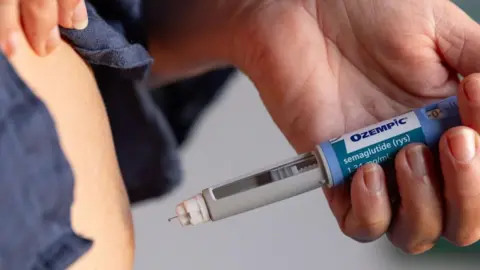 Getty Images
The maker of Wegovy and Ozempic, Novo Nordisk, has launched legal action accusing its arch rival Eli Lilly of false advertising in suggesting its weight-loss drugs perform better.
The Danish company filed a lawsuit in the US on Tuesday claiming Eli Lilly, which makes Mounjaro and Zepbound, deployed ad campaigns to "create the misleading impression that Eli Lilly's medicines are superior".
Novo said its competitor compared the highest approved doses of its medicines for obesity and type-2 diabetes with lower doses of Novo Nordisk's, while omitting newer, higher-dose options.
Eli Lilly hit back at the claims and said it stood "firmly behind our advertising".
"It is truthful, it is transparent, and it is grounded in the most direct scientific evidence available - exactly what patients deserve. We will continue to focus on the science and defend against this lawsuit vigorously," a spokesperson for the company said.
Heavyweight battle
The lawsuit comes as pharmaceutical heavyweights Novo and Eli Lilly are locked in battle to dominate the fast-growing weight-loss drug industry, especially in the US, which analysts have estimated could be worth more than $100bn by 2030.
Novo Nordisk claimed its main competitor in the weight-loss drug business had committed "multiple violations" of federal and state false advertising and unfair competition laws, through its nationwide ad campaigns.
The company said Eli Lilly's current campaigns "intentionally" selected outdated studies comparing Lilly's highest doses against lower doses of Novo Nordisk's medicines.
It said the ads had "deceptively" presented that Eli Lilly's products were superior, but buried or omitted "critical clinical context".
The products being compared incorrectly, according to Novo, were Mounjaro vs. Ozempic and Zepbound vs Wegovy.
"As new and more effective treatment options become available, people deserve accurate information that reflects the latest scientific evidence and helps them make informed care decisions," said John F. Kuckelman, senior vice president and group general counsel for Novo Nordisk.
"Healthcare companies have a responsibility to keep their public claims accurate and current - ineffective, fine-print disclaimers do not fix the misleading impression created by major national campaigns," he said.
Novo said it was seeking a court order requiring Eli Lilly to pull its ads and instead run what it called a "corrective advertising campaign".
It added if Eli Lilly did not voluntarily remove the commercials, it would file a motion in the coming days to seek a preliminary injunction to block them.
But Eli Lilly accused Novo of asking the court to stop the company from communicating the results of a comparison trial it said was "robustly designed" and "the gold standard".
