High Court quashes decision to restrict annual Drumcree parade

 Pacemaker
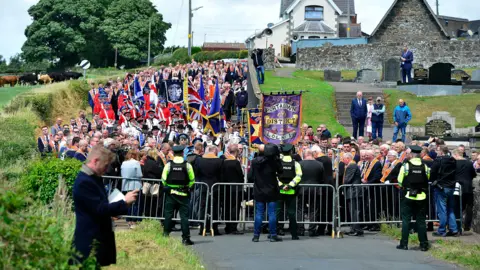
A decision by the Parades Commission to impose restrictions on one of the most contentious parades in Northern Ireland has been quashed in the High Court.
It follows a legal challenge brought by a member of the Orange Order over its annual parade at Drumcree outside Portadown.
The commission had banned this year's paradefrom entering the mainly nationalist Garvaghy Road - a move which reflected every decision it has made since 1998.
It has been claimed the case may pave the way for a future parade on the road being permitted. However, it would require a new decision based on a fresh application.
The Parades Commission said the High Court's decision "does not affect any future considerations and decisions by the commission of future parades or protests".
"Any such notifications will be considered carefully and a decision made on the basis of all of the information available and in light of the legal framework," it continued.
A Northern Ireland Office (NIO) spokesperson said the Secretary of State Chris Bryant will meet the Parades Commission chair "as a priority" to assess the actions needed to strengthen its procedures.
"The Parades Commission has a challenging role regarding parades in Northern Ireland. It is vital that the public has confidence in its decision-making process."
 Pacemaker
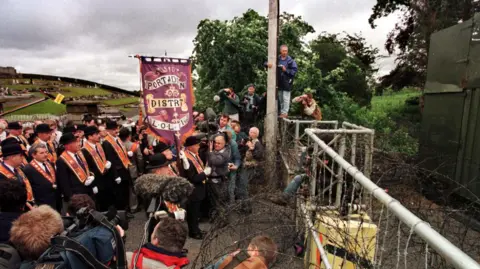
The Drumcree parade dispute began in the mid-1990s and it almost derailed the peace process at the time.
Violence related to the dispute resulted in riots, roadblocks and murders.
The Orange Order is a Protestant organisation and opposition grew to its annual July parade in Portadown, which included the Garvaghy Road, a mainly Catholic area.
When the order was prevented by police from walking down the route in July 1995 there was a tense stand-off. It was the same for the next three years.
The Parades Commission began operating in 1998 to regulate parades and try to defuse tension around marches.
Its decision not to allow a march down the Garvaghy Road that summer has been challenged by the Orange Order for the past three decades.
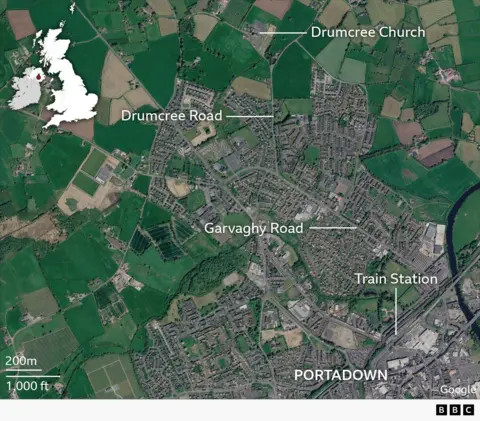
The legal challenge regarding July 2026's paradewas launched last month.
The High Court was told on Tuesday that the commission conceded the case last week and requested the court quash its determination before a full hearing.
The commission conceded a procedural error in how it dealt with the annual application for permission to walk along the Garvaghy Road.
Not all six members of the public authority had signed off on the final determination before it was issued last month.
"I have no hesitation in making the quashing order," Mr Justice McAlinden said.
"This is simply a case that does not stand up to any scrutiny at all."
Lawyers representing the local Orangeman claimed the commission's latest decision unlawfully breached his rights to freedom of belief, expression and peaceful assembly under the European Convention on Human Rights.
Lawyers for the applicant also argued that Garvaghy Road residents had refused talks with the Orange Order and the commission breached legislation by making it "a pre-requisite to a parade".
It was also claimed the commission had imposed restrictions to prevent disorder when no evidence for potential trouble was presented.
 Pacemaker
Part of the challenge related to a WhatsApp chat group where commissioners were allegedly urged to reflect on any opinions about Drumcree expressed by an online commentator who used the pseudonym 'Choyaa'.
The commission also failed to act on a request to make representations from Carla Lockhart, the Democratic Unionist Party (DUP) MP for the area.
Commission members were also accused of failing to read or consider the decision.
Lockhart was in court, along with several other politicians, including the Traditional Unionist Voice (TUV) MP Jim Allister.
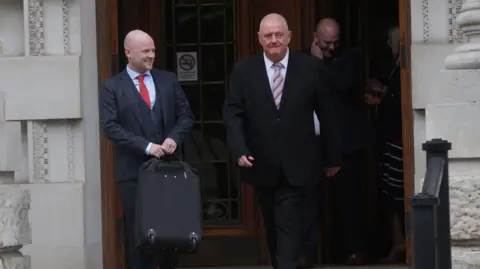
Counsel for the Orangeman who took the case, John Larkin KC, was critical of the commission's approach to proceedings.
Seeking an order for heavier indemnity costs to be made against the authority, the barrister accused some of its representatives of a "scandalous abdication of responsibilities".
The Parades Commission said it "welcomes scrutiny and accountability".
Adding that it has already "implemented procedural changes to address the issue identified in the proceedings and will continue, as a learning organisation, to ensure that its processes are lawful and appropriate".
It urged all of those involved in the parading dispute at Drumcree to "make every effort to seek a mutually agreeable and durable resolution".
What has been the reaction?
 PA Media
Speaking outside the High Court on Tuesday, Allister said: "The whole commission should resign. Caught out they should bow out."
Lockhart said the decision was a "massive victory for unionism and loyalism".
She also called upon the commissioners to voluntarily resign.
"If they do not, there is a clear obligation on the secretary of state to remove them from office and I am writing to him today to ask this process is commenced immediately," Lockhart said.
Northern Ireland Secretary Chris Bryant said it was "really important that the Parade's Commission carries the respect of all communities in Northern Ireland, otherwise it simply can't function".
Bryant said he had not read the "precise terms" of what has been said, but added that he was "concerned that it looks as if the Parades Commission have not got things right here".
The Grand Orange Lodge of Ireland welcomed Tuesday's High Court ruling and said it made "the position of the current commissioners untenable".
"We further call on the secretary of state to instigate a long overdue comprehensive examination of the commission's internal decision-making processes, which since its inception, have often lacked credibility, accountability and transparency."
Loyalist activist Jamie Bryson, who was involved in bringing the case, said the applicant has secured a "seismic victory".
"This Parades Commission cannot stand. They stand condemned in the eyes of the law," Bryson said.
Sinn Féin MP John Finucane said the judgement needs to be "carefully studied".
"Those declaring this a victory for unionism and loyalism should reflect on who exactly they believe has been defeated."
Finucane said if a fresh application is made Sinn Féin will make representations to the Parades Commission on the party's position that there is "no logic or justification for an Orange Order parade proceeding down the Garvaghy Road".
Alliance Party MLA Eóin Tennyson said the secretary of state must now "carefully review the judgement and any issues identified with the decision-making process".
"Alliance remains supportive of the Parades Commission and the instrumental role it has played in de-escalating parading disputes and improving community relations in Portadown and across Northern Ireland."
