When police stormed a Penn State frat house, one brother thought it was a prank

 Getty Images
They came to Penn State from across the US, varsity athletes and top students drawn to the university's strong academic reputation and social opportunities.
Agostino Abbatiello graduated from a prestigious Catholic all-boys' school on Long Island, New York. During high school, he listed himself as a "life coach" - the type who lived by the school's moral code of doing "the right thing at the right time because it is the right thing to do, regardless of who is watching".
At Penn State, however, his adherence to that motto has come under question.
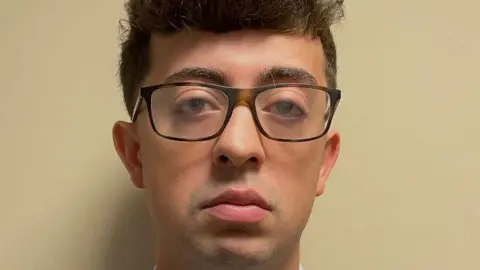
Abbatiello, 24, was arrested and charged this week, accused of being the ringleader of a drug-dealing enterprise that included members of local fraternities - all-male organisations on many US college campuses. In the US, some fraternities are notorious for putting prospective members through elaborate ritual initiations, known as hazing. In total, 13 current and former students have been charged.
But rather than put young college students through drinking challenges, prosecutors say, the alleged drug ring architectsforced some to process and package cocaine.
A lawyer for Abbatiello, who turned himself in to Pennsylvania police, did not respond to a request for comment from the BBC.
Penn State University expressed its horror at the allegations against its current and former students.
"Criminal activity, including hazing, such as this has no place at our institution, and we will co-operate with law enforcement in any way we can," Andrea Dowhower, vice-president for student affairs, said in a statement.
In some ways, the scheme as prosecutors have described it is reminiscent of a Hollywood movie script - sprawling and sophisticated, yet the handiwork of youths just a few years out of high school.
They allege the suspects utilised apps like Snapchat and Venmo, and usernames tied to their actual names ultimately helped get them caught.
They allegedly enlisted fraternity brothers and made some prospective fraternity members cut and package the cocaine. One of the ringleaders, when officers stormed his fraternity house, allegedly thought he was being pranked - until the police used a stun gun on him as they uncovered a haul of drugs and a weapon.
"There was nothing junior or childlike about this type of conduct," Pennsylvania Attorney General Dave Sunday said when announcing the charges. "This was an upper-level trafficking organisation for this region in Pennsylvania."
 PA Office of Attorney General
According to the grand jury report, obtained by the BBC, fraternity members at Delta Upsilon were selling cocaine to each other and sourced it from Abbatiello, a member of Sigma Chi. Abbatiello got drugs from a Pennsylvania source that Sigma Chi brother Lars Zeepvat, one of his co-accused, had already cultivated, according to the report.
But when that coke connection ran dry, Abbatiello allegedly "sought out a new source" and found one "in his hometown in New York that would supply them with larger amounts of cocaine", it continues.
After that, according to the report, Zeepvat noticed "a shift in Abbatiello, and it was clear to him that Abbatiello was now selling drugs for profit, rather than sourcing it for himself and a few friends".
Zeepvat said Abbatiello had asked him if he "wanted to make money and help him distribute cocaine", the report alleges.
It wasn't long before Zeepvat and another were either accompanying Abbatiello for pick-ups or driving to "purchase large quantities".
"They would drive to a location based on an address given to them from Abbatiello, a man would deliver a bag with cocaine in it … and they would return with the bag to State College and give it to Abbatiello," the report reads.
Meanwhile, two members of the Delta Upsilon fraternity, Mohammed Huraibi and Thomas Robinson - who are also facing felony charges - partnered in the coke business in 2023, prosecutors say, and the pair began making larger and larger purchases of cocaine from Abbatiello.
By late 2023, according to the report, "several of the pledges [aspiring members] at the Delta Upsilon fraternity were used to package the drugs into half gram bags for sale".
The attorney general described "a pattern of events that showed cutting and bagging cocaine was, for some pledges, an indoctrination into the Delta Upsilon and Sigma Chi fraternities".
Lawyers for Zeepvat and Huraibi did not respond to messages seeking comment. No lawyer was listed on the court docket for Robinson and attempts to reach him were unsuccessful.
By fall of 2024, the ring that had started with a few fraternity brothers selling to each other was booming, and Robinson and Abbatiello were allegedly recruiting more help, according to the report. Friends and fraternity brothers pitched in packaging, delivery and distribution.
 Getty Images
At the same time, however, police were catching onto them, court documents from 2024 - obtained by the BBC's news partner in the US CBC News - revealed.
According to those documents, a confidential informant had told police that a man using the nickname "T-Rob" had been selling cocaine from the Delta Upsilon fraternity house, and accepting Venmo payments under his username "Tom-Robinson".
It did not take authorities long to trace that to the Penn State student and police later raided his room at Delta Upsilon in December 2024, CBS reported.
Robinson had thought it was a prank so did not follow orders and was Tasered, CBS says, citing the court records.
Police found a 220g bag of marijuana, pill bottles, drug paraphernalia, a handgun in a safe and a magazine with ammunition, CBS reports.
He then pointed police to Abbatiello as his supplier - and the rest unravelled.
In the report obtained by the BBC, co-defendant Zeepvat described Abbatiello as the "largest distributor of cocaine at Penn State University" - has been charged with numerous felonies.
These include multiple counts of illegal drug possession with intent to deliver and conspiracy. He failed to show up for his 17 August arraignment but turned himself in the next day.
Robinson, Zeepvat, and Huraibi have also been charged with felonies. Most of the other suspects face misdemeanours.
Penn State said fraternity Delta Upsilon is facing interim suspension. Sigma Chi operates outside the university's oversight.
Sigma Chi Executive Director Michael Church said in a statement reported by CBS that the alleged conduct was "an egregious violation of our values", members charged have been suspended, and the chapter involved was also placed on interim suspension.
Delta Upsilon Executive Director Justin Kirk said it was working closely with Penn State and investigators - and that the suspects associated with the fraternity had "either been expelled, suspended or resigned," according to a statement to US media.
"We are pleased to report that the most significant members of this cocaine-trafficking organisation are accounted for, and will have their fair process in court," the state attorney general said.
"These are very serious charges and the next steps will be preliminary hearings."
