Enclosure to welcome breeding storks after 600 years

 PA Media
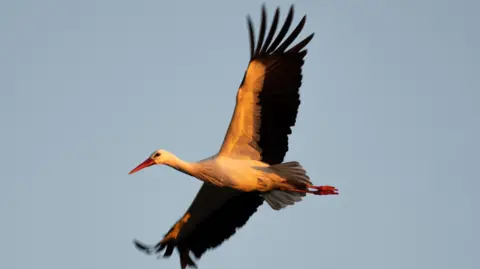
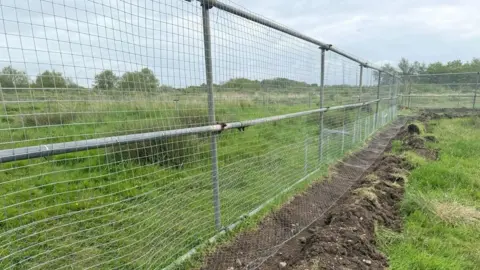
The finishing touches are being made to stork enclosures designed to encourage the birds to breed in Derbyshire for the first time in about 600 years.
The £300,000 predator-proof enclosures at Willington Wetlands, once completed, will be home to a first pair of nesting white storks since the 14th Century.
In recent years, Derbyshire Wildlife Trust said sightings had increased, including birds recorded flying over Willington Wetlands in 2024 and nearby in 2025, but none have yet stayed to breed.
It said having a nesting pair at the nature reserve, would create a "social magnet" to encourage passing storks to "stop, settle, and breed".
The project will lead to carefully-managed soft releases into the wider landscape as well.
The enclosure would "restore a missing piece of wetland ecosystem", the trust said, and had been developed with Celtic Rewilding, specialists running a captive breeding facility just over the border in Staffordshire.
 Derbyshire Wildlife Trust
Once finished, it is hoped the trust will be ready to introduce white storks to the site this summer.
After they arrive, volunteers will monitor the site daily to check their welfare.
Beavers were reintroduced at Willington Wetlands in 2021, leading to the birth of two beaver kits in the county for the first time since the 13th Century.
And in 2024, both Britain's loudest bird, the bittern, and Britain's smallest rodent, the harvest mouse, were recorded at the site for the first time.
Listen to BBC Radio Derby on Sounds and follow BBC Derby on Facebook, on X, or on Instagram. Send your story ideas to eastmidsnews@bbc.co.uk or via WhatsApp on 0808 100 2210.
