I was drugged and raped by my husband for years

 BBC
BBCWarning: You may find some of the graphic detail in this story disturbing
A woman whose husband drugged, raped and filmed himself abusing her for years is speaking out about her experience in a bid to help other victims of similar crimes.
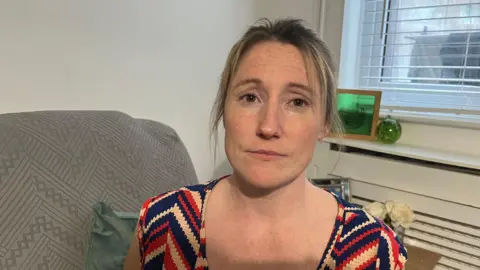
Zoe Watts, 43, from Devon, had known her now ex-husband since she was 17 and they had been in a relationship for 18 years, during which he crushed sleeping pills into her tea at night to rape, photograph and film her.
She and Amanda Stanhope, who was also abused by her husband whilst unconscious, have started a campaign to combat drug-facilitated sexual assault and the online distribution of material depicting unconscious women being abused.
"From the research we have done, its a prevalent crime and its happening a lot more that you think," said Zoe.
Her ex-husband was sentenced to 11 years in prison in 2022.
His crimes spanned six years, from 2011 to 2016, and included rape, assault by penetration and administering a substance with intent to overpower to allow sexual activity.
Zoe, who has waived her right to anonymity, said her then husband revealed he had been abusing her one Sunday after they had returned home from church.
"He sat me down and told me he had had an affair, that he had been crushing medication into my tea at night and that it was to take photographs and video," she said.
Zoe said in that moment all she could focus on was the revelation of the affair - her body had been overloaded with five shocks in about 40 seconds.
Her family contacted the police and it was only then she realised she had been raped.
"I wasn't aware of what he was doing," Zoe said.
"It had to be broken down by some really kind police officers that if I was sedated, I couldn't give consent, therefore it was rape."
- If you have been affected by the issues in this article, help and support can be found at BBC Action Line.
She said on the odd time she would wake up when he was attacking her, she was disoriented having been sedated.
"You question what is happening," Zoe added.
"Straight away you go to the person you love, the person you trust.
"It was a really confusing time for me to start understanding that this person who I cooked a meal for would do that to me."
She does not know what happened to the images and videos of her or if they can be seen on the internet.
"He explained that he was using them for himself because he thought I wouldn't want him looking at other women on pornographic sites," she said.
"He was on various different sites and platforms at the time. He knows where those images are and if I let that consume me, then I feel like he is controlling me from prison so I just have to make my peace with that."
'Survivor networks'
The name of the campaign #EndEyeCheck refers to a practice where perpetrators pull back a victim's eyelid while they are sedated to prove they are unconscious before committing an assault, often recording and sharing these acts in online spaces.
Those involved want to set up a support network for victims, create education and training programmes for young people and those working in healthcare and change laws to ensure perpetrators are punished and people cannot profit from the distribution of images and videos of sexual assaults and rape.
Zoe said hundreds of women who have experienced drug-facilitated rape have been in contact from about 22 countries.
"It tells us the crime is a worldwide crime. It's difficult to know if it is on the rise but we need to develop these survivor networks of women who have experienced it," she said.
The campaign is calling for new legislation to make the creation, possession and distribution of such material a specific criminal offence, and for online platforms to be held legally accountable for hosting it.
She urged anyone who thinks they have been spiked to either get checked by the medical community or to report it to the police.
"A drug-facilitated rape is very covert in the respect that if you have been sedated, you are trying to get your memory back and you are confused as to what has happened," Zoe said.
"Instead of internalising that pain, reach outwards. There's nothing wrong with going to the police even if you decide not to prosecute."
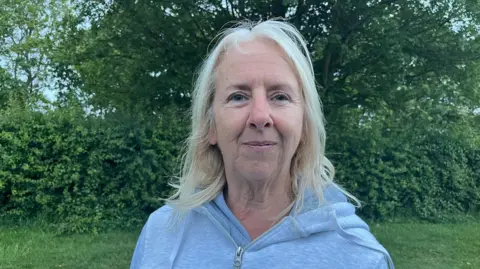
Zoe spoke out about her trauma to also raise awareness of spiking prevention training in Devon and Cornwall being delivered by Exeter-based charity Stamp Out Spiking.
"We are learning that spiking doesn't just take place by strangers, it can be a lot closer to home," said founder Dawn Dines.
"After the Gisèle Pelicot case, we are starting to see more cases globally where domestic spiking is happening which is so much more dangerous because it's a person of trust who is doing it to you."
