Ice cream history features at dessert festival

 Beamish, The Living Museum of the North
All things sweet have been showcased at a dessert festival on Teesside, which also coincides with National Ice Cream Day.
The event in Redcar featured handcrafted cakes, pastries and artisan chocolates from local producers, and workshops giving an insight into the history of ice cream making.
Staffed by Beamish Museum historians, the workshops gave people the chance to make and sample their own ice cream in the original way - using ice and salt to freeze - in a traditional machine from its collection.
Those taking part were also able to hear about the history of the sweet treat and how it arrived in the north-east of England.
Robert Martin, one of the learning co-ordinators at Beamish, said: "Ice cream became available to the masses in the Victorian era.
"It was brought to England by Italian families fleeing the Wars of Unification, which left many people impoverished, or struggling under the harsh military crackdowns.
"They needed to make a living and many began manufacturing and selling ice cream.
"It was cheap and easy to produce, just needing ice and salt and churning, and only Italians knew the secret of making it.
"Lots of other countries claim to have invented it, but the popularity of ice cream in this country is due to Italian emigration."
 Getty Images
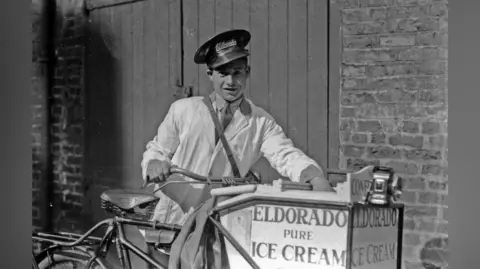
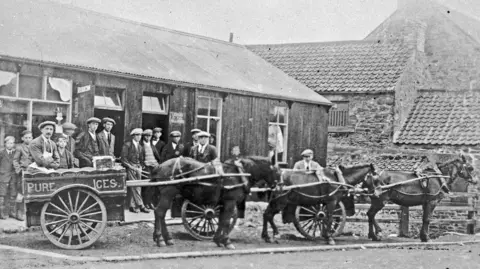
Starting off in Newcastle in the 1870s, it spread to Sunderland, then Middlesbrough, and County Durham.
Many of the mining villages had an ice cream parlour run by a particular family, who often became a focus for the community.
Each family had its own recipe for ice cream, which was kept a closely guarded secret
John's Cafe in Beamish is a recreation of the ice cream parlour founded by Giovanni (John) Parisella in Wingate in the 1950s.
The museum took over the building, the machinery and other artefacts donated by the family but one thing they did not pass on was their famous ice cream recipe.
 Beamish, The Living Museum of the North
The popularity of ice cream remains undiminished today, with an estimated 320 million litres consumed annually in the UK.
A spokesperson for Redcar and Cleveland Council said the dessert festival, was a fantastic opportunity to showcase the town, the home of the famous "lemon top" ice cream.
The local delicacy, a swirl of vanilla ice cream topped with a scoop of lemon sorbet, was originally created in the 1920s in the ice cream shop Pacittos, which still has an outlet in the town.
