NI leaders urge prime minister to take action over fuel costs

 Getty Images
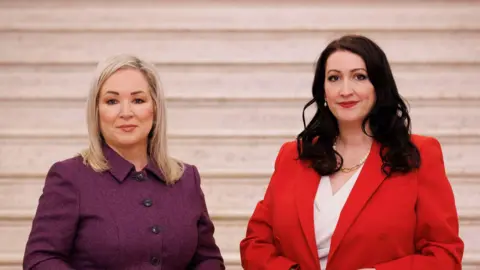
The first minister and deputy first minister have sent a joint letter to the prime minister calling for intervention as households and businesses face increasing pressure from rising fuel and energy costs.
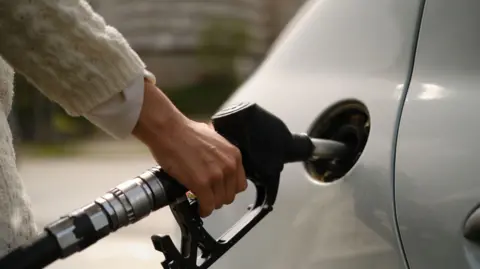
It comes as fuel prices in Northern Ireland have risen faster than the UK average since the beginning of the US and Israeli war against Iran at the end of February.
Petrol here increased from 124.8p litre on 26 February to 153.1p litre on Thursday, according to the Consumer Council.
Diesel prices have risen faster than petrol, going from 132.6p litre to 185.6p litre.
 PA Media
The average price of petrol in the rest of the UK has risen by 22p since the war began, with diesel rising by 24p, according to data from UK motoring group the RAC.
That's a rise of 15.6% and 16.1% respectively.
Wholesale oil and gas prices surged when the conflict began on 28 February, with the production and transportation of energy across the Middle East slowing or stopping entirely due to missile strikes and drone attacks.
After US president Donald Trump announced a temporary ceasefire on 7 April, the wholesale price of oil and gas dropped back, but uncertainty in the following days led to further price increases.
In a statement issued on Friday, Michelle O'Neill and Emma Little-Pengelly said: "We are deeply concerned about the escalating pressures facing families, workers and businesses as fuel and energy costs continue to rise.
"The cost of fuel is putting significant pressure on, with increases not sustainable.
"Our hauliers, our farmers, and small and medium-sized enterprises are facing sharply increased operating costs too and these costs are inevitably being passed on further, deepening the cost-of-living crisis.
"Families and businesses cannot continue to absorb these sustained increases without intervention."
The Nipsa trade union also warned that the "rising cost of getting to work is placing significant pressure on household budgets" and is "calling on employers and government to take urgent, practical steps to support workers".
Meanwhile in the Republic of Ireland, slow-moving convoys have been protesting against high fuel prices caused by the US and Israeli war against Iran.
On Friday, the Taoiseach (Irish PM) Micheál Martin said that the blockades mean the country is "on the precipice of turning oil away from the country" amidst a global oil supply crisis.
The CEO of Fuels for Ireland has warned that the number of garage forecourts without fuel in Ireland could rise to 500 by Friday night if blockades continue.
