Rare duck breeding success gives hope for species

 Durrell Wildlife Conservation Trust
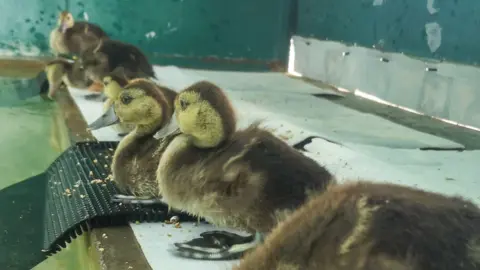
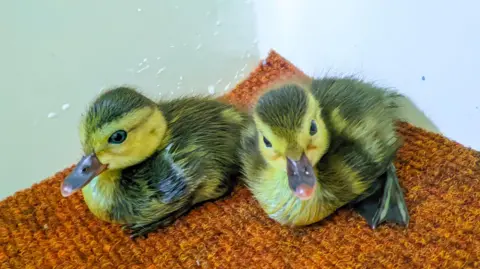
Six of the world's rarest ducks have reached adulthood after conservationists successfully raised them from eggs collected in the wild.
The Madagascar pochards were hatched after their eggs were carried 44km (27 miles) on foot before being taken to a specialist breeding centre in Madagascar. The species was once thought to be extinct before being rediscovered in 2006.
Work was carried out by the Jersey-based Durrell Wildlife Conservation Trust, which said the success had given scientists another way to protect the species when nests were threatened.
Roland Digby, a conservation biologist at Durrell, said: "This is an important milestone for the Madagascar pochard."
 Durrell Wildlife Conservation Trust
The trust said the breakthrough could be particularly important because the Madagascar pochard survived at just one known wild nesting site worldwide.
Digby said: "We've shown that, when conditions demand it, we can safely collect eggs from the wild, transport them on foot and successfully incubate and rear healthy birds."
The six birds hatched from 15 fertile eggs collected at Lake Matsaborimena in north-west Madagascar, with Durrell staff working alongside The Peregrine Fund to collect them.
The eggs were carried in a cooler before being transported to Durrell's specialist breeding centre in Antsohihy in northern Madagascar.
 Durrell Wildlife Conservation Trust
Since the species rediscovery, Durrell said it had led an international recovery programme combining habitat restoration, captive breeding and reintroductions.
About 180 birds now exist across captive and wild populations, including 51 at the Durrell breeding centre, 82 at Bemanevika and 74 at Lake Sofia.
Durrell chief executive Rebecca Brewer said: "For many people, this is a story about six ducks.
"For us, it's about what long-term conservation can achieve."
Follow BBC Jersey on X and Facebook. Send your story ideas to channel.islands@bbc.co.uk.
