'I would've relapsed without the Amy Winehouse rehab clinic'

 Getty Images
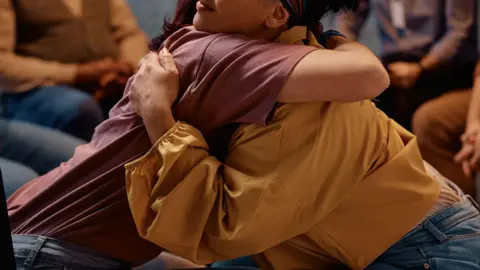
In a part of east London that remains a secret, a drug rehab clinic for women has been quietly saving lives for ten years, having been set up by the family of the late singer Amy Winehouse.
"I thought it was just going to be like a dumping ground, but it wasn't," said Ciara, one of the current residents at Amy's Place, a clinic run by the Amy Winehouse Foundation and Clarion Housing Group.
"It was a community, loads of girls that were similar. It felt like home the minute I came here," she said.
Ciara, 27, who moved to the clinic a year ago, explained how her journey started with party drugs in her teens before things took a "dark turn".

She told the BBC that the rehab centre has "completely changed" her life, and said without it, "I don't know where I would be right now."
"I didn't have enough love for myself to want to stop using drugs. No matter if I went to [a support groups], friends or family, my partner, my mum or dad, nothing was enough.
"The counselling, the therapies, the activities, the girls here, that's what I needed. That's what made me want to stay clean."
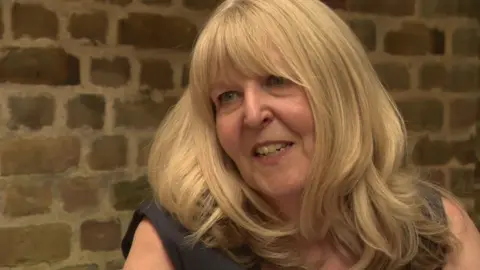
Marking 10 years of supporting women to leave drugs behind and helping them rebuild their lives is something Amy Winehouse would have been "proud of", her stepmother Jane Winehouse said.
The Amy Winehouse Foundation started shortly after the singer was found dead at her Camden flat on 23 July 2011 after consuming high levels of alcohol.
During her career, the soul and jazz singer released two critically acclaimed albums, Frank (2003) and Back to Black (2006), with the latter winning five Grammy Awards and becoming one of the best-selling albums of the 21st Century.
She also went on to win three Ivor Novello Awards, a Brit Award, and performed at Glastonbury Festival three times.
"I think she would have loved the girls, I wish she could be here to meet them, but she's certainly here in spirit," Jane said.
The centre provides accommodation for two years and offers specialist support to help women sustain their recovery and move towards independent living.
Jane said she comes to Amy's Place regularly, and said "you hear a lot about how Amy touched people's lives".
She remembers the global superstar as a "family girl", who was "bright, really clever, witty and a real talent".
For many of the girls at the clinic, Amy Winehouse's voice was a soundtrack to their early childhoods.
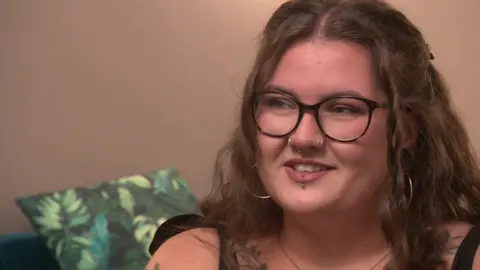
Ez, 25, is one of the newer residents and has been at the clinic for eight weeks.
She said she designed an Amy Winehouse tattoo for herself five years ago, long before she knew of Amy's Place, adding: "It just seems so strange to have benefited so much from her, it's great."
She said the singer's battles with addiction, recovery and relapse mirror some of her own experiences.
"I definitely relate to her getting sober, relapsing, getting sober, relapsing. I myself relapsed a few weeks after I detoxed, and it's only been since I went to rehab I've actually managed to stay clean. So I'm really glad that I did that."
For Ez, moving to the centre and meeting other women in a similar situation has been "amazing".
"Having people that you know have been through similar things to you and just being able to talk to them," she said.
"We also have key work every week, there's counselling here, there's art therapy, there's nutritionists. I'm taking piano lessons now and it's great, I feel supported."
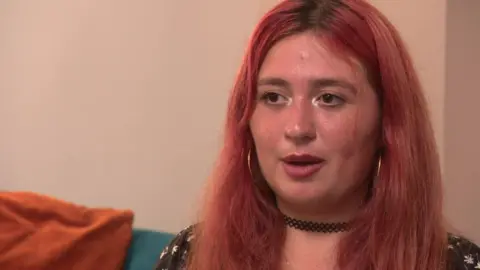
Like the other women, Stella, who has been at the clinic for 18 months, credits the friendship and sisterhood for her recovery.
"I just was desperate to come here," Stella explains.
She describes how she spent the previous four years "in my room in pain, unable to get out of bed."
Her addictions had caused her to become distanced from loved ones.
"I had just completely ruined my whole life. My life before Amy's was so lonely and it just wasn't a life I wanted to live," the 21-year-old said.
She described how the turnaround came when she developed septic shock.
"That was my quick realisation that I had to stop this," she said.
Since living at Amy's Place, the change has been "abrupt", she said.
She now volunteers at a farm and at the same drug and alcohol service that helped her.
"I wouldn't have anything without this place," she said. "I'm really grateful that her legacy can live on within this house."
 Getty Images
For Jane Winehouse, stories like Stella's are inspiration to expand the work, but said "funding is always an issue".
"After 10 years we're still the only recovery house that's specifically for young women," she explained.
"We wish there was more provision," she adds.
However, the centre has helped nearly 90 women in the last decade.
Claire Miller, the group chief executive of Clarion Housing Association said: "It's unique because it is the only provision for young women starting out on that recovery journey from addiction.
"It's a tragedy really because there are so many young women who would benefit from this type of specialised provision."
The demand is huge, she explains, "we could fill this project several times over".
But, she said: "The beauty of the project is that it's small scale, so you really do feel like you're moving into a community and that you're living with other people who have been in similar circumstances to yourself, and there's a lot of support therefore for your journey out."
Listen to the best of BBC Radio London on Sounds and follow BBC London on Facebook, X and Instagram. Send your story ideas to hello.bbclondon@bbc.co.uk
