How a seaside town realised it needed public loos

 Kevin Gordon
Eastbourne has a fascinating history with one of life's most basic amenities: the toilet.
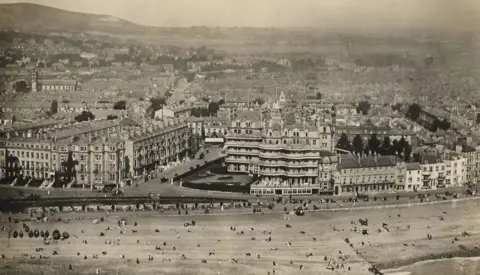
In the Victorian era, as the town grew from a small settlement into one of Britain's most fashionable seaside resorts, thousands of tourists arrived by train each year.
But the number of toilets did not match the number of visitors and a popular boat race in 1870 laid bare the lack of facilities.
"It's said that over 1,000 people used a small stable near the pier to go the toilet," historian Kevin Gordon told Secret Sussex.
"I'm not even sure if it was plumbed in; this obviously made the council realise that they needed to do something about this problem," Gordon explained.
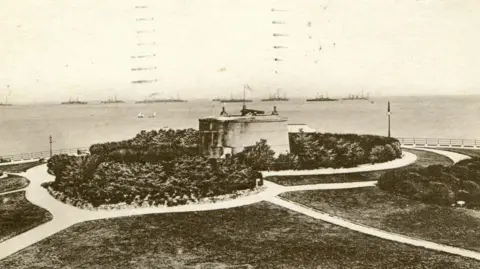
He said that one of the first toilets was built at the Wish Tower slopes close to the seafront, on land that was then owned by the military.
While that toilet, which was notably only for men, was put in place in 1873, the first sign for it was not erected until 17 years later.
A growing interest in building public toilets put Trinity Trees - a street in the centre of Eastbourne that eventually became another site for an early public toilet - at the centre of a debate.
Plans to construct facilities were not universally embraced.
"[Some] people didn't want a toilet there at all. The Duke of Devonshire said he didn't want any toilets, public toilets, on his land because he called them 'violations of public decency'," said Gordon.
 Kevin Gordon
Even when toilets were built, they weren't for everyone.
Gordon said the council didn't introduce the first public ladies' toilets until 1900.
Plans had previously been turned down by the council, which remember, was male led, he said.
According to Gordon, the town's soaring popularity prompted the council to finally take action.
He said: "Thousands of people were coming down here by train, and I don't think the council initially realised that they needed the ordinary things that we all want."
The refurbished toilets at Eastbourne Pier, the bandstand, Holywell and Beachy Head are now £1 to use.
Follow BBC Sussex on Facebook, on X, and on Instagram and listen to BBC Radio Sussex on Sounds. Send your story ideas to southeasttoday@bbc.co.uk or WhatsApp us on 08081 002250.
