What does Andy Burnham mean for Scottish Labour?

 Getty Images
Some Scottish Labour figures enjoyed watching England lose to Argentina in the World Cup this week.
But they've also got a defeat of their own to reflect on.
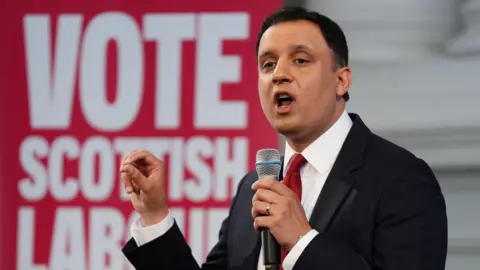
The party suffered its worst ever result in the Holyrood election in May. This has prompted a series of post-mortem meetings from the Highlands to the Borders to discuss what went wrong.
And some are calling for radical change – they think it's time for the party to split away from the wider UK Labour movement.
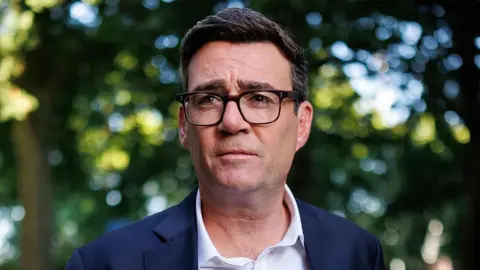
But there's another important factor to take into consideration. The Labour Party is about to have a new leader in Andy Burnham.
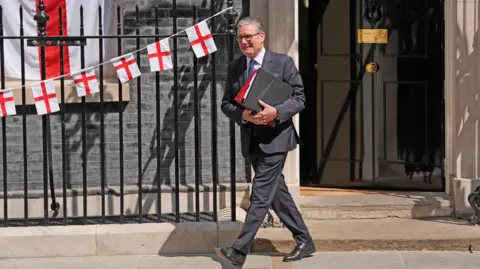
There is a slight quirk in the process - he becomes the UK's prime minister next week, a few days after he replaces Sir Keir Starmer as leader.
Does this changing of the guard give the party a boost north of the border? Or is it a distraction that doesn't deal with underlying issues?
For defeated Holyrood Labour candidates, like Jack McConnel, the nuclear option is the way to go. He wants a completely separate Scottish Party.
He's heard all the jokes about sharing a name with the former Labour first minister (and eagle-eyed readers will have spotted the different spelling) but he's trying to be just as impactful when it comes to the fate of Scottish Labour.
"Scottish Labour has only ever lost seats in elections to the Scottish Parliament it created. We must break the link in the electoral fortunes of the Scottish and UK parties, which has haunted us in every election since 2007," he said.
"And we must be seen to stand up for Scotland. Only a new independent Scottish party will convince voters we are firmly on Scotland's side."
There is some sympathy for McConnel's ideas in Scottish Labour's ranks.
Monica Lennon, who was a high-profile MSP until she lost her place at Holyrood in May, told BBC Scotland News that McConnel had "reignited a debate Scottish Labour can no longer avoid."
"If the party is to survive and thrive, it must evolve. No UK Labour leader, however popular, can guarantee success at Holyrood. In modern Scotland, being an unmistakeably Scottish party isn't optional, it's essential," she said.
 PA Media
When you speak privately with Scottish Labour politicians, you'll struggle to find anyone who defends May's election campaign.
Words like "disaster" and "catastrophe" come up.
But there's still a hostility from many towards the idea of breaking away from the UK party.
"Fanciful and reactionary" is how one party figure put it. And another told me it simply wasn't a practical solution.
A radical move like this would create a lot of complexities when it comes to funding, data, and internal party bureaucracy.
But there's a feeling it's being taken more seriously now than in the past.
And certainly the idea of, at the very least, more distance between the UK and Scottish party operations is likely to get a bit more of a hearing in these party review sessions.
But Scottish Labour has already pushed quite far in this direction.
The party has a different symbol and party colour, and in recent years has taken different positions on policies such as winter fuel payments and the two-child benefit cap.
The most common internal complaints that came up in the wake of May's election results were the unpopularity of Sir Keir, a lack of focus on the second regional vote, and a manifesto that was seen by many to play it a bit too safe.
In terms of the latter two, it's hard to see how they would have been different if Scottish Labour was a truly separate party.
This will all be chewed over when candidates and activists meet to discuss the election campaign.
 PA Media
Some of these events have already taken place, with a number due to happen in the coming days.
But there are some gripes about these election post-mortems.
Some have pointed out they're taking place at a time when many people are on holiday, and multiple figures say the invitations went out with just a few days' notice.
The party has pushed back against this, insisting notice was given 12 days before the meetings kicked off.
One party figure told me they feared the sessions are "structured to get the answers that the leadership want."
They expect the review will ultimately conclude that Andy Burnham taking over will solve Scottish Labour's problems.
The party defends the process.
A spokesperson said: "This review allows all members, candidates, elected representatives, trade unionists and affiliates to contribute their thoughts on the campaign and their ideas for future Scottish Labour campaigns".
Plenty in Scottish Labour think things are a bit more complex than just changing leader, but there is a genuine optimism that Andy Burnham will deliver a boost.
Many in the party think he's a better communicator, and that the time he's spent outside London – as Mayor of Greater Manchester – will help him prove he "gets" the UK's nations and regions.
But few truly see a new UK leader as the solution to all their problems.
This is a party with a big question to contend with over the summer. How radical does the change need to be if Scottish Labour is to reverse a pattern of decline at Holyrood?
