Lost manuscript uncovers Brontë's 'raucous' side

 The Brontë Society
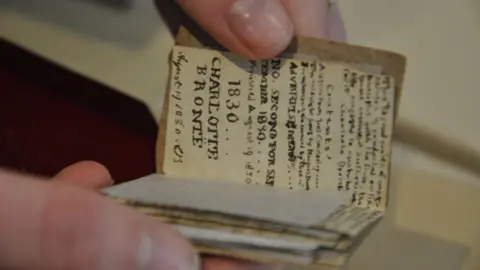
A lost manuscript which had been hidden for more than a century has uncovered a teenage Charlotte Brontë's fascination with "very naughty" Parisian society.
The Journal of a Frenchman was the missing part of a series of The Young Men's Magazine, which Brontë edited and wrote aged 14.
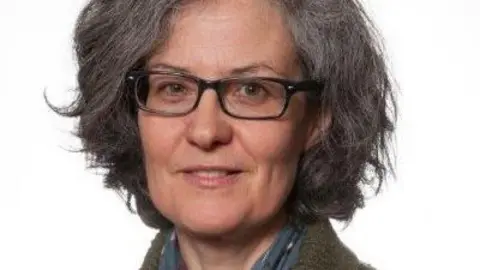
It belongs to the Brontë Parsonage Museum and has been analysed for the first time by the University of Chester's Professor Deborah Wynne, who said she was honoured to be chosen.
On reading the magazine Wynne said she discovered aspects to Charlotte Brontë she "hadn't really encountered before".
"It's written as though Charlotte herself is a French young man who's a dandy. He gets drunk and disorderly.
"So you've got this Yorkshire clergyman's daughter, who seems so respectable, but she seems to know all about being drunk and disorderly in Paris in this journal entry.
"And you realise she had this sense of humour, which doesn't always come out in quite the same raucous way in her novels.
"She's more ladylike in the way she writes in her novels, whereas she gave herself this freedom to write as a man and really went to town with that," she said.
 Bevan Cockerill
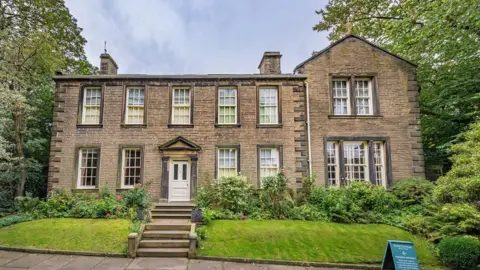
In 2019, the magazine was discovered and purchased by the Brontë Parsonage Museum in Haworth, where the sisters lived and wrote their novels, such as Jane Eyre and Wuthering Heights.
The museum had all other issues of The Young Men's Magazine and bought the September 1830 issue when it appeared in a Parisian auction house.
The museum set up a fundraising campaign, which Wynne donated to, and it returned to Haworth where it has now been examined and preserved.
Six scholars were invited to analyse the work the results of which were published in The Journal of the Brontë Society last year.
Wynne said discovering the manuscript was "fitting together this piece into a jigsaw".
"It was an amazing experience to see that manuscript and know it had been hidden away for over a century," she said.
"To know I was the first person to actually push all of that jigsaw together, as it were, it was really exciting. So it's been one of the best projects I've ever worked on."
 University of Chester
She said themes in the manuscript reappear in Brontë's later more well-known works, such as Jane Eyre and Villette.
"She really presents the aristocratic characters in France negatively. And later in her novels, a lot of the aristocratic characters are presented negatively too," she said.
"So you can sort of see how she's already a little bit disapproving of her Frenchman. And in the end, he loses all of his money and he becomes a tavern keeper. And he says he's much happier drawing pints for the people who come into his tavern.
"There is this sense that France is a very naughty sort of place. It's a place where things go on that don't in Yorkshire parsonages."
Measuring just 3cm by 6cm the magazine is part of a series of works the Brontë children wrote on scraps of paper because of the high cost of paper in the Victorian era.
Principal curator at the Brontë Parsonage, Ann Dinsdale, explained the little manuscripts were meant to look like printed books and magazines produced at the time.
"These tiny little books have got title pages, they've got contents pages, they contain all the kinds of stories, reviews, poetry that you'd expect to find in Blackwood's magazine.
"Some of them have even got advertisements in the back. So these were the first publications by the Brontës really."
She said the children would have created them using quill pens.
"It would have taken a fair amount of practise to kind of devise this almost sort of italicised style of writing that they developed for the little books," she said.
"It became like a secret code among the siblings because they must have realised that if their father or their aunt came across any of these tiny manuscripts they wouldn't have been able to read them.
"Which is probably quite a good thing because some of the content is not the kind of thing you would expect from the minister's children."
Listen to highlights from West Yorkshire on BBC Sounds, catch up with the latest episode of Look North.
