Channel Islands facing 'hottest ever summer'

 BBC
BBCThe summer of 2026 is on course to be the Channel Islands' hottest since records began, according to local meteorologists.
Provisional statistics from Jersey Met show Jersey's average temperature, measured across both day and night, was 20.9C (69.6F) between 1 June and 15 August. That is 3.2C (5.8F) above the 1991 to 2020 average.
Guernsey's mean temperature over the same period, and with two weeks of summer to go, is 19.2°C (66.56F), some 3C (5.4F) above the average, meteorologists said.
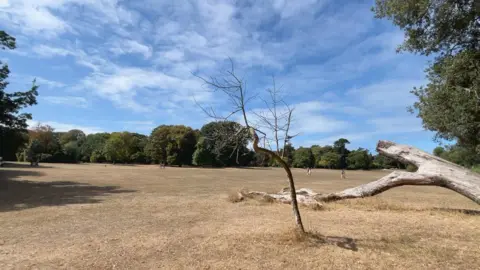
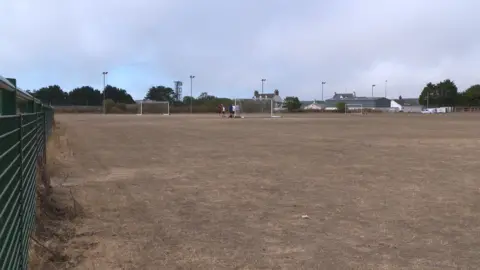
It was in line with evidence that climate change was driving hotter summers and increasing the likelihood of drier conditions, they added.
There have also been record-breaking temperatures across the islands, with Guernsey reaching 36.4°C (97.52F) on 25 June, its highest temperature ever recorded; and Jersey reaching 39.3°C (102.74F) on the same day, also its highest temperature on record.
Alongside the summer heat, the islands have experienced significantly lower than average rainfall.
In Jersey, 69.6mm of rain fell over the summer, compared with a 30-year average of 158.0mm.
In Guernsey, 43.2mm of rain was recorded, well below the 30-year average of 147.6mm.
Unlike large parts of the UK, this lack of rain has not led to drought conditions or hosepipe band across the islands.
Paul Aked, from Jersey Met, said the summer had not been too dissimilar to famous drought of 1976, although 2026 had actually been hotter, with more heatwave periods and higher peak temperatures.
Aked went on to say, in terms of the heat and how people felt it: "It is very different for the islands when we're comparing ourselves with a city in the United Kingdom.
"We have the sea around us, which is cooler than the air temperature, and that does influence [where we] get some cooling from."
He added: "Just because we've had a hot summer, it doesn't mean we're going to get a particularly cold or wet or wintry winter."
Follow BBC Guernsey on X and Facebook. Follow BBC Jersey on X and Facebook. Send your story ideas to channel.islands@bbc.co.uk.
