'Public defib advice change could cost lives'

 BBC
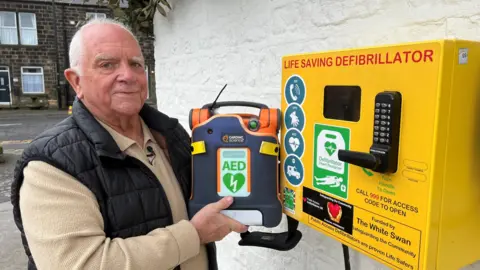
BBCA man who has helped install hundreds of public defibrillators in Yorkshire has warned "lives could be lost" because of changes to how the life-saving devices are being deployed to incidents.
Yorkshire Ambulance Service (YAS) introduced a new call handling system last year which only advises their use when "it's clear" someone is in cardiac arrest.
Brian Firth, from Public Access Defibrillators UK, said he was "worried" the devices were no longer sent as a precaution to emergencies that could develop into cardiac arrest, like heart attacks.
YAS said its new system asked more detailed medical questions which meant the advice was "more accurate" and "better matches" the patient's condition.
Public access defibrillators, alongside CPR, can provide immediate life-saving support when someone is in cardiac arrest and waiting for an ambulance.
The new call handling system, called NHS Pathways, was first introduced by YAS for 999 calls in May 2025 and is currently used by more than half the ambulance services in the UK.
YAS said it changed the way calls were "handled and coded", which meant patients might receive different advice based on the information gathered during the assessment.
The trust said the previous system used to prompt the allocation of a defibrillator "more often" and this was done as a precautionary measure when "in many cases" they were not needed.
It said defibrillators were now only advised when "it's clear someone is having a cardiac arrest and CPR instructions are being given over the phone".
Firth, who founded Public Access Defibrillators UK 13 years ago and has seen his devices help save 33 lives, said he believed the changes could "unnecessarily cost lives".
"At one time it would be deployed as a precaution for a potential life-threatening condition, such as a stroke or a heart attack," he said.
"Now, that action is delayed until the patient actually stops breathing."
Firth said his defibrillators used to be accessed 30 or 40 times a month, but since last September that had dropped to an average of once a month.
"Now that they're not being deployed as a precaution, you're taking away the advantage of it being available during that first three to five minutes of a cardiac arrest, which is reducing their chances of survival," he said.
YAS said its deployment rates were now "at similar levels" to most of the other ambulance services using NHS Pathways as their telephone triage system.
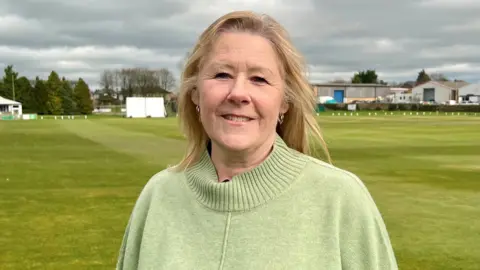
Three years ago, Rachael Coyne suffered a cardiac arrest while visiting her son and his girlfriend in Lofthouse.
The 59-year-old travel agent believes her life was saved because her son, Daniel, was advised to go and get a defibrillator while his girlfriend, Rebecca, carried out CPR.
"At the time he did think I'd had a massive heart attack," she said.
"I hadn't, I'd gone straight into cardiac arrest.
"What my son was advised on the day, to go get the defibrillator to use it on me, made all the difference."
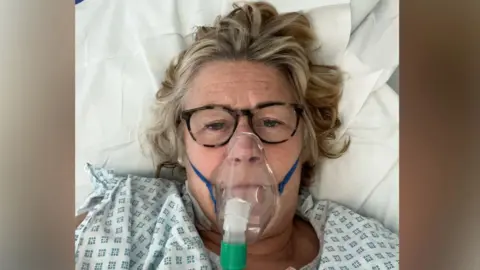 Rachael Coyne
Figures from the British Heart Foundation show there are more than 40,000 out-of-hospital cardiac arrests in the UK each year, with a survival rate of less than one in 10.
Early recognition of cardiac arrest, immediate resuscitation and rapid defibrillation can more than double the chance of survival, according to Resuscitation Council UK.
YAS said: "Defibrillators are still extremely important when someone's heart has stopped, and they should be used alongside CPR wherever possible.
"We continue to monitor the quality of 999 calls made to the service and address any issues that may arise from the use of NHS Pathways in our Emergency Operations Centre."
