Restoration route to save rural relics

 BBC
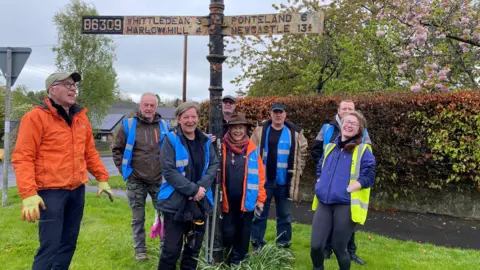
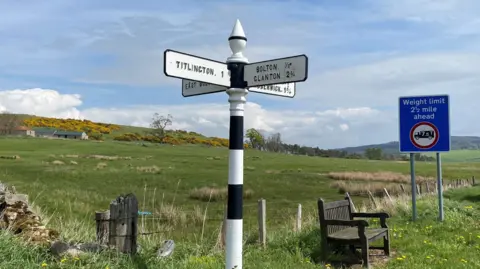
BBCA relic of a world long before sat nav, thousands of black and white fingerposts once guided the nation's drivers to their destinations. Now largely redundant, many are disappearing from the rural landscape - something the Campaign for the Protection of Rural England (CPRE) is trying to prevent.
"I really wasn't interested in fingerposts at all," David Gosling said with a slightly rueful smile.
"But my wife was on the parish council of our home village of Lanercost in Cumbria and there was one which needed repairing and she piped up 'David will do it'.
"It all just went from there."
Since then the 75-year-old has spent decades repairing the historic markers and is leading a restoration course organised by CPRE Northumberland across three weekends this summer, hoping to pass on his skills to others.
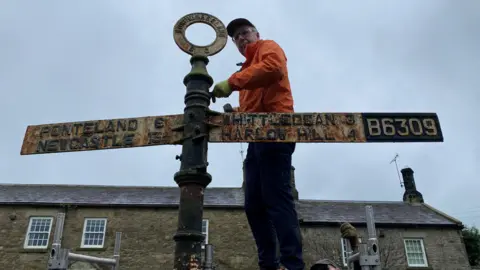
Stone road markers called milliaries were used in Roman times, but it was not until after the General Turnpike Act 1773 that milestones along with guide posts or fingerposts began to appear.
They became ubiquitous in rural areas in the early 20th century when local authorities became responsible for signage following the Motor Car Act 1903, but there are subtle differences between them from region to region.
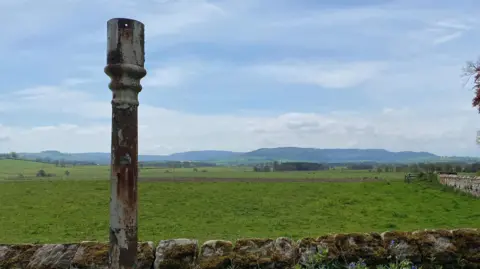
"The local authorities all had their own foundries who all wanted to put their own stamp on them," Gosling told Radio 4's Farming Today programme.
"So although the basic structure is the same, the decorative top, the finials, can be quite different."
"Some had a crest on them, others the name of the area."
Many were removed during World War Two to thwart any invading German army, but were reinstalled in peacetime only to be phased out when the Traffic Signs Regulation Act of 1964 introduced modern replacements.
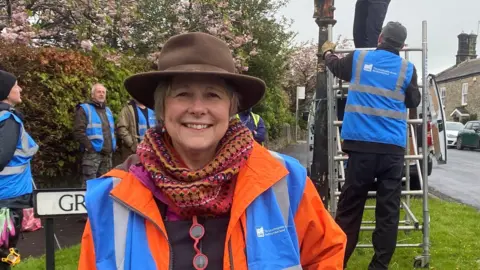
The six-day course spread across three weekends will see the restoration of two fingerposts including one erected a century ago in the village of Stamfordham.
Participants include conservation officer Andrea De Monte.
"I just wanted a better understanding of signposts and some practical skills," she said. "It's good to actually get my hands on something."
Mole catcher Steve Elliott from Alnwick wanted to add "something else to my bow".
"I never used to notice the signs, but since I signed up to the course I see them everywhere."
The course was the idea of Annie Lloyd, from CPRE Northumberland, who is also a member of the Milestone Society.
"I cycle past these signs every day on my way to work and I can see them literally falling apart," she said.
"By restoring them we're giving these communities something they're going to be delighted to see.
"They're such iconic pieces of wayside heritage and once they're gone, they're gone forever."
